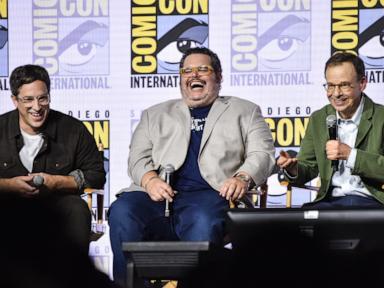
Rick Moranis received a standing ovation during a surprise Comic-Con appearance for the upcoming Spaceballs sequel, proving that his absence from Hollywood over the last three decades has only cemented his legendary status. When a performer walks away from the peak of their earning power to raise children after a profound personal tragedy, the industry usually forgets them within a fiscal quarter. Studios move on. Audiences find new obsessions. Yet, when Moranis stepped back into the public eye to discuss the continuation of Mel Brooks' sci-fi parody, the reaction was not merely nostalgic warmth. It was a cultural validation of an exit strategy that Hollywood still fundamentally fails to understand.
Most actors cling to relevance until the phone stops ringing entirely. Moranis did the opposite. Following the tragic death of his wife, Ann Belsky, in 1991, he quietly stepped back from major film projects to focus on raising his children as a single father. He did not issue a grand manifesto. He did not hold a tearful press conference. He simply stopped taking studio roles, shifting into voice work, commercial projects, and a quiet domestic routine that kept him far away from the Los Angeles machine.
Industry analysts at the time predicted career suicide. In the ruthless calculus of 1990s movie studios, momentum was everything. If you were not anchoring a high-profile comedy or headlining franchise sequels like Honey, I Blew Up the Kid, you ceased to exist in the minds of casting directors. But Moranis miscalculated nothing. He accurately weighed the finite nature of childhood against the infinite vanity of Hollywood, choosing the former with a quiet stubbornness that has aged remarkably well.
The Anatomy of a Voluntary Exile
To understand why the Comic-Con ovation mattered so deeply, one must examine how rare genuine withdrawal is in the entertainment business. Stars routinely take hiatuses, but they usually involve rehab stints, creative burnout, or vanity passion projects financed by streaming giants. A permanent, deliberate walkaway from blockbuster cinema at age forty is almost unheard of.
Moranis was not a washed-up character actor looking for a soft landing. He was the architect behind some of the most profitable comedies of the twentieth century. From Ghostbusters to Spaceballs, Little Shop of Horrors to Honey, I Shrunk the Kids, his neurotic, fast-talking, bespectacled persona defined an entire era of American humor. He possessed that rare comic alchemy: the ability to play deeply absurd characters with absolute, deadpan sincerity.
When the offers dried up because he stopped answering his agents, the studios assumed he would eventually crack. They waited for the inevitable comeback tour, the quick cash-grab sequel, or the tell-all memoir. Instead, decades rolled by with only occasional voice-over appearances in things like Brother Bear or brief advertising cameos for companies like Mint Mobile alongside Ryan Reynolds.
This sustained absence transformed him from a working comic actor into something closer to an urban legend. Fans grew up, had their own children, and passed down VHS tapes of Ghostbusters and Spaceballs. By the time the Spaceballs sequel was announced and Moranis was confirmed to return alongside Mel Brooks, the cultural landscape had shifted entirely. The hyper-saturated, content-driven machine of modern media made audiences nostalgic for an era when comedy felt tactile, specific, and authored by distinct comic voices.
The Economics of Nostalgia and the Spaceballs Sequel
Amazon MGM Studios and the creative teams behind the new Spaceballs project understand something fundamental about modern intellectual property. Nostalgia is currency, but unearned nostalgia is poison. Audiences can smell a cynical cash grab from miles away. They reject reboots that rely solely on deep-faked likenesses and recycled catchphrases without the original talent driving the engine.
Bringing back Rick Moranis is not merely a casting coup. It is the validation of the entire enterprise.
For years, Hollywood has tried to resurrect dead franchises by replacing legacy stars with younger, cheaper archetypes or by dragging reluctant actors back into green-screen monoliths against their will. Moranis's return is different because it is entirely on his own terms. He spent thirty years saying no, which means when he finally says yes, it carries immense weight.
The financial logic of the Spaceballs sequel relies heavily on this exact dynamic. Mel Brooks, now well into his nineties, remains the patron saint of cinematic silliness. Pairing him conceptually and logistically with Moranis bridges a generational gap. Younger viewers who discovered Spaceballs through streaming algorithms will see a living legend return to a role he defined, while older audiences experience a rare moment of cultural continuity that Hollywood rarely affords them.
Yet, resurrecting a satirical masterpiece from 1987 in the modern media ecosystem presents unique obstacles.
Satire in a Hyper-Saturated Culture
Spaceballs worked in 1987 because the targets of its satire were clear, distinct, and culturally monolithic. George Lucas and his Star Wars empire stood tall as the ultimate titan of space opera, making them ripe for gentle, affectionate mockery. The film poked fun at merchandising, cinematic tropes, and corporate greed with a Borscht Belt sensibility that felt warm even when it was cutting.
Today, the cinematic landscape looks vastly different.
The targets are no longer standalone blockbusters; they are sprawling, interconnected cinematic universes with built-in defenses against parody. How do you satirize a corporate media conglomerate when that same conglomerate owns the streaming service hosting your parody? How do you mock a billion-dollar superhero industrial complex that already exists in a state of self-aware irony?
This is where Moranis's comedic instincts become invaluable. His genius never relied on being edgy or politically charged. It relied on absolute, unwavering commitment to absurdity. Whether he was playing Dark Helmet struggling with his oversized helmet or Louis Tully rambling about keyser soze-level legal troubles in Central Park, his humor was rooted in human vulnerability. He played men who were desperately out of their depth, trying to maintain an air of professional dignity while everything around them crumbled into chaos.
That type of character work transcends changing political climates and shifting studio trends. It is timeless because it is fundamentally empathetic.
The Cost of Staying Away
While the narrative surrounding Moranis is often painted as a heartwarming fairy tale of a father putting family first, the reality of long-term career abandonment in the arts carries quiet costs.
In interviews over the years, Moranis has occasionally addressed his time away with characteristic modesty. He never framed himself as a martyr or a philosophical hero. He simply stated that he missed acting less than he loved being a parent, and that once he adjusted to domestic life, he simply didn't miss the grueling travel, the press tours, and the volatile nature of film sets.
For aspiring performers, his trajectory offers a sobering lesson about the industry. Hollywood does not owe anyone a second act, and returning after a thirty-year hiatus usually results in irrelevance or embarrassment. That Moranis escaped this fate is a testament to the sheer magnitude of his original body of work. He built a reservoir of goodwill so deep that three decades of radio silence could not drain it.
When he walked out onto the stage at Comic-Con, the deafening applause was not just a welcome back. It was an acknowledgment that some artists are so thoroughly original that the culture will wait for them, no matter how long they choose to stay in the dark