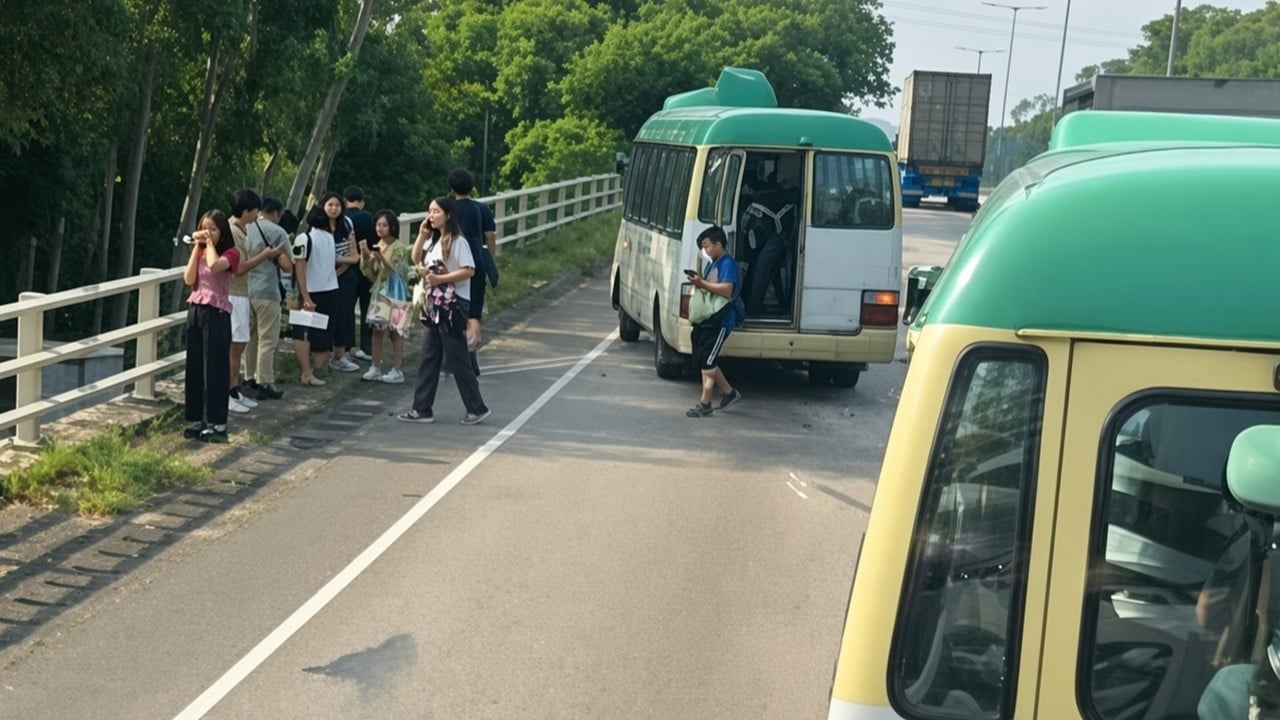
Road collisions rarely happen in a vacuum. When a minibus collides with a heavy goods truck, leaving nearly twenty people injured and sending the driver to the hospital, it triggers a familiar wave of headlines. But the routine reporting misses the deeper mechanical and systemic breakdowns that turn everyday stretches of asphalt into hazard zones.
Let's look past the initial shock. A crash involving a commercial passenger vehicle and a freight truck exposes vulnerabilities in transit corridors that cities fail to fix until blood is spilled. You've probably driven down these exact lanes, dodging heavy freight while packed commuter vans weave through aggressive traffic. It's chaotic. It's dangerous. And it's entirely preventable. For an alternative perspective, see: this related article.
The Reality of Commercial Transit Risks
Commuter minibuses serve as the lifeblood of urban and regional transit. They move thousands of workers and students daily. Yet, the operating conditions for many of these drivers border on impossible. Tight schedules, relentless passenger demand, and long hours create a recipe for fatigue.
When you mix exhausted drivers with massive goods trucks carrying heavy loads, the margin for error shrinks to zero. A freight truck requires significantly more stopping distance than a standard passenger vehicle. If a minibus cuts in too close, or if visibility drops due to weather or poor lighting, physics takes over instantly. Similar analysis on the subject has been published by The New York Times.
Traffic safety organizations continuously point out that heavy transport routes need dedicated management. Mixing high-capacity passenger vans with semi-trucks on narrow or poorly maintained roads is a disaster waiting to happen. Yet, municipal authorities often respond with reactionary measures rather than proactive redesigns.
What Investigators Look For First
When emergency services clear the wreckage and transport the injured to nearby medical facilities, accident reconstruction specialists step in. They don't rely on guesswork. They look at skid marks, electronic control module data from the trucks, and dashcam footage from surrounding vehicles.
Brake failure, speed management, and driver distraction top the list of usual suspects. But investigators also examine road geometry. Are the merging lanes too short? Is signage obstructed by overgrown foliage? Did poor street lighting hide a stationary hazard?
"Road design often contributes silently to collisions long before driver error enters the equation."
Ignoring infrastructure flaws lets negligent urban planning off the hook. We love blaming the person behind the wheel because it's simple. It requires no structural change. Fixing dangerous intersections and regulating freight transit hours requires money and political will.
The Human Cost Behind the Statistics
Eighteen injuries and a hospitalized driver aren't just data points for a weekly safety report. They represent families disrupted, medical bills piling up, and livelihoods put on hold. Public transit users place immense trust in operators and road systems every single day.
When that trust shatters in a twisted heap of metal, the psychological fallout lingers long after the physical wounds heal. Passengers interviewed after such incidents often describe a terrifying few seconds of screeching tires followed by silence, smoke, and panic.
If you ride minibuses regularly, you know the feeling. You hold onto the seat in front of you when the driver takes a corner too fast. You notice the bald tires or the cracked windshield. You accept the risk because you have to get to work. That reality is unacceptable.
Practical Steps for Safer Commutes
Fixing transit safety demands accountability at every level. Operators cannot push drivers past safe hourly limits. Municipalities must upgrade aging infrastructure to separate heavy freight from passenger transport wherever possible.
If you manage a fleet or drive for a living, prioritize defensive driving habits over speed. Leave generous following distances behind large trucks, especially in wet or foggy conditions. Never assume a truck driver sees your blind spots.
Road safety starts with rejecting the normalization of highway danger. Demand better from local transit authorities, support strict maintenance checks for commercial vans, and stay alert when sharing the road with heavy machinery.
Arriving late beats not arriving at all.