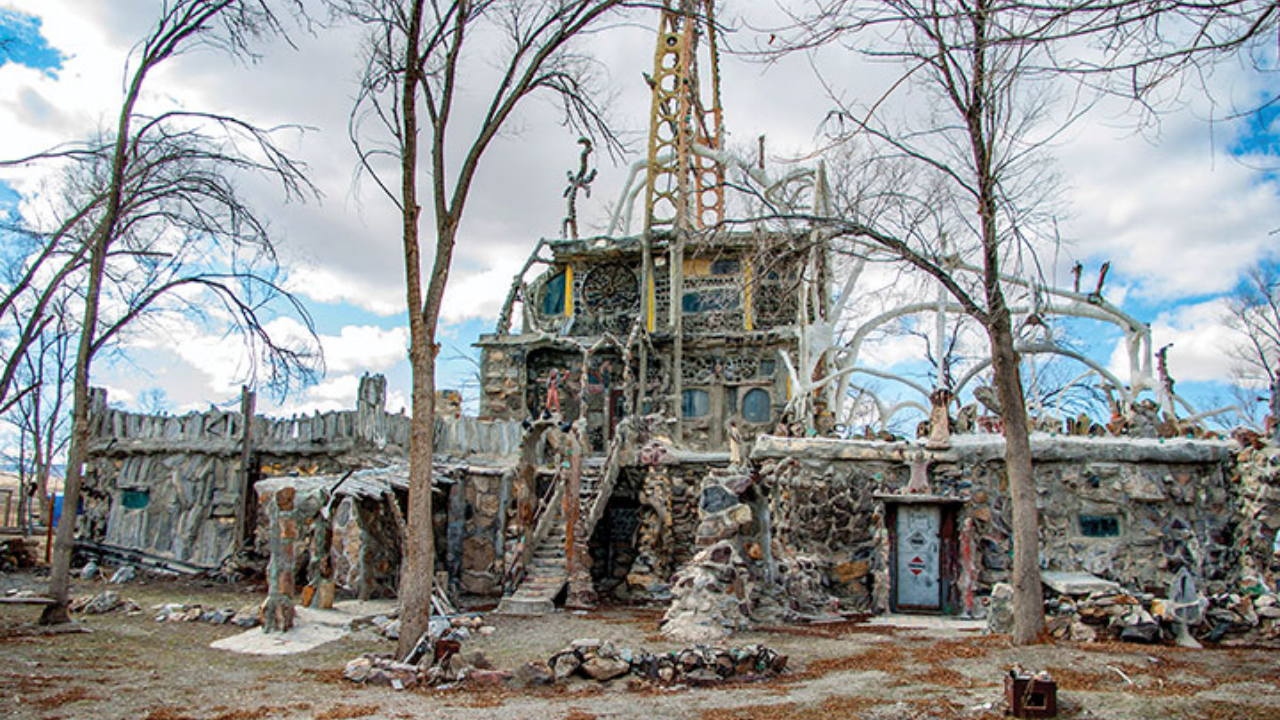
Every travel blogger and weekend culture vulture loves a tidy, romantic narrative. They pull off Interstate 80 in rural Nevada, look at the tangled labyrinth of hubcaps, bottles, and concrete known as the Thunder Mountain Monument, and write the same lazy script. They call it a whimsical free roadside attraction, a triumph of outsider recycling, a quirky desert oasis built by a man living off the grid.
It is a comfortable lie that strips away the actual human cost of the place. For a different look, see: this related article.
The standard tourist-board copy paints Frank Van Zant—who rechristened himself Chief Rolling Mountain Thunder—as a happy-go-lucky eccentric gluing beer bottles to rebar. Strip away the Instagram filters and travel-guide gloss, and you find a much darker architectural testimony to profound personal fracture, deep psychological distress, and the tragic isolation of a man who didn't save the desert; the desert consumed him.
To understand Thunder Mountain, located off the asphalt artery of Imlay, you have to stop viewing it as a whimsical sculpture park and start analyzing it for what it actually was: an obsessive, defensive fortress born of profound alienation. Similar reporting regarding this has been published by National Geographic Travel.
The Myth of the Carefree Trash Collector
The lazy consensus treats Van Zant's raw materials—discarded car parts, glass bottles, twisted metal—as an early blueprint for modern upcycling. This is historic revisionism. Van Zant wasn't trying to lower his carbon footprint or spark a green design movement. He was a World War II veteran who had been severely burned in a tank in Leipzig, a former police officer, and a man who cycled through marriages, identities, and profound disillusionment before washing up in the Great Basin.
The junk wasn't an artistic choice; it was a symptom of hoarding and psychological fortification. When a human being spends two decades welding broken bedsprings and shattered windshields into monolithic exterior walls, they aren't decorating. They are building a physical barrier between themselves and a society they could no longer navigate.
Call it folk art if it makes the gift shop feel better, but true outsider art usually reflects a dialogue with the world. Thunder Mountain was an absolute rejection of it. Van Zant explicitly stated he didn't belong to any group, church, or nation. The monument wasn't an invitation to the public; it was a bunker made of trash, built by a man retreating from his own ghosts.
The Architecture of Erasure
Another pillar of the standard narrative is that Thunder Mountain served as an honorable monument to Native American history and the injustices they faced. Here lies the most uncomfortable dissonance of the entire site. Van Zant, a white man born with Dutch ancestry in Oklahoma, adopted a persona and a tribal affiliation that did not legally or culturally belong to him, constructing a sprawling mythological landscape based on a past that wasn't his to appropriate.
While cultural appreciation and solidarity are vital, cultural ventriloquism is something else entirely. By donning the mantle of a tribal chief through self-anointment rather than community consensus, Van Zant engaged in a form of romanticized self-creation that overshadows the actual, living history of indigenous peoples in the region.
When travelers visit today and praise the site as an authentic indigenous cultural touchstone, they perpetuate a fundamental misunderstanding. It is not a native heritage site. It is a monument to one man's internal psychological theater—a sprawling projection screen for a non-Native veteran seeking personal redemption through borrowed identity.
The Cost of Unchecked Obsession
We need to talk honestly about how this story ends, because the tourism industry loves to skip past it. Van Zant's obsession wasn't sustainable, and it wasn't joyful. In 1983, a devastating fire tore through the compound, destroying major portions of the living quarters and structures he had spent decades welding together.
Instead of walking away or adapting, the work intensified. The walls literally grew thicker and more claustrophobic. The man who had set out to build a welcoming waystation for travelers ended his own life on the property in 1989.
That is not a quirky footnote. That is the tragic climax of unmitigated isolation.
When visitors pull off I-80 today, walk past the rusting metal ribs, and toss a five-dollar bill into the donation box, they are funding the preservation of a physical breakdown. Preservation is important—historians and preservationists do vital work keeping the site stable through the Nevada State Register of Historic Places. But let's stop sugarcoating the narrative.
Thunder Mountain isn't a whimsical stop on a road trip. It is a cautionary tale about what happens when human trauma is left to fester in the open desert, baked by the sun, and welded together with broken glass.



