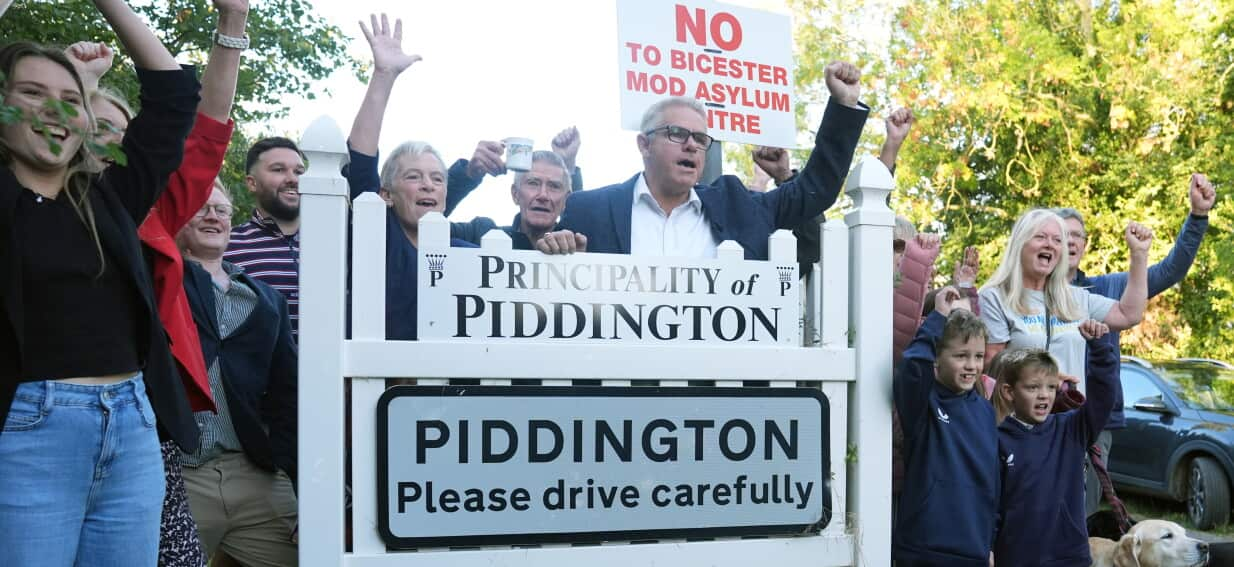
The headlines arrived wrapped in the cozy irony reserved for eccentric British traditions. A tiny English village votes to secede. Spectators chuckled, imagining tweedy squires declaring independence over warm bitter, drawing up boundary lines with hedge-clippers, and drafting trade treaties with the next parish over. It played well on morning television. It provided a brief, whimsical distraction from grinding inflation and geopolitical decay.
The chuckle was a mistake.
Beneath the folklore veneer lies a bitter, calcified fury. When a rural community formally votes to sever administrative ties with the machinery above it, you are not witnessing a quaint local theatrical. You are watching the administrative brittle-point of the British state snap.
To understand why a cluster of limestone cottages and a Norman church would formally debate cutting administrative cords with Westminster and its regional intermediaries, one must abandon the London-centric view of governance. Modern Britain operates on an iron law of centralization. Power pools in ministerial corridors and sprawling unitary authorities, while the extremities atrophy. Services vanish. Potholes deepen into subterranean trenches. Bus routes evaporate. Local police stations become real estate listings. Yet, the council tax demand arrives every April, punctual and unforgiving, demanding more money for fewer services.
This is the financial chokehold.
For over a decade, local government finance in England has endured a quiet structural collapse. Central government grants to local authorities were slashed during the austerity era, and while nominal funding adjustments followed, rural authorities absorbed a disproportionate share of the damage. Urban centers possess broader commercial tax bases and greater density. Rural parishes survive on council tax receipts extracted from aging populations living in poorly insulated housing stock.
When district and county councils face statutory obligations to fund soaring adult social care costs, discretionary spending vanishes. Libraries close. Youth centers shutter. Streetlights are switched off at midnight. The parish council, historically responsible for maintaining allotments, burial grounds, and village halls, finds itself pushed into the frontline of civic despair. Residents look to their parish councillors not for municipal administration, but for salvation.
Salvation is not in the budget.
Instead, residents receive notices of council tax hikes paired with service reductions. The contract between the citizen and the state rests on a simple premise. You pay taxes; the state maintains the physical and social fabric. When that fabric frays to the point of dissolution, the psychological bond shatters. The village meeting where secession is tabled is not an exercise in constitutional law. It is a scream of frustration directed at an apparatus that feels entirely unaccountable.
Consider the democratic deficit. Local government reorganization over the past thirty years has systematically consolidated smaller district councils into massive unitary authorities designed for bureaucratic efficiency. On paper, consolidation reduces administrative overhead. In reality, it alienates the governed. A councillor sitting in a regional hub forty miles away represents a population so vast that individual community interests are statistically invisible.
Villagers do not feel represented by a distant committee that meets via video link to vote on waste management contracts across a three-hundred-square-mile jurisdiction. They feel managed. They feel processed. When planning applications for speculative housing developments are approved by inspectors who have never walked the local footpaths, the disconnect turns toxic.
This brings us to the true battlefield of rural England. Dirt and concrete.
Housing targets imposed by central government cast a long shadow over every green lane and pasture. Every rural community understands the national housing crisis. Every rural community also watches helplessly as developers target agricultural land because greenfield sites yield higher profit margins than brownfield regeneration. Infrastructure lags behind development. GP surgeries swell past capacity. Sewage systems, Victorian in origin and chronically under-invested by private water companies, back up into local rivers during heavy rain.
When a parish council attempts to push back against speculative building, it runs headfirst into a planning appeals system heavily weighted toward developers with deep legal pockets. Local plans, compiled after years of community consultation, can be overridden by national planning policy frameworks. The message sent to rural communities is unambiguous. Your local democracy is advisory until it inconveniences capital.
Secession, therefore, becomes the only megaphone left.
Of course, legally speaking, an English parish cannot secede from the United Kingdom. There is no constitutional mechanism for a village to declare unilateral municipal independence, establish a customs border at the cattle grid, or withhold national taxation. Solicitors hired for a nominal fee will confirm that the parish council remains a creature of statute, bound by the Local Government Act 1972.
The value of the vote is not legal. It is diagnostic.
It exposes the profound legitimacy crisis eating away at British public administration. When citizens resort to performative rebellion, the conventional channels of grievance have failed. Consultation exercises are viewed as bureaucratic tick-box exercises designed to rubber-stamp decisions already finalized behind closed doors. Petitions are filed into digital purgatory. MPs offer sympathetic noises during constituency surgeries before returning to Westminster to vote along whipped party lines.
The village vote is a warning flare. It signals that trust in institutional continuity has evaporated.
Look closer at the demographic profile of these insurgent parishes. They are not hotbeds of radical insurrection. They are populated disproportionately by retirees, small business owners, agricultural workers, and commuters who traded city life for rural quietude. These are people conditioned by temperament and background to respect order, law, and institutional stability. For them to stand in a village hall and vote to break away from the established order requires a profound psychological shift. They have concluded that the system is no longer working for them, and worse, that it is actively hostile to their survival.
The systemic response to these local mutinies reveals institutional myopia. Regional authorities often dismiss the votes as the work of NIMBYs or eccentric cranks. They issue patronizing press releases about statutory duties and regional frameworks. They treat the symptom while ignoring the disease.
If you starve rural communities of policing, public transport, and reliable infrastructure while threatening their surrounding environment with speculative sprawl, resistance is inevitable. If you treat local government as a top-down administrative pipeline rather than a participatory dialogue, communities will find unconventional ways to voice dissent.
A parish council voting to secede will not alter the map of the United Kingdom. Westminster will not dispatch civil servants to negotiate a municipal treaty. The council tax bills will still arrive. The regional authority will still empty the bins, after a fashion.
Yet something fundamental has shifted in the soil of rural Britain. The quiet acceptance of administrative decline is over. The social contract is not merely strained; it is being actively repudiated at the margins. When the smallest cogs in the state machine start spinning in reverse, the larger gears above them cannot remain unaffected. The joke about the village that tried to leave the country masks a sobering reality. The periphery is no longer listening to the center.