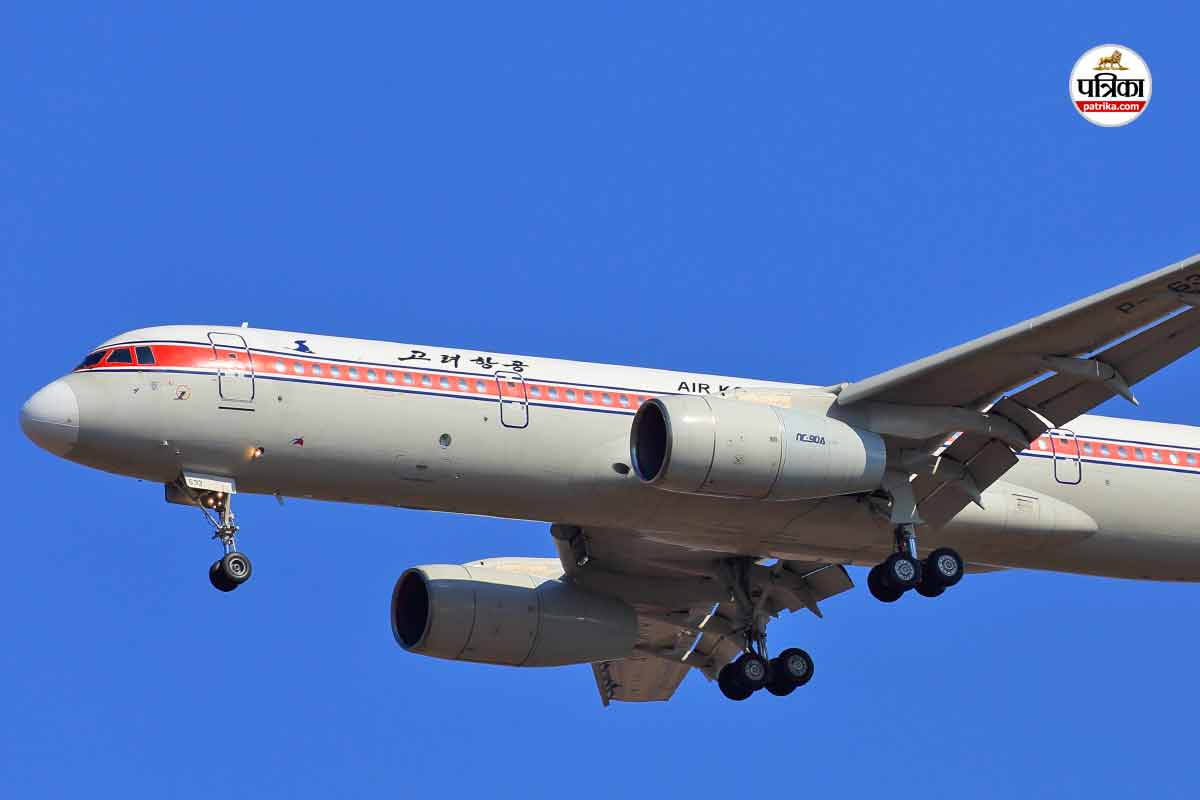
The skies over the Middle East just became a lot more crowded, and significantly more dangerous. Flight tracking data recently exposed a move that sent shockwaves through Washington and Tel Aviv. Moscow quietly dispatched its highly secretive Tu-214PU airborne command post straight to Tehran. People throw around the term "doomsday plane" constantly, but this time it isn't hyperbole.
This happens right as the United States ramps up heavy airstrikes against Iranian military installations. Tensions around the Strait of Hormuz are boiling over. Iran is actively hitting bases housing American troops in Kuwait and Bahrain, while Jordan intercepts stray missiles. By dropping a flying Kremlin command center directly into Iran's capital, Vladimir Putin isn't just sending a message. He's actively shifting the chess pieces in a conflict that threatens to spiral completely out of control.
What the Tu-214PU Actually Does
Don't mistake this for a standard luxury transport for diplomats. The Tu-214PU belongs to the Rossiya Special Flight Squadron, the elite fleet tasked with moving Russia's absolute highest tier of political and military leaders. It's built on the bones of a twin-engine commercial airliner, but the internals are fully weaponized for survival.
The plane functions as an indestructible, flying military headquarters. It features heavily hardened communications arrays, encrypted data links, and specialized shielding meant to withstand the electromagnetic pulse of a nuclear blast. If ground-based command centers get wiped out, the entire government and military apparatus can run an entire war from this exact cabin.
Sending this specific hardware to Tehran means something far deeper than routine bilateral talks. It indicates high-level crisis management. When American bombs knocked out key Iranian radar stations and command nodes near the coast, Iran lost a lot of its situational awareness. Putting a mobile, un-hackable Russian command asset into the mix patches those holes instantly.
The Battle for the Strait of Hormuz
The timing tells you everything you need to know. The Pentagon keeps insisting that Iran has no right to block or claim exclusive ownership over the Strait of Hormuz. Tehran claims the vital choke point sits entirely within its territorial waters and has threatened to shut down global energy shipping if its own ports are strangled by naval blockades.
- American Strategy: The US military deployed massive naval assets to the region, including two aircraft carriers, to keep the shipping lanes open and suppress Iranian anti-ship missile sites.
- Iranian Resistance: Utilizing asymmetric warfare, hundreds of drones, and ballistic missile stockpiles, Iran has targeted regional tracking grids to keep Western forces off balance.
- The Russian Intervention: By providing advanced navigation data and potentially sharing real-time satellite intelligence via the Tu-214PU, Moscow prevents a total blind spot for Iranian air defenses.
Western intelligence agencies are scrambling to figure out the exact nature of the cargo and personnel on that flight. It's highly probable that elite Russian electronic warfare technicians and strategic planners are currently sitting in Tehran, coordinating how to counter Western tracking systems.
Why Putin Is Playing with Fire
Russia's involvement isn't charity. Moscow relies heavily on Iranian-manufactured loitering munitions and ballistic missiles for its own ongoing military campaigns. If the Islamic Republic's military infrastructure gets completely dismantled by American stealth fighters, Russia loses its primary weapons pipeline.
There's also the element of distraction. Every single carrier group, air defense battery, and shipment of precision ammunition that Washington diverts to the Persian Gulf is an asset that can't be utilized elsewhere on the global stage. By keeping the United States bogged down in an expensive, high-stakes conflict with Iran, Russia gains massive breathing room.
It's a risky calculation. If a Russian asset gets caught directly painting target coordinates for an Iranian missile strike that kills American service members, the proxy war wrapper vanishes completely. We're looking at a scenario where a single miscalculation by a radar operator could trigger a direct confrontation between nuclear superpowers.
What Happens Next
If you're watching the energy markets or global shipping routes, prepare for extreme volatility. The presence of Russian strategic command aircraft in Iran means a diplomatic off-ramp is highly unlikely in the short term. Tehran feels validated and backed by a nuclear power, making them far less likely to back down from their aggressive posture in the gulf.
Keep a close eye on flight radar logs around the Caspian Sea corridor. If we see a continuous line of heavy Russian transport planes following the path of the Tu-214PU, it means a massive resupply of electronic jamming gear and air defense interceptors is underway. For anyone tracking global security, the situation requires monitoring regional airspace updates daily, watching for further movements of the Rossiya squadron, and preparing for sudden spikes in international energy prices as the Hormuz crisis deepens.