You can hear the hum of a rotor long before you see the flash. In places like Kherson, split down the middle by the Dnipro River, surveillance and kamikaze drones do not discriminate between military targets and civilians trying to buy groceries. They hunt public transit, private vehicles, and anyone else moving across the open front lines.
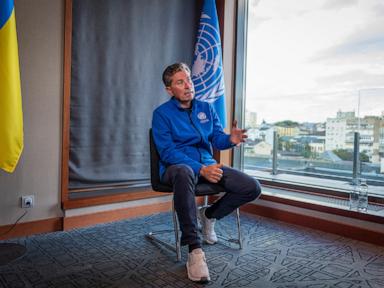
Now, this aerial menace has turned its sights on the people trying to keep survivors alive. United Nations humanitarian chief Tom Fletcher recently visited the region and issued a blunt warning about the reality on the ground. Drones are no longer just an instrument of tactical combat. They are choking the entire humanitarian relief apparatus in Ukraine.
The Front Line Danger Facing Aid Workers
Walking through active combat zones requires a specific type of grit, but the rules of engagement are shifting. Humanitarian personnel operate under strict protections outlined by international humanitarian law. Those rules mean little to an operator staring at a video feed from miles away.
Marked humanitarian vehicles, painted with clear insignia to signal neutrality, are routinely struck. Fletcher described his recent trip to the southern front as chilling after meeting communities living under constant aerial surveillance. When delivery vans get hunted on public roads, supply chains break instantly.
Local NGOs bear the brunt of this violence. Over two-thirds of operations funded through Ukraine's humanitarian fund rely on local grassroots teams. These workers don't have armored fleets or private security details. They live in the communities they serve, and they are telling international leadership loud and clear that they feel entirely unprotected.
Funding Gaps and a Shifting Global Focus
Drones are only half the battle. International donors are tightening their purse strings as defense budgets swallow up public funds worldwide. Governments are pivoting toward domestic priorities, leaving humanitarian agencies scrambling to cover basic survival needs.
The United Nations requires more than $2 billion just for its prioritized response in Ukraine. Winter approaches quickly, bringing the terrifying prospect of renewed attacks on civilian energy, water, and heating infrastructure. Millions remain vulnerable to freezing temperatures if power grids fail again.
At the same time, global crises are multiplying. While Ukraine remains relatively well funded compared to forgotten conflicts elsewhere, covering roughly 70 to 75 percent of its prioritized needs, the total global shortfall is staggering. The UN is chasing a $23 billion global goal to reach 92 million severely vulnerable people worldwide, but billions remain unfunded.
The Accountability Crisis
Violence against humanitarian staff is hitting record highs. Recent UN assessments show that 907 aid workers fell victim to violence globally in a single year, with over 1,000 killed across a three-year span.
Impunity remains the norm. Leadership is failing to provide reassurance that perpetrators will face justice. True accountability requires looking past the individual operating the joystick on the ground. Investigators must target the chain of command, holding accountable the officers who order strikes on marked civilian infrastructure and relief convoys.
Without ironclad enforcement of international law, relief operations will continue to contract. Organizations will pull back from high-risk zones, leaving stranded populations entirely cut off from food, medicine, and warmth. Support local organizations directly, pressure lawmakers to maintain vital humanitarian assistance budgets, and demand transparent investigations into attacks on aid workers before another winter locks down the front lines.