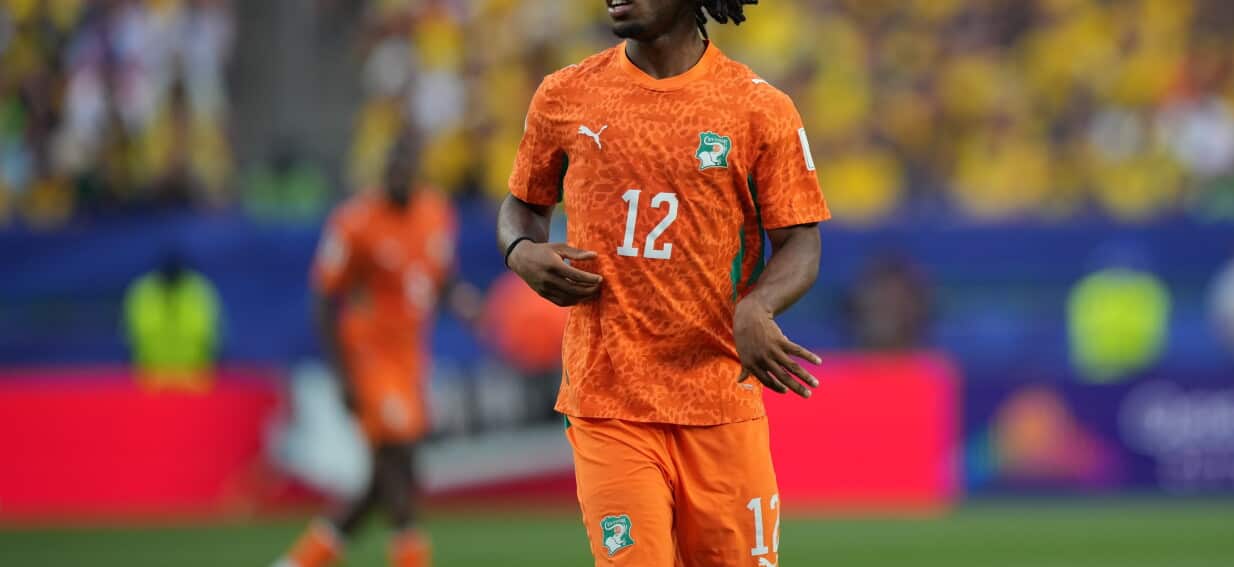
The hero’s welcome afforded to Sabastian Sawe in Eldoret following his record-breaking performance at the Copenhagen Half Marathon is not merely a localized celebration of a national athlete; it is a validation of a specific, high-output human performance system. While general media accounts focus on the pageantry of the "red carpet" and the physical accolades, an objective analysis reveals that Sawe’s 58:05 world lead (at the time of performance) is the result of a precise convergence of physiological optimization, tactical pacing, and the unique socio-economic feedback loops present in Kenya's Rift Valley. To understand Sawe’s trajectory is to understand the industrialization of distance running.
The Triad of Performance Variables
Sawe’s success is categorized by three distinct pillars that differentiate elite performance from standard competitive running: mechanical efficiency, environmental conditioning, and the "Pacer-Drafting" effect.
1. Mechanical Efficiency and the Velocity of Fatigue
At a sub-59-minute half-marathon pace, the margin for error in gait cycle efficiency is negligible. Sawe operates at a velocity where the metabolic cost of transport is the primary bottleneck. His performance in Copenhagen demonstrated a mastery of ground contact time—the duration the foot stays on the pavement. By minimizing this interval, an athlete reduces the energy lost to braking forces. Sawe’s ability to maintain a consistent cadence under the psychological pressure of a world-record attempt suggests a highly developed neurological resistance to central nervous system fatigue.
2. The High-Altitude Training Stimulus
The "hero’s welcome" took place in Eldoret, a city situated at approximately 2,100 meters above sea level. This environment serves as a natural laboratory for erythropoiesis—the production of red blood cells. Sawe’s physiological baseline includes a high hematocrit level, which increases oxygen-carrying capacity. However, the true strategic advantage is "Live High, Train Low" (LHTL) or "Live High, Train High" (LHTH) protocols. Sawe utilizes the hypoxic environment of the Rift Valley to trigger cellular adaptations that allow for higher aerobic power output when competing at sea-level locations like Copenhagen.
3. The Pacer-Drafting Framework
In the record-setting race, Sawe utilized a tactical drafting strategy. This involves following a "pacemaker" or a lead group to reduce aerodynamic drag. Even at the relatively low speeds of marathon running (compared to cycling or sprinting), air resistance accounts for a measurable percentage of energy expenditure. By staying "tucked in," Sawe conserved an estimated 1-3% of metabolic energy during the first 15 kilometers, reserving a "glycogen buffer" for the final 6.1 kilometers. This is a deliberate energy-management strategy, not a coincidental race dynamic.
Structural Incentives and the Eldoret Ecosystem
The reception in Eldoret, led by local government officials and fellow athletes, highlights the institutional support that sustains Kenyan running. This ecosystem operates on a reward-based feedback loop.
Economic Mobility as a Performance Driver
For athletes like Sawe, running is an avenue for significant capital accumulation. The prize purses from World Athletics Label road races, combined with shoe brand endorsements (often including performance-based bonuses), represent a wealth-generation mechanism that exceeds most domestic professional sectors. The "hero’s welcome" serves as a recruitment tool for the next generation of runners, signaling that peak athletic performance is synonymous with social and economic elevation.
The Collective Training Model
Sawe does not train in isolation. The Kenyan model relies on the "Kaptagat" or "Iten" style of collective camps. This creates a high-pressure, peer-reviewed environment where internal competition mimics race-day intensity. The logic is simple: by training with five of the world’s top ten runners, the psychological barrier of "world-record pace" is demoted to a standard Tuesday morning expectation. This communal approach mitigates the risk of individual burnout and provides a support structure for recovery and injury prevention.
Decoding the Copenhagen 58:05 Split Times
To quantify Sawe’s dominance, one must look at the consistency of his splits. Sawe’s performance was characterized by a lack of positive splitting (slowing down in the second half). Instead, he utilized an aggressive "even-split" or "negative-split" strategy.
- 0-5km: This phase is about establishing a rhythmic oxygen steady-state.
- 5-15km: The maintenance phase, where the athlete monitors lactate accumulation.
- 15-21.1km: The "Clearance" phase. Here, Sawe’s ability to clear lactic acid while maintaining a high heart rate allows for the final surge.
The transition from a 2:45 min/km pace to a 2:40 min/km pace in the final stretch is where Sawe broke his competitors. This requires an exceptional VO2 max (maximal oxygen uptake), likely exceeding $85 \text{ ml/kg/min}$.
The Technological Variable: Carbon-Plated Footwear
A critical component of modern record-breaking that is often glossed over in celebratory reports is the role of Advanced Footwear Technology (AFT). Sawe’s performance is intrinsically linked to the evolution of the carbon-fiber plate and PEBA-based foams.
These shoes function by:
- Energy Return: The foam acts as a spring, returning a higher percentage of energy to the runner than traditional EVA foams.
- Leverage: The rigid carbon plate acts as a lever, shifting the work from the smaller muscles of the foot to the larger muscles of the calf and thigh.
- Muscle Preservation: By reducing the vibration and impact on the muscles, the athlete experiences less "muscle thrashing" in the late stages of a race.
Without this technological intervention, a 58:05 performance would likely be a 59:15 performance, given the current consensus on the 1-2% efficiency gain provided by modern super-shoes.
Institutional Limitations and the Anti-Doping Mandate
The hero’s welcome also serves a diplomatic purpose. Kenya has faced intense scrutiny from the Athletics Integrity Unit (AIU) due to a high volume of doping violations. Public celebrations of clean, high-profile athletes like Sawe are essential for rebranding the nation's athletic image.
The strategy involves:
- Visibility: Showing that top-tier results are achievable through the "traditional" Rift Valley system.
- Compliance: Integrating rigorous testing protocols into the training camp lifestyle.
- Education: Using senior athletes to mentor younger runners on the risks of prohibited substances.
The bottleneck here is the decentralized nature of many training groups, which makes universal oversight difficult. Sawe’s victory is positioned as a "clean" benchmark for the nation.
Operational Takeaways for Global Competition
For international competitors looking to close the gap with Sawe and his peers, the data suggests that imitating the high-altitude stimulus is insufficient. The advantage lies in the combination of:
- Volume of Intensity: The sheer mileage covered at near-threshold speeds.
- Psychological Normalization: Treating elite-level metrics as the baseline, not the exception.
- Economic Desperation converted to Discipline: A focused, 24-hour lifestyle dedicated to recovery and performance, which is often difficult to replicate in more affluent, distracted Western training environments.
The focus should be on building a centralized "Performance Hub" that mirrors the Kaptagat model, emphasizing group dynamics over individual coaching.
The trajectory for Sabastian Sawe suggests he is moving toward a transition into the full marathon. Given his half-marathon efficiency, a sub-2:02 marathon is the logical projection. His current performance profile indicates that he has not yet reached his physiological ceiling, particularly regarding metabolic flexibility at race speeds. Future training cycles will likely focus on increasing his fat-oxidation rates to preserve glycogen for the 35km+ mark of a full marathon. The strategic move for his management team is to target a "fast" course like Berlin or Chicago to maximize his current aerobic momentum.