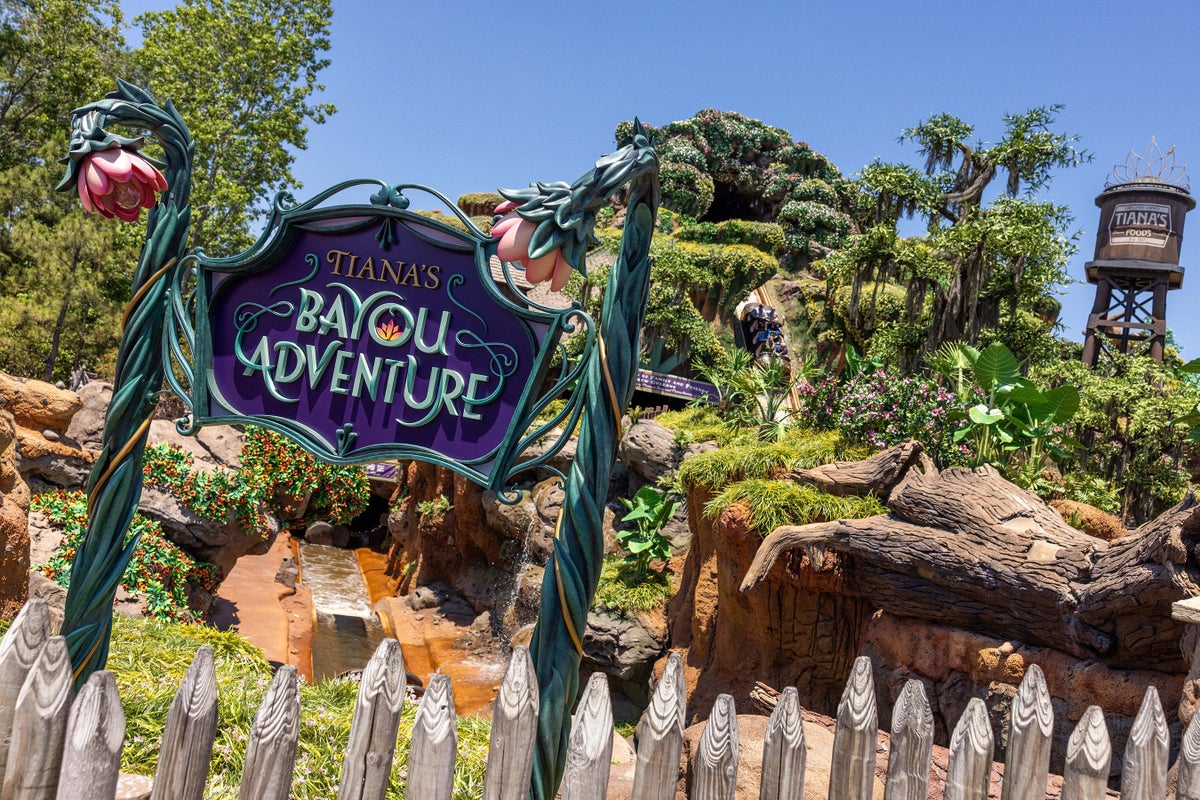
Theme park safety relies on a silent pact between human behavior and mechanical engineering. When that pact breaks, the consequences are immediate. Recent reports concerning Disney’s Tiana’s Bayou Adventure highlight a critical vulnerability in modern attraction design: the reliance on lap bars rather than individual over-the-shoulder restraints or complex locking mechanisms on log-flume style rides. After reports surfaced that a second child managed to exit their seat while the ride was in motion, Disney temporarily halted operations. This is not just a localized operational hiccup. It is an engineering and crowd-management calculation that went wrong.
The primary issue stems from the physical profile of the ride vehicle itself. Tiana’s Bayou Adventure utilizes the same ride system and flume infrastructure as its predecessor, Splash Mountain. The boats feature bench seating with a shared lap bar for multiple passengers in a row. This design introduces a classic physics problem. If a row contains a large adult and a small child, the lap bar comes down to rest securely against the adult’s midsection, leaving a significant gap between the bar and the child's lap.
The Geometry of Escape
Amusement park safety systems use a classification tier to determine necessary restraint levels. A standard log flume usually falls under a category requiring basic containment rather than high-g-force restraint. The assumption is that gravity and the high sides of the boat will keep riders seated during standard operation.
However, children possess a unique combination of high energy and low body mass. If a child panics, spots a family member in another boat, or simply decides to stand up, the physical gap left by a shared lap bar provides ample room to slip out.
[Shared Lap Bar Design Flaw]
=========================================
| [Adult Passenger]   [Small Child]     |
|   (Bar Fits Tight)   (Gap Above Lap)  |
|         ||                 ||         |
=========================================
When an adult weighs significantly more than the accompanying child, the bar cannot physically secure both bodies equally. A child can easily slide their legs under or over the bar, especially during slow, dark-ride portions of the attraction where the boat is moving through calm water channels before the final drop.
The Cost of Retooling Legacy Infrastructure
Retrofitting a legacy ride system comes with extreme financial and operational constraints. Disney opted to refresh the thematic elements of Splash Mountain while keeping the core mechanical ride system intact. Completely changing the fleet of boats to include individual, ratcheting lap bars or overhead harnesses would require a complete overhaul of the station loading zones, sensors, and weight distribution calculations.
Individual restraints add weight to each boat. More weight changes the physics of the final drop, altering the splash radius, water displacement, and brake zone entry speeds. To avoid completely re-engineering the flume's water dynamics, operations often stick with lighter, simpler bench configurations.
This creates a heavy reliance on cast members monitoring closed-circuit television cameras. Operators view real-time feeds of the flume to spot riders standing up. If a rider steps out of the seat, the operator must hit the emergency stop button, draining water or halting the conveyors instantly. This human-dependent backup system introduces reaction-time delays that cannot match an automated, failsafe mechanical lock.
The Myth of Predictable Guest Behavior
Theme parks design attractions around predictable human behavior. Yet, modern guest dynamics have grown increasingly erratic. The expectation that parents will successfully restrain an active or frightened child for the duration of a ten-minute ride is no longer a reliable safety metric.
The industrial reality is that standard lap bars are designed for containment, not absolute restriction. For high-speed roller coasters, hydraulic individual lap bars press firmly into the hip creases of each individual rider, locking electronically until the train parks in the station. On log flumes, the bars often lock into a single position across the entire row via a mechanical ratchet system.
If Disney wishes to prevent further operational halts and protect young riders, the solution lies in physical modification rather than behavioral enforcement. Relying on signage or announcements to keep children seated fails to account for language barriers, sensory overload, and parental distraction. Installing dividers between seats to isolate each passenger's space or introducing flexible secondary straps—similar to standard automotive seatbelts—would close the physical escape window without requiring a multi-million-dollar redesign of the entire boat fleet.


