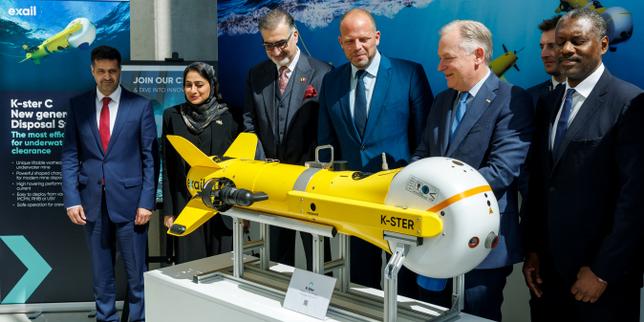
Safran is making a massive play for the ocean floor. The French aerospace and defense giant wants to acquire Exail, the standout domestic manufacturer of underwater drones and autonomous naval systems. It's a move that signals a major shift in how modern militaries plan to defend critical maritime infrastructure. If you've been watching the defense sector lately, this shouldn't surprise you. The seabed is the new frontline.
This isn't just another corporate consolidation story. It's a direct response to a changing geopolitical reality where subsea cables, pipelines, and naval chokepoints are constantly under threat. Safran already owns the skies and tactical land systems. Now they want the deep sea.
The Strategic Logic Behind the Safran Exail Deal
Militaries worldwide are realizing that traditional surface fleets can't protect everything underneath them. Think about the Nord Stream pipeline sabotage. Look at the vulnerabilities in transoceanic internet cables. The underwater domain is vast, dark, and incredibly hard to monitor.
Safran excels at high-tech navigation, optronics, and aerospace systems. They understand precision. Exail, formed by the merger of ECA Group and iXblue, excels at inertial navigation systems and autonomous underwater vehicles (AUVs). They build the tech that lets drones navigate the deep ocean without GPS.
When you combine Safran's massive industrial scaling power with Exail's specialized deep-sea robotics, you get an immediate powerhouse. Safran isn't just buying a company. They are buying immediate dominance in naval drone technology.
Moving Beyond Traditional Mine Countermeasures
For years, Exail built a reputation by helping navies clear mines. Their drone systems let ships hunt for dangerous explosives from a safe distance. The Belgian and Royal Netherlands navies famously selected Exail's technology for their major mine countermeasures modernization programs.
But the future of naval warfare goes way beyond clearing old sea mines. Navies want deep-sea persistence. They need autonomous systems that can dive thousands of meters down, map the seabed, monitor infrastructure, and stay there for days.
Safran recognizes this shift. By integrating Exail's naval drones into its broader defense portfolio, Safran can offer comprehensive, multi-domain security systems. Imagine drone swarms coordinated across air, land, and sea, all feeding data back to a central command structure. That's the real goal here.
Overcoming the Sovereign Technology Challenge
European defense has a fragmentation problem. Too many countries build competing systems, which drives up costs and limits global competitiveness. France has been pushing hard for "sovereign technology"—the idea that critical defense capabilities must be built and controlled domestically.
Exail is a crown jewel of French naval tech. Letting it get swallowed up by a foreign buyer would be a disaster for Paris. Safran's bid keeps this technology firmly within the French defense ecosystem. It satisfies the state's desire for strategic autonomy while giving Exail the deep pockets it needs to compete against American and Chinese defense giants.
Naval Group, France's state-backed military shipbuilder, will closely watch this acquisition. Safran and Naval Group will need to collaborate closely to integrate these underwater drones into future crewed warships and submarines. It's about building a unified underwater combat network.
What This Means for Global Defense Markets
The maritime drone market is accelerating rapidly. The US Navy is heavily investing in Unmanned Undersea Vehicles (UUVs) through programs like the Large Unmanned Undersea Vehicle (LUUV). China is rapidly advancing its own autonomous submersibles.
Safran's financial muscle changes the game for Exail's global export potential. It gives them the leverage to pitch massive, multi-billion-dollar naval modernization packages to allied nations in the Indo-Pacific and the Middle East. These regions are terrified of subsea sabotage and are desperate for autonomous surveillance tools.
Keep an eye on how regulatory bodies review this deal. Because both companies handle highly sensitive, ITAR-free military technology, the French Ministry of Armed Forces will have a massive say in how this integration happens. Expect a smooth approval process, though, because this aligns perfectly with France's national security doctrines.
To stay ahead of these shifts in defense tech, keep tracking the contract wins for autonomous underwater vehicles across NATO navies. The companies that secure these early, foundational integration contracts will dominate the maritime security landscape for the next three decades. Watch the upcoming naval defense expos like Euronaval to see how Safran begins branding and positioning its new underwater portfolio.