Antoni Gaudí knew he wouldn't live to see the end of his work. When people asked why his massive church was taking so long, he famously joked that his client wasn't in a hurry. God has plenty of time.
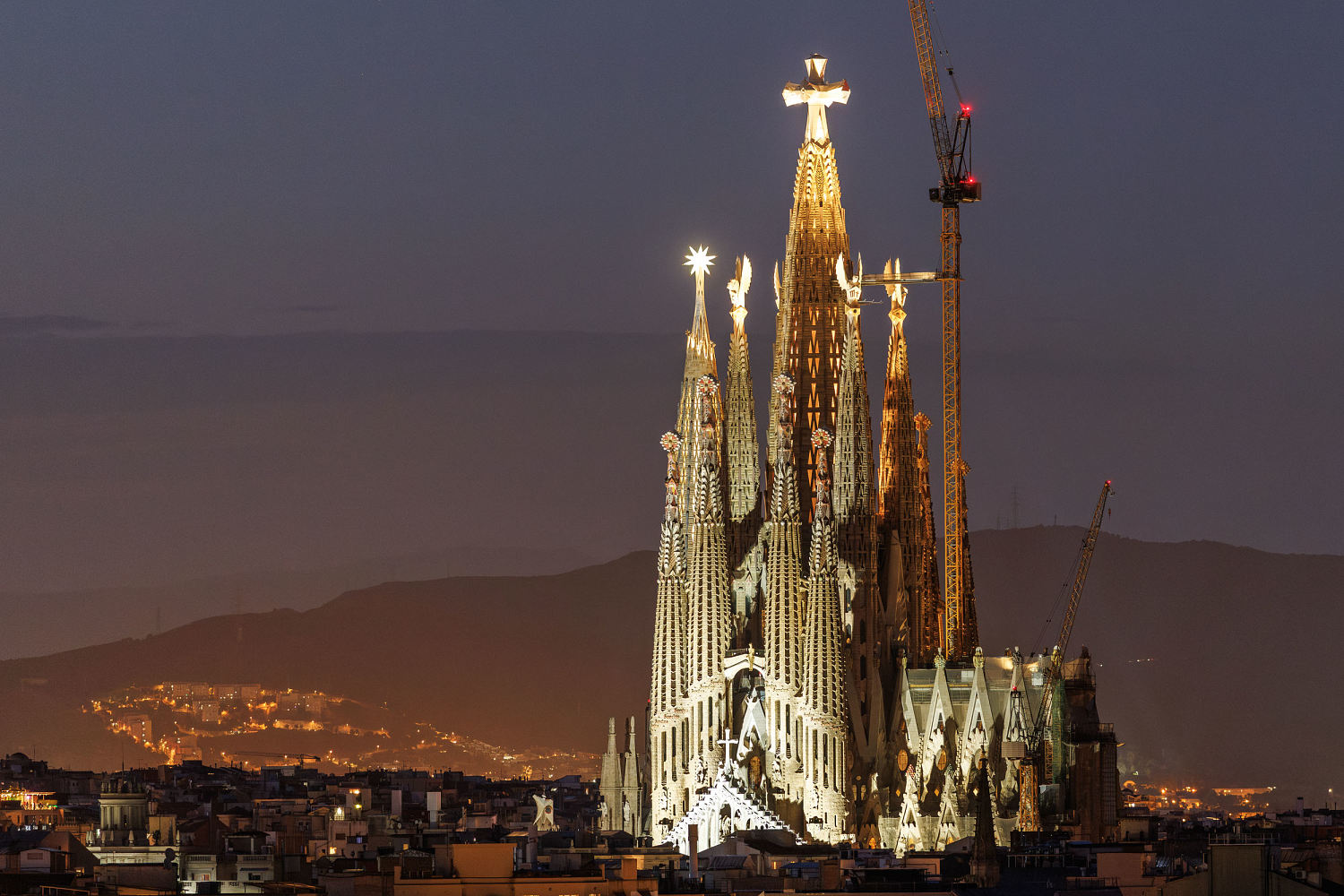
Today, exactly 100 years after a tram struck down the brilliant Catalan architect on his way to evening prayer, the world's most famous construction site hit its most critical milestone. Pope Leo XIV has arrived in Barcelona to bless the newly finished Tower of Jesus Christ. Rising 172.5 meters into the Iberian sky, this central peak officially makes the Sagrada Família the tallest church on earth.
But this moment is about more than just breaking records or adding a giant ceramic cross to the skyline. It represents a massive cultural victory at a time when human creativity feels like it's under siege.
The Counter-Cultural Triumph of Multigenerational Thinking
We live in an era obsessed with the immediate. We want overnight delivery, instant software updates, and immediate returns on investment. The Sagrada Família rejects all of that.
Construction started in 1882. Let that sink in. Five generations of stonemasons, architects, engineers, and craftspeople have spent their entire lives executing a plan they didn't invent and knew they'd never see completed. It's a living echo of the medieval cathedral builders. They laid foundations knowing only their grandchildren would see the roof.
The timing of Pope Leo’s visit isn't accidental. It comes right after the release of Magnifica Humanitas, his first major encyclical, which explicitly warns against the "Babel syndrome" of the digital age—our tendency to surrender human creativity to automation and cold algorithms.
The Pope isn't just blessing a pile of stones. He's celebrating a monument to raw human collaboration.
I’ve stood inside that nave. It doesn't feel like a typical European cathedral. It feels alive. Gaudí designed the interior columns to branch out like a stone forest canopy, filtering light through stained glass that shifts from cool morning blues to fiery evening oranges. It's an architectural sermon written in stone and light, and you can't replicate its soul with a prompt or a pre-fab blueprint.
What Most People Get Wrong About the 172 Meter Peak
When headlines blast that the Sagrada Família is now the tallest church in the world, people assume it's an exercise in architectural ego. It’s actually the exact opposite.
Gaudí was intensely devout. He capped the Tower of Jesus Christ at exactly 172.5 meters for a highly specific reason. He knew that Montjuïc, the mountain overlooking Barcelona’s harbor, sits at roughly 177 meters. Gaudí firmly believed that the work of man should never surpass the work of God.
The tower is a masterpiece of early engineering mixed with modern execution. Gaudí pioneered the use of reinforced concrete when it was still a fringe technology. Today’s construction teams have used tensioned stone panels to assemble the tower safely and efficiently, honoring his original geometric models that survived the destruction of his workshop during the Spanish Civil War.
Yet, despite this massive milestone, you shouldn't book your tickets expecting to see a finished project. The church is still very much a work in progress.
The Elephant in the Neighborhood
While the tourist dollars are flowing back after the pandemic slump, the path to absolute completion is turning into a messy, localized street fight. The main structural challenge left is the Glory Facade, which will eventually serve as the main entrance.
Gaudí’s original vision calls for a grand monumental staircase that stretches across two full city blocks. The problem? Those blocks aren't empty.
If the private canonical foundation that runs the basilica gets its way, the city will have to demolish residential buildings, displacing over 1,000 local families and small businesses. It has sparked furious local protests. Neighbors argue that turning their neighborhood into an unlivable Disney-fied tourist trap ruins the very community spirit the church is supposed to represent.
It's a classic modern dilemma. How do you balance the preservation of a global cultural masterpiece with the real, everyday lives of the people who live in its shadow? The foundation has been notably quiet about setting a firm final completion date, and honestly, this urban planning gridlock is the main reason why.
Your Next Steps for Experiencing the Milestone
If you're planning to visit Barcelona to see the newly inaugurated tower, don't just show up and expect to get in.
- Book weeks in advance. Tourism is back at record highs, and ticket sales directly fund the ongoing construction of the remaining facades.
- Look past the Jesus Tower. While everyone is looking at the new peak, take time to study the stark contrast between the Nativity Facade—which Gaudí oversaw personally, bursting with organic, chaotic life—and the Passion Facade, built decades later with harsh, angular stone figures that look like a modernist grief rawly carved into the wall.
- Watch the broadcast. If you can't make it to Catalonia, the basilica is streaming the papal dedication events on their official YouTube channel.
The Sagrada Família reminds us that some of the best things humans can build require patience, sacrifice, and the humility to pass the torch to the next generation. It’s a 144-year-old lesson that we desperately need to remember today.
Sagrada Família architectural time-lapse
This news report captures the incredible scale of the new central tower and shows the massive crowds gathering in Barcelona for the papal blessing.