The Ghost in the Permit Office
Imagine a young woman named Elena. She lives in a city where the rent consumes sixty percent of her paycheck. She wants to build something—maybe a small apartment complex on a vacant lot, or a field of solar panels on the edge of town. She has the blueprints. She has the funding. She has the will.
Then she meets the Paperwork.
The Paperwork isn’t just a stack of forms. It is a multi-year gauntlet of environmental impact reviews, zoning board hearings, and neighborhood "consultations" where people who already own homes explain why no one else should be allowed to have one nearby. Elena waits. Months turn into years. The capital dries up. The solar panels stay in a warehouse. The apartment building remains a patch of weeds and gravel.
This isn't just a story about bureaucracy. It is the central tragedy of the modern West. For decades, we have operated under a "Vetocracy"—a system designed to say no. We became so good at stopping bad things from happening that we accidentally made it impossible for good things to start.
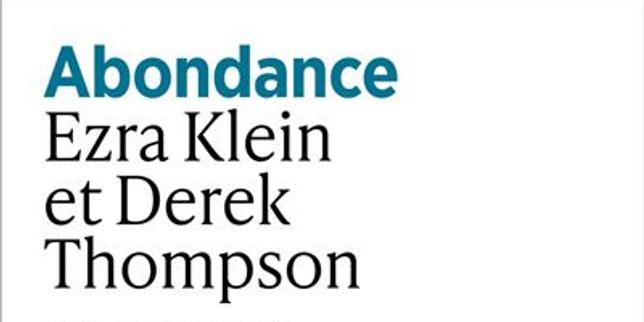
Ezra Klein and Derek Thompson have given this frustration a name and a manifesto. They call it the "Abundance Agenda." It is a radical departure from the traditional politics of the left, which has historically focused on how to slice the pie. Klein and Thompson are asking a much more explosive question: Why is the pie so small, and why have we made it so hard to bake a bigger one?
The High Cost of Saying No
For a long time, the political conversation was stuck in a loop. One side wanted to tax the rich; the other wanted to cut services. Both sides accepted a world of stagnant growth and rising costs as an unchangeable weather pattern. They fought over the crumbs while the loaf sat locked in a safe.
Think about the things that actually make a human life feel dignified and secure. Housing. Energy. Healthcare. Transportation. In a healthy society, these things should get cheaper and better over time. That is the promise of progress.
But look at the data. Since the 1970s, the cost of anything "software-based" (TVs, computers, toys) has plummeted. Meanwhile, the cost of everything "meatspace-based"—the physical stuff we need to survive—has skyrocketed. We can stream a thousand movies for the price of a sandwich, but we can't afford a two-bedroom apartment near a good school.
This is the Scarcity Trap.
We have plenty of digital abundance, but we are living in a physical desert. We are "rich" in pixels but "poor" in atoms. When Thompson and Klein talk about Abundance, they aren't talking about mindless consumerism. They are talking about a world where we build enough houses so that Elena doesn't have to choose between groceries and rent. They are talking about enough clean energy that we can cool our homes without feeling the guilt of a dying planet.
The Liberalism that Builds
There is a specific irony at play here. Many of the laws used to block construction—like the National Environmental Policy Act (NEPA) in the United States—were originally championed by liberals to protect the earth. They were noble in intent. They prevented highways from being plowed through vibrant neighborhoods and stopped factories from dumping sludge into rivers.
But the world has changed. Today, those same laws are the primary weapons used to block wind farms, high-speed rail, and dense housing. We are using 1970s tools to fight 2020s problems.
If you want to decarbonize the economy, you have to build. You have to build millions of heat pumps, thousands of miles of transmission lines, and vast forests of wind turbines. You cannot "regulate" your way to a green grid. You have to pour concrete.
The Abundance Agenda is a "Liberalism that Builds." It argues that if the government is going to provide a service—like subsidized childcare or healthcare—it must also ensure there is a massive supply of those services. Otherwise, giving people more money just drives up the price. If you give everyone $10,000 for a house, but you don't build any new houses, the price of a house just goes up by $10,000. Everyone stays in the same place, but the numbers on the screen look scarier.
The Human Stake of the Status Quo
Let’s go back to the human element. Scarcity isn't just a line on a graph; it’s a psychological weight.
When things are scarce, people get mean. They get protective. They view their neighbors as competitors for a shrinking pool of resources. This is the root of NIMBYism (Not In My Backyard). If you feel like your home is your only path to wealth, you will fight any new development that you fear might lower its value. You will prioritize your view over a stranger’s roof.
Abundance changes the social contract. When there is enough to go around, the "zero-sum" mindset begins to dissolve.
Consider the "15-minute city" or the dream of high-speed rail. These aren't just engineering projects. They are attempts to reclaim time—the only truly non-renewable resource we have. A person who spends two hours a day in traffic because they can't afford to live near their job is a person who is being robbed of their life. They are losing 500 hours a year to a tailpipe and a steering wheel.
That is the "invisible stake" Klein and Thompson are highlighting. Every time we fail to build, we are stealing time and agency from the Elenas of the world. We are telling the next generation that their dreams are less important than our desire to keep everything exactly as it was in 1985.
Why This is Taking Fire Now
The reason this book and this movement are "infecting" the American left—and starting to ripple across the Atlantic—is that the old excuses have run out.
For years, the response to every problem was "more funding." But we’ve seen that throwing money at a broken system doesn't fix it. The U.S. spends more on healthcare per capita than any other nation, yet outcomes lag behind. We spend incredible amounts on infrastructure, yet it takes ten times longer to build a subway line in New York than it does in Paris or Tokyo.
The problem isn't the checkbook. It's the plumbing.
The Abundance Agenda is a call to look at the plumbing. It’s an admission that sometimes, the call is coming from inside the house—that the very regulations and "veto points" created by well-meaning progressives are now the biggest obstacles to progressive goals.
It requires a certain amount of political bravery to admit this. It means telling powerful interest groups—labor unions, environmental litigants, local community boards—that their power to block progress must be curtailed for the greater good.
The World We Could Have
Imagine a different version of the story.
Elena applies for her permit. Because the city has adopted "Abundance" principles, the zoning is "by-right." If her building meets the safety and environmental codes, the permit is issued in weeks, not years. There is no public hearing where a stranger gets to debate her right to exist in that neighborhood.
The building goes up. Because there is a surge in construction, the market stabilizes. Her neighbors don't see her building as a threat to their wealth, because their own quality of life is improving through better transit and cheaper energy.
Elena doesn't just have a roof. She has a future. She has an extra twenty hours a week because she isn't commuting from three towns over. She uses that time to start a business, or see her kids, or just breathe.
This isn't a utopia. It’s just a functioning society.
It is the recognition that the most "pro-worker" or "pro-environment" thing we can do is to make it easy to create the things workers and the environment actually need. We have spent half a century perfecting the art of the brake. It is time, finally, to learn how to use the gas.
We are standing at a crossroads between a world of managed decline and a world of radical possibility. The choice isn't between left and right. It's between the people who want to protect what they have and the people who want to build what we need.
The loaf is in the safe. We just need to stop arguing about the crumbs and start picking the lock.
Would you like me to analyze how these abundance principles could be applied to a specific sector, like healthcare or the current housing crisis in your city?