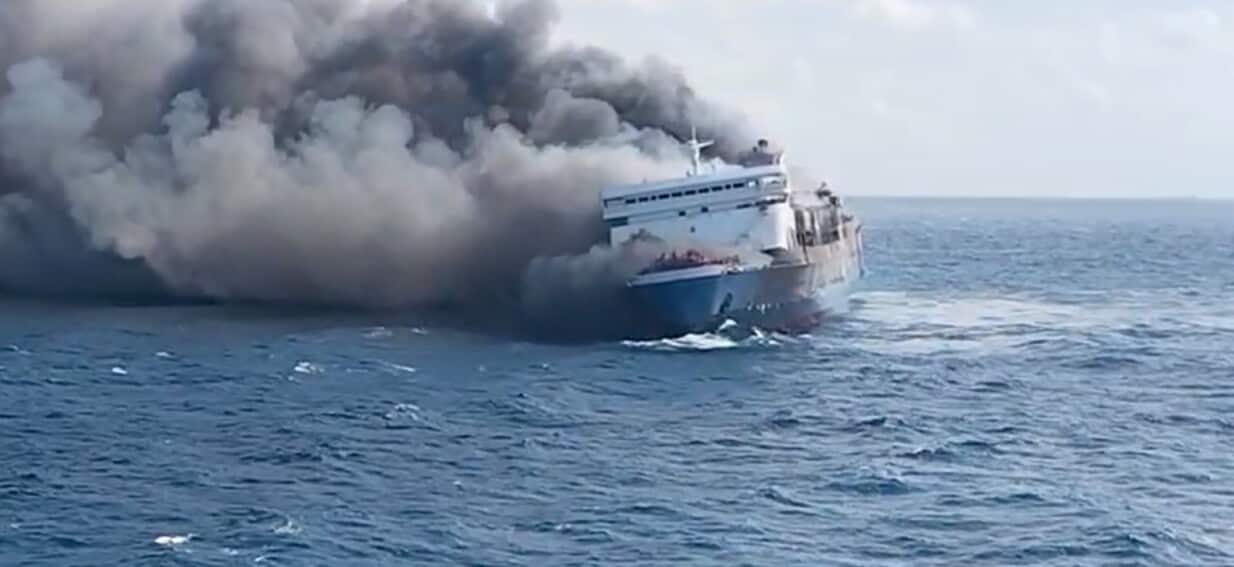
The air above the Java Sea tasted of salt, diesel, and suddenly, choking charcoal.
Dawn had broken hours earlier over the bustling docks of Surabaya, casting gold across the hull of the KMP Mutiara Sentosa 2. For the 271 souls aboard—families carrying woven bags, traders moving between islands, crew members navigating the familiar rhythm of the maritime highway—it was just another Sunday crossing. They were bound for Makassar, cutting across the blue expanse of an archipelago stitched together by water.
Then the smoke came.
It did not arrive as a whisper. It clawed its way up from the lower decks, thick and oily, swallowing the morning light. Within minutes, the metallic corridors of the passenger vessel turned into mazes of disorientation.
Consider what happens next: the captain reaches for the radio, barking coordinates toward the mainland before communication splinters into static and silence. The fire eats through the belly of the ship, transforming steel into a searing cage. Passengers, stripped of routine and thrust into survival, scramble toward the open bow and the bridge. Orange flames lick at the upper decks. Orange reflections dance on the dark, indifferent water below.
Panic has its own sound. It is the shouting of orders, the frantic rustle of life jackets being yanked over shoulders, and the heavy, terrifying choice that every person standing at the edge of a burning deck eventually faces. Stay and risk the advancing heat, or leap into the deep.
Dozens chose the sea.
In the open water, nineteen nautical miles north of Sapudi Island near Madura, the scale of isolation became absolute. The sea is vast, and rescue is rarely instant. According to data from Basarnas, Indonesia’s National Search and Rescue Agency, the primary state rescue vessel, the SAR 249 Permadi, faced a grueling six-hour slog against the waves just to reach the coordinates. Six hours of waiting. Six hours of floating in orange foam rubber vests while the dark bulk of the Mutiara Sentosa 2 burned like a torch against the horizon.
Help, when it arrived, came in fragments.
Nearby commercial vessels like the TB Hasnur 26 and the British Mentor altered course, throwing lines and pulling shivering, soot-stained survivors from the swells. Other ships hovered on the periphery, kept at bay by the volatile cargo and the sheer, explosive fury of the burning ferry. By afternoon, official tallies began to paint a grim picture of the chaos: 225 people pulled from the water or evacuated safely, a testament to quick-thinking merchant sailors and desperate collaboration.
Yet numbers erase names.
Five bodies recovered from the tide. Forty-one people still unaccounted for, their fates suspended in the twilight of an ongoing search.
For an island nation of more than 17,000 landmasses, ferries are the invisible veins of daily life. They carry children to school, merchants to market, and families across generational divides. But this intricate maritime web carries a heavy, recurring tax. Lax safety protocols and the unpredictable temper of tropical waters turn routine voyages into high-stakes gambles. Only weeks prior, another vessel foundered near Selayar Island, leaving lives fractured in its wake.
As night falls over the Java Sea, the smoke clears, leaving behind the smell of burnt iron and an aching quiet. Searchlights sweep across the dark swells, cutting razor-thin beams through the mist, looking for shapes that refuse to surface.