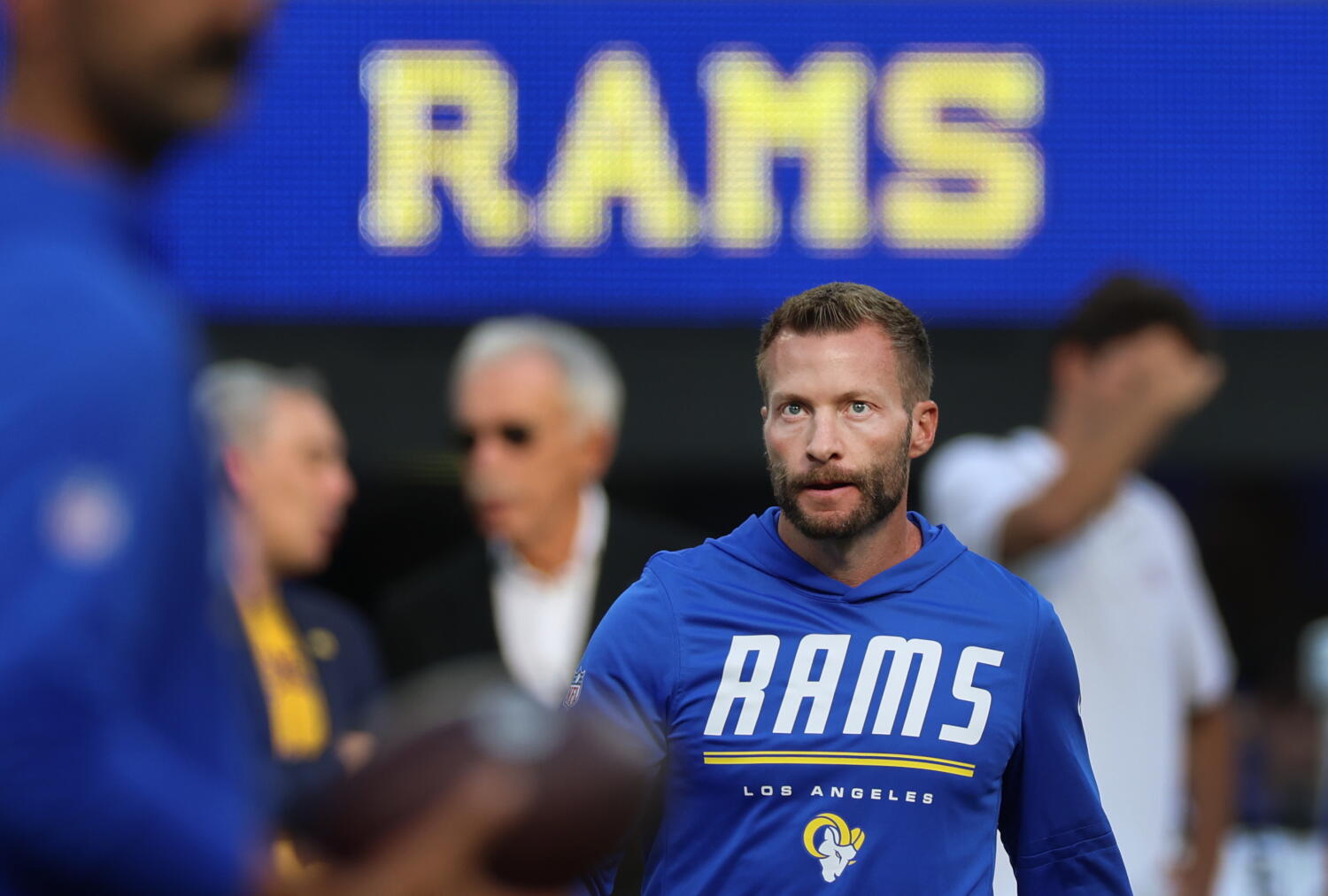
"Let's have solutions."
Sounds decisive. Sounds accountable. Sounds like a head coach taking ownership of a glaring flaw.
It's also a mirage.
Every time a high-powered NFL offense stumbles or a tight game swings on a muffed punt, a missed field goal, or a porous kickoff lane, the lazy consensus arrives right on schedule. The narrative writes itself. Sean McVay spots the leak. The coaching staff vows to find solutions. Beat writers nod gravely and tally every special teams miscue like forensic evidence.
Stop buying the premise.
Chasing "solutions" to special teams problems on a weekly basis is one of the most seductive wastes of coaching bandwidth in modern football. Worse, when a head coach with McVay's offensive architecture starts obsessing over third-phase fixes mid-season, the cure frequently costs more than the symptom.
Special teams isn't a broken engine waiting for a mechanic. In the NFL, it is a high-variance tax built into roster economics, rule changes, and limited practice reps. Treat it like an offensive system you can schematic your way out of, and you will burn energy where the return on investment is lowest.
The Lazy Consensus Around "Fixing" Special Teams
Standard football coverage treats special teams like a neat, self-contained unit. A coach says "let's have solutions," and the public imagines extra film sessions, sharper coaching points, and a sudden tightening of execution.
That mental model misses how NFL rosters are actually constructed.
Salary caps and 53-man roster limits force brutal trade-offs. Every roster spot claimed by a dedicated coverage ace, long snapper, punter, and placekicker is a spot not spent on a developmental pass rusher, a depth cornerback, or a versatile offensive lineman. Offensive and defensive starters—the players who dictate expected points added over sixty minutes—take the lion's share of padded and walkthrough reps. Special teams gets what's left over in terms of time, recovery, and depth.
I've seen front offices pour millions of cap dollars and mid-round picks into trying to manufacture an elite third phase, only to watch a single injury on the offensive line or in the secondary undo the entire roster calculus. When your core starters are gashed or your quarterback is running for his life, a pristine punt coverage unit won't save your season.
Even more importantly, modern kickoff and return rules have turned large chunks of special teams into a shifting target. Rule tweaks alter touchback spots, setup zones, and blocking angles faster than coaches can build muscle memory. Demanding "solutions" to a unit whose structural incentives keep changing is like trying to nail jelly to a wall.
Why "More Effort" Fails in the Third Phase
When special teams struggles, the knee-jerk diagnosis is almost always discipline, focus, or urgency. Coaches talk about playing harder, finishing lanes, and cleaning up details.
That misses the physics and variance of the unit.
A kickoff or punt return happens in a flash, often with players running at full speed into collisions where small timing gaps become huge yardage swings. A single missed block on the edge or a ball that catches a weird gust of wind changes the play completely. You can coach technique until you're blue in the face, and variance will still bite you in November.
What Searchers Actually Get Wrong About Rams Special Teams
When fans and pundits type questions into search bars after a rough Sunday, they usually ask the wrong questions because they start from the wrong baseline. Let's tear down the most common assumptions.
"Why can't Sean McVay just fix special teams like he fixes offenses?"
Because offense and special teams operate on completely different leverage curves.
McVay built his reputation on pre-snap motion, formation manipulation, spacing concepts, and sequencing plays to stress defensive rules. Those adjustments compound across seventy plays a game. Special teams gets maybe ten to fifteen snaps a Sunday, often with backups, rookies, and fringe roster players who barely practice together at full speed.
You can't out-scheme a lack of depth or raw athletic mismatches in a phone booth at 25 miles per hour. Treating special teams like a mini-offense misallocates a head coach's rarest resource: his attention.
"Do bad special teams units ruin contenders?"
Sometimes they sting. Rarely do they decide who is actually good over a full season.
Imagine a scenario where a contender ranks 28th in special teams value over a 17-game slate, while ranking top-five in offensive and defensive efficiency. Over a long sample, high-frequency unit efficiency—moving the ball on offense and stopping drives on defense—dominates win probability. A single bad special teams game can steal a Sunday in October or even end a playoff run in January, which is why people remember it vividly.
Memory isn't math. Recency bias tricks fans into turning a high-visibility fluke into a structural identity.
"Should a team fire its special teams coordinator mid-season?"
Mid-season coordinator firings feel like decisive action. Usually they're theater.
Mid-season, you cannot overhaul roster personnel, rebuild kicking mechanics from scratch, or magically conjure extra practice hours out of the collective bargaining agreement. Swapping play-callers or phase leaders in October or November rarely fixes underlying depth issues; it just creates a new scapegoat while the same bottom-of-the-roster players run down the field.
The Mechanics of Third-Phase Variance vs. Core Efficiency
To understand why chasing "solutions" is treacherous, look at how points and field position actually accumulate across a game.
| Dimension | Core Offense & Defense | Special Teams |
|---|---|---|
| Snap Volume | High frequency every game | Low frequency, bursty snaps |
| Roster Priority | Starters, core cap allocation | Depth, specialists, fringe players |
| Practice Time | Primary installation & reps | Compressed periods, limited contact |
| Variance Profile | Repeatable system & execution | High swing from ball flight, angles, rules |
| Coaching Leverage | High compounding payoff | Bounded by depth and rule volatility |
Look closely at that table. It explains why smart organizations don't panic over every special teams hiccup.
Special teams plays are high-leverage in moments, low-volume in structure. A blocked kick or a 70-yard return flips momentum instantly. Anyone watching live feels the jolt in their chest. Yet over an entire season, the team that controls third downs, red-zone efficiency, pressure rate, and explosive plays on offense and defense builds the durable foundation.
Great coaches—the heavy hitters who win titles across eras, from Bill Belichick's disciplined roster management to Andy Reid's offensive precision—understand where marginal gains actually compound. When Belichick had elite special teams, it wasn't because he yelled "let's have solutions" into a microphone during a rough week; it was because he systematically drafted and rostered specific body types for those roles over years. When a team hasn't built that roster foundation, demanding instant fixes mid-stream is a recipe for over-reacting.
The Downside of My Own Contrarian Take
Let's be honest about the risk of telling a head coach not to sweat special teams.
If you shrug off special teams as "just variance" and ignore fundamental errors, sloppy football creeps in. Coaches who dismiss the third phase completely invite self-inflicted wounds: running into the punter on fourth-and-long, leaving an unguarded gunner downfield, mismanaging clock on a late field goal, or sending the wrong personnel group onto the field.
Those aren't variance. Those are unforced errors.
There is a sharp line between accepting inherent variance and tolerating sloppiness. If you under-invest in special teams details, you can lose a playoff game by three points because nobody accounted for a fake or a directional punt. Pretending special teams doesn't matter at all is just another form of lazy thinking.
The trick isn't ignoring special teams. The trick is refusing to let it hijack your season's identity or pull your best offensive mind away from the engine that actually drives the franchise.
What Smart Coaches Actually Do Instead of Chasing "Solutions"
If saying "let's have solutions" is mostly noise, what is the unconventional, high-return move for a coach like McVay?
1. Cut Unforced Errors, Not Just Coverage Schemes
Stop trying to turn fringe players into All-Pros overnight. Focus relentlessly on the things coaching actually controls: zero pre-snap penalties, crystal-clear communications on fakes and blocks, smart return decisions inside the end zone, and clean hands on catches. Eliminate the free points you hand the opponent before the ball is even tackled.
2. Protect the Core Engine First
Keep offensive installation, quarterback timing, and game-plan precision sharp. When your offense scores touchdowns instead of settling for field goals, and when it sustains drives, it gives your defense rest and shrinks the impact of a mediocre punt or kickoff spot. Field position matters less when your offense can march eighty yards anyway.
3. Treat Personnel as a Long-Term Ledger
Evaluate special teams through roster construction across offseasons, not emotional press conferences after a tough loss. Look at which backups have the speed, tackle radius, and toughness to survive in space. If your bottom six roster spots are filled with developmental project players who can't cover or block on kicks, own that trade-off honestly instead of pretending a speech will change their forty-yard dash times.
4. Change the Game Script So Variance Matters Less
Put the game out of reach of a single bounce or a single flag. Teams that live in one-score games every week are at the mercy of every kick, bounce, and referee whistle. Teams that build leads through dominant core play force opponents into desperate scripts where special teams variance loses its bite.
A press-conference vow sounds good for thirty seconds on talk radio. Winning football takes cold-blooded clarity about what actually moves the needle.


