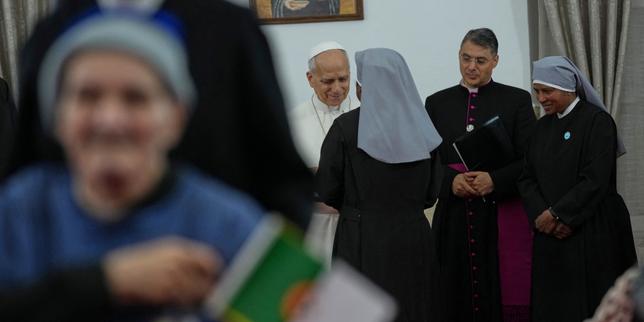
Algeria didn't want the world to see the smoke rising from Blida while Pope Leo XIV was on the tarmac. You won't find much about this in official state archives from that week. It's a classic case of a government trying to curate a "perfect" image while the ground literally shakes underneath them. When the double suicide attack hit Blida, the timing couldn't have been worse for the presidency. They were hosting the first papal visit in decades, a move designed to show the world that Algeria was a stable, pluralistic bridge between Islam and the West. A couple of bombs at a military outpost just kilometers away threatened to shatter that expensive PR campaign.
I’ve looked into how these narratives get buried. It’s never just one thing. It’s a combination of physical cordons, digital blackouts, and a very specific kind of pressure applied to local journalists. The goal wasn't just to hide the dead. It was to ensure the Pope’s message of peace wasn't drowned out by the screams of a counter-narrative.
Security Optics Versus Brutal Reality
The Algerian government spent months prepping for Pope Leo XIV. They repainted curbs, cleared street vendors, and deployed thousands of plainclothes officers. Then, the Blida explosions happened. Two vehicles, detonated near a high-security zone. It wasn't just a random act of terror; it was a targeted strike on the state's credibility.
If you were watching the state-run TV channels that afternoon, you saw choirs and handshakes. You didn't see the blood on the pavement in Blida. The discrepancy is jarring. While international wires started picking up whispers of "unconfirmed blasts," the Algerian media apparatus went into a strange, synchronized freeze. They didn't deny it at first. They just didn't mention it. That silence is a tool. It's used to buy time while the "official" version of events is cooked up in a room somewhere in the capital.
The logic is simple. If the Pope hears about it, the trip changes. If the international press corps—hundreds of them following the Holy See—starts asking about Blida, the "Security and Stability" theme is dead. So, the state did what it does best: it clamped down.
How the Media Blackout Actually Worked
You might think a blackout means turning off the internet. It’s actually much more subtle. In the hours following the Blida attack, local reporters found their phone signals "unstable" near the blast site. Roadblocks appeared under the guise of "security for the papal motorcade," even though the Pope was nowhere near that specific route.
Journalists I’ve spoken with from the region described a series of "friendly reminders" from the Ministry of Communication. These aren't threats, usually. They’re suggestions. "Let’s focus on the historic nature of the visit," they’re told. "Don't give the terrorists the oxygen of publicity." It’s a clever framing. It makes reporting the truth feel like an act of betrayal against the country’s image.
- The Narrative Pivot: By the time the government acknowledged the "incident," they downplayed the casualties.
- The Localization Tactic: They framed it as a "local criminal matter" unrelated to the broader security climate.
- The Timing Delay: News was held until the Pope was safely back in the air, heading to Rome.
This wasn't an accident. It was a choreographed sequence. The state essentially hijacked the news cycle. By the time the world could look at Blida, the Pope was gone, and the story was "old news."
The Human Cost of Staged Stability
We often talk about censorship in terms of politics, but it has a massive human cost. The families of those killed or injured in Blida weren't just grieving. They were grieving in a vacuum. Their tragedy was treated as a PR liability. That’s a bitter pill to swallow.
When a government prioritizes the comfort of a visiting dignitary over the transparency owed to its own citizens, it creates a vacuum of trust. You can’t build a "New Algeria" on a foundation of buried headlines. The double suicide attack was a sign that the underlying tensions in the country hadn't been resolved, despite the shiny exterior presented to the Vatican.
The Pope’s visit was supposed to symbolize healing. Instead, for the people of Blida, it became a symbol of being ignored. They were the "unwanted guests" at their own country's party. While the world watched Leo XIV talk about brotherhood, the people of Blida were scrubbing soot off their walls and wondering why no one was talking about the sirens.
Why the World Missed the Story
Western media often gets a bad rap for being "distracted," but in this case, the Algerian state played them perfectly. If you’re a journalist covering a papal trip, your schedule is set in stone. You’re on a bus. You’re in a press pen. You’re watching the Pope. You don't have the freedom to hop in a cab and drive 50 kilometers to a bomb site when the roads are closed for "the Holy Father’s safety."
The Algerian authorities used the Pope as a human shield against scrutiny. They knew the international press wouldn't abandon the visual gold of the Pope in Algiers to chase a murky explosion story in a province they couldn't access. It’s a masterclass in media manipulation.
I’ve seen this happen in other regimes. You create a spectacle so big and so positive that anything negative feels like a distraction. It makes the critic look like the "bad guy." If you reported on the bombs, you were "ignoring the message of peace." It’s a classic trap.
The Lingering Impact on Algerian Press Freedom
This event didn't just happen and disappear. It set a precedent. It showed the government that they could successfully manage a major crisis without ruining a high-profile event. That’s a dangerous lesson for any administration to learn.
Since the Blida-Pope Leo XIV incident, the "security first" justification for censorship has become even more entrenched. You see it in how protests are covered—or not covered. You see it in the rising number of journalists who find themselves facing "incitement" charges for simply describing what they see with their own eyes.
The silence on Blida wasn't just about one day. It was about testing the limits of how much the public would tolerate being kept in the dark. It turns out, if you have a big enough distraction—like a visiting Pope—you can get away with almost anything.
Breaking the Cycle of Managed Information
If you want to understand the real Algeria, you have to look at the gaps in the official record. You have to look at what wasn't said during the big moments. The Blida bombings were a massive story that should have changed the tone of that papal visit. It didn't, because the state was more concerned with the "vibe" than the truth.
The next time you see a massive, perfectly staged state visit, ask yourself what’s happening in the provinces. Look for the "unconfirmed reports" on social media that the mainstream news isn't touching yet. Usually, that’s where the real story lives.
You should support independent North African outlets that refuse to take state-issued press releases at face value. Follow local journalists on encrypted platforms where they can speak without a "friendly reminder" from the ministry. Don't let the spectacle blind you to the reality on the ground. When the smoke rises, someone is always trying to fan it away before you notice. Pay attention to the fan.