The arrest of a dual UK-Iranian national following a tense security breach near RAF Fairford exposed a hard truth about modern European defense. Military installations hosting foreign assets aren't just isolated fortresses anymore. They sit on open borders, vulnerable to low-tech surveillance, proxy networks, and local operatives taking orders from thousands of miles away.
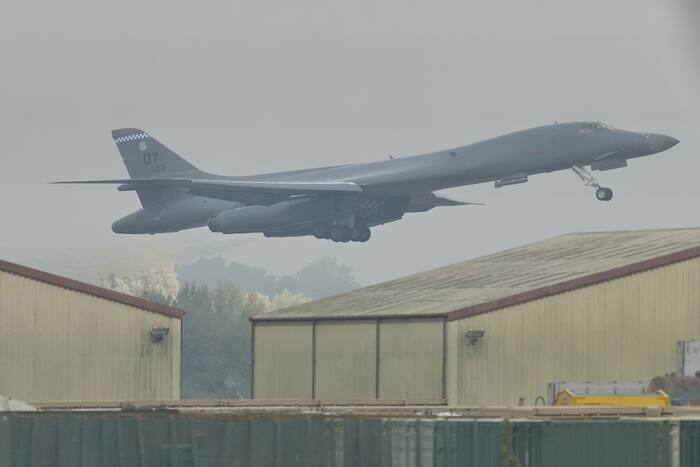
When British authorities intercepted suspicious vans loaded with fuel drums and makeshift components heading toward the Gloucestershire base, it triggered immediate operational shifts. The United States Air Force rapidly redeployed heavy bombers away from the site, signaling that Western military planners take these hybrid threat models seriously. You cannot treat perimeter security as a static checklist when hostile actors use disguised commercial vehicles and real-time remote guidance.
How Modern Hybrid Threats Target Infrastructure
Intelligence agencies have tracked a significant shift in how state-backed actors operate on foreign soil. Instead of deploying uniformed intelligence officers to conduct high-risk operations, organizations linked to groups like Kata'ib Hezbollah or Iranian Revolutionary Guard networks increasingly rely on localized proxy recruitment.
The mechanics are straightforward yet difficult to disrupt before execution:
- Financial Incentives: Handlers wire money through digital channels to local associates.
- Surveillance Runs: Operatives rent vans with fake commercial branding—such as pool supply or fuel delivery logos—to blend seamlessly into rural English traffic while filming base perimeters.
- Remote Direction: Handlers direct attacks or reconnaissance in real time using encrypted video apps, minimizing the need for local masterminds on the ground.
This operational framework makes interception exceptionally difficult for local police forces. Counter-terrorism units have to balance open-society freedoms with the absolute necessity of locking down critical defense assets.
The Broader European Ripple Effect
The incident at RAF Fairford wasn't an isolated anomaly. Similar security escalations hit RAF Mildenhall, where authorities adjusted threat levels and relocated air tankers and transport assets. Tehran's public declarations that bases utilized for operations against Iranian interests are legitimate targets transformed quiet rural English communities into frontlines of a broader geopolitical shadow war.
Critics often point out that local policing resources are stretched thin when monitoring sprawling military footprints. When suspects can blend into everyday life holding dual nationalities, immigration and national security policies collide. Lawmakers face immense pressure to tighten bail laws, increase surveillance around strategic defense nodes, and rethink how intelligence is shared between domestic police and international partners.
What Comes Next for Base Security
Defense ministries across Europe are currently overhauling how they handle perimeter defense. Relying on chain-link fences and standard checkpoint guards is no longer enough when the threat comes from inside the country's own economic and social fabric. Expect to see permanent exclusion zones, heavier electronic counter-surveillance, and a much lower threshold for detaining individuals spotted recording sensitive military zones.
Security is no longer just about guarding gates against foreign armies. It's about dismantling the invisible digital and financial pipelines that turn local residents into proxy combatants.
US charges 3 men with plotting terror attacks, including planned assault on UK air base provides an in-depth look at the federal indictments and the broader international network behind these plots.