The floor of the warehouse in Gujarat hums with a steady, low-frequency vibration. Dust motes dance in the harsh glare of overhead mercury lamps, settling softly on stacked rows of steel liquid pumps readying for a long journey across the sea. For Rajesh, a veteran floor manager who has spent three decades watching heavy machinery move from Indian assembly lines to foreign ports, every crate represents sweat, precision, and a hard-fought reputation. He knows the weight of these industrial components. He knows the exact torque required to seal a compressor valve.
Yet, miles away in Washington, a different kind of weight is being assigned to his labor.
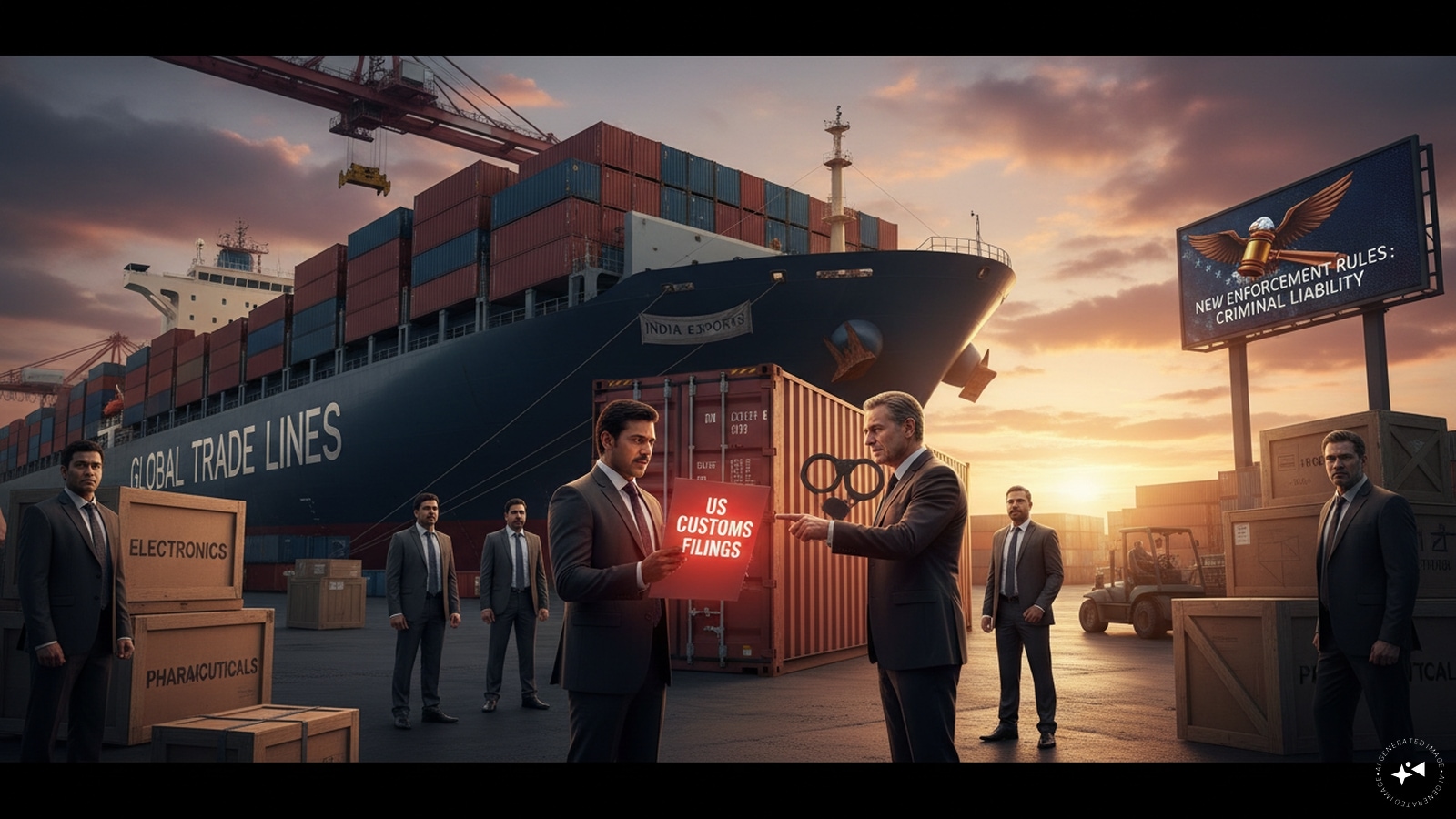
A high-profile White House trade document has thrown open a window into a quiet, high-stakes global anxiety. Dubbed the Great Transshipment Scam, the report casts a suspicious eye across more than forty nations, placing India into a premier tier of scrutiny alongside industrial heavyweights like Japan, Mexico, and the European Union. The core accusation is stark. American trade officials argue that international supply chains are being quietly hijacked to launder Chinese manufacturing, routing goods through third-party nations with minor relabeling or minimal assembly to dodge steep American tariffs.
Suddenly, an export corridor stretching from Pune through Gujarat to Chennai finds itself under a microscope.
The math behind the anxiety is staggering. Government estimates point to tens of billions of dollars in goods slipping through transshipment hubs, resulting in massive holes in collected tariff revenue. For American policymakers, the solution is shifting toward an algorithmic eye. Plans are underway to deploy an automated artificial intelligence system known as Detective Border, designed to cross-reference shipping manifests, historical trade data, and production-capacity metrics at lightning speed to intercept suspect cargo before it ever touches an American dock.
But numbers on a spreadsheet rarely capture the human friction on the ground.
Consider what happens when trade policy collides with authentic craftsmanship. Independent trade analysts point out that India boasts genuine, deeply rooted manufacturing capabilities in sectors like industrial pumps and compressors. Millions of dollars in global exports move through these channels every single year. When raw components or intermediate parts arrive from overseas, they often undergo a profound transformation on local assembly floors, emerging as distinct products forged by local labor and engineering expertise.
The line separating a legitimate global supply chain from an origin workaround has become razor-thin.
For exporters who have spent decades building trust, the new regulatory climate feels like walking through a minefield blindfolded. Every bill of lading is now scrutinized not just for what it contains, but for where its components slept before they arrived. The risk is no longer limited to a single rejected container. Retrospective penalties can stretch backward, threatening businesses with financial liabilities for shipments that cleared customs months prior.
Pressure breeds adaptation. Trade negotiators in New Delhi and Washington remain locked in delicate talks, trying to hammer out agreements that balance market access with strict origin verification. For Indian manufacturers, proving the legitimacy of their supply chains is no longer optional paperwork. It is an existential requirement.
Back in the warehouse, the hum of machinery continues. Rajesh wipes a streak of grease from his forearm and signs off on another outgoing manifest. The world beyond his loading dock is shifting, demanding absolute transparency in an era where every bolt, pump, and steel casing must prove its true home.