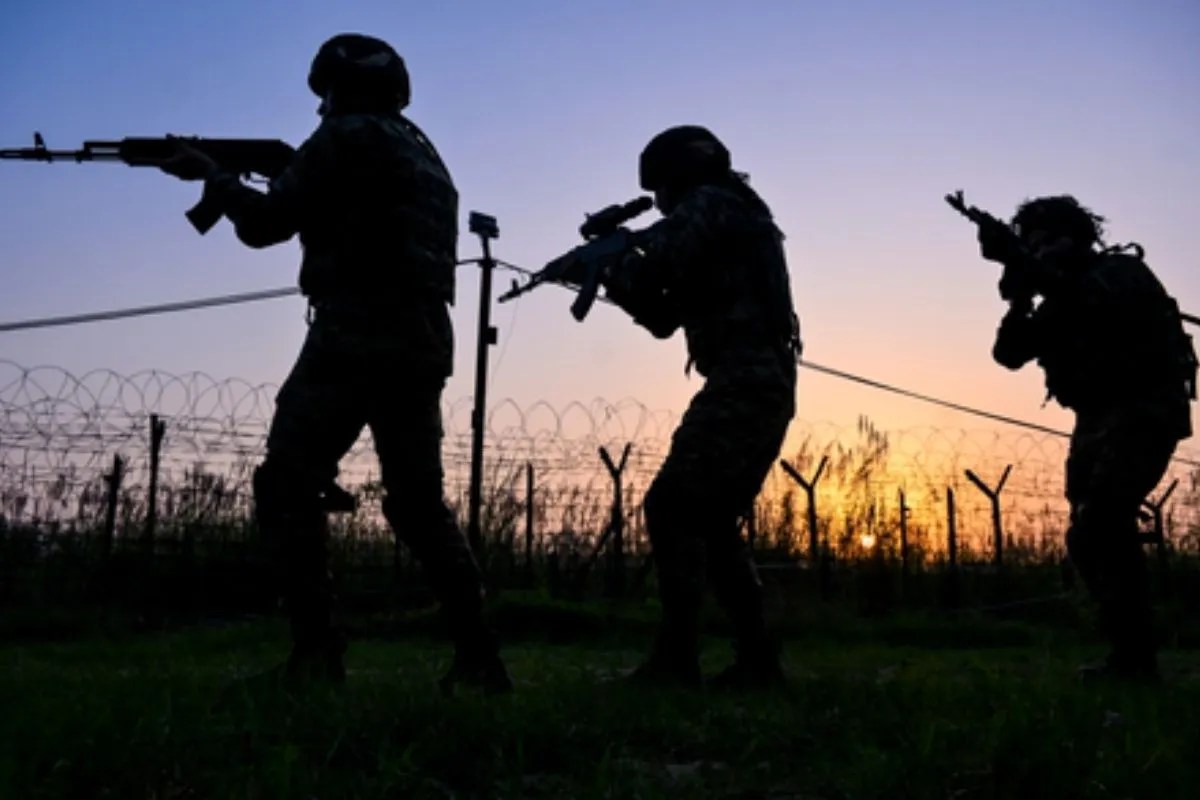
Dawn along the Line of Control rarely arrives with fanfare. It creeps in through grey mist, carrying the damp smell of pine needles, wet earth, and diesel from distant generators. In a mountain village miles behind the frontier, a tea vendor lifts a heavy brass kettle off smoldering coals, listening to the hum of a passing military convoy before the sun has even cleared the ridge.
For ordinary families living near volatile borders, security is not an abstraction debated in oak-paneled conference rooms. It is measured in whether a child walks to school with a lighter step or a tighter grip on a parent's hand. It is felt in the sudden silence of dogs at night, in rumors traded over evening cups of chai, and in the heavy, unspoken arithmetic of risk that settles into daily routine.
When intelligence reports surface claiming that roughly five hundred militants are staged near forward launchpads—and linking heightened pressure to Pakistan's new ISI chief Khan and a renewed push toward BAT-style operations—the headlines can read like cold arithmetic. Numbers on a screen. Acronyms in a briefing. Yet behind every intelligence assessment lies a human equation: soldiers scanning ridges through night-vision optics, families preparing for disruption, and policymakers weighing signals in an environment where miscalculation carries steep costs.
Why Intelligence Claims Feel Both Urgent and Elusive
To understand why reports of staged fighters and tactical doctrines stir immediate alarm, it helps to strip away the jargon and look at what intelligence actually is. Intelligence is rarely a finished photograph. More often, it is a mosaic of fragments: radio intercepts, movement patterns along rugged terrain, historical playbooks, and assessments of leadership intent.
When analysts point to figures like five hundred operatives positioned near launch zones, they are describing potential capacity and proximity rather than a single marching column waiting on a parade ground. Mountainous frontiers are porous by nature. Ravines, dense forests, and shifting weather create natural cover where small groups can disperse, regroup, or wait for windows of opportunity.
Still, uncertainty does not make a threat harmless. In security affairs, waiting for absolute certainty can mean surrendering initiative. Intelligence agencies look for convergence—when leadership changes, tactical shifts, and forward positioning appear to align. That is why the name of Pakistan's Inter-Services Intelligence chief Khan and references to Border Action Team—commonly known as BAT—tactics draw sharp scrutiny whenever tension rises.
To make sense of how asymmetric tactics operate on ground level, consider a hypothetical scenario (clearly a composite illustration rather than a confirmed event). Imagine a small forward post tucked into a steep forested saddle just before winter snows close the high passes. For weeks, routine patrols report nothing unusual. Then, over a few nights, patrols notice subtle changes: disturbed brush along a dry streambed, brief bursts of encrypted communication, and reports from locals of unfamiliar faces moving after dusk. Nothing is proven yet. Every shadow could be wildlife or smugglers. Yet experienced commanders know that surprise thrives in ambiguity, and a handful of well-trained infiltrators moving under cover can create outsized shock if defenses grow complacent.
That tension—between what is verified and what is inferred—is the hardest part for the public to navigate. Headlines demand certainty. Reality usually offers probabilities.
The BAT Playbook and the Logic of Asymmetric Pressure
In South Asian security discussions, BAT operations carry a distinct and grim connotation. Historically, the term has been used to describe cross-border raids combining irregular fighters with specialized support, aimed at inflicting tactical damage, testing defenses, and generating psychological impact far beyond the immediate engagement zone.
Why do planners lean toward asymmetric tactics instead of conventional confrontation? Because conventional escalation invites massive retaliation and international scrutiny. Asymmetric pressure operates in the gray zone—below the threshold of full-scale war, yet sharp enough to bleed morale, tie down troops, and keep an adversary off balance.
Think of it like pressure on a pressure cooker. Turning up the heat gradually may not blow the lid immediately, but it forces everyone in the kitchen to watch the gauge closely. Every patrol becomes tenser. Every rumor spreads faster. Even when no major strike occurs on a given day, the state of high readiness consumes time, money, and emotional energy.
Leadership transitions inside intelligence agencies often prompt close watchers to ask whether old playbooks will be dusted off or adapted. When a new chief takes the helm at the ISI, observers scrutinize early signals for continuity or change. Does the new leadership favor quiet deniability, heightened forward pressure, or calibrated restraint? Publicly, intelligence work happens behind thick curtains, so external analysts rely on patterns—past doctrine, regional dynamics, and corroborating indicators—to judge whether a shift in tone translates into movement on the ground.
The Invisible Stakes for Families and Frontline Communities
Diplomats talk about deterrence and escalatory spirals. Strategists draw arrows on maps. Meanwhile, people living near border districts carry a quieter, heavier burden.
Consider another hypothetical example, drawn from the lived realities of border communities. Picture a schoolteacher named Farhan—a composite figure representing residents in a border-adjacent settlement—who wakes before dawn to check his phone for news of road closures or security alerts. His life is anchored in ordinary hopes: keeping his students focused on exams, repairing a leaky roof before monsoon or winter rains, and ensuring his aging parents get their medicine on time. When rumors circulate of militant staging near the frontier or heightened operational chatter, Farhan does not panic in dramatic fashion. Instead, a familiar knot forms in his stomach. He notices how quickly shopkeepers shutter early, how conversations turn cautious, and how easily local tensions can flare if misinformation takes root.
Fear rarely announces itself with sirens in these moments. It arrives as hesitation.
Economic life along tense borders is uniquely fragile. Tourism hesitates. Trade slows. Construction stalls. Young people weighing whether to stay or seek work elsewhere factor in the unpredictability of life near a flashpoint. Even security forces stationed along harsh terrain endure relentless strain: freezing nights, steep climbs, isolation from family, and the constant demand to stay sharp when hours—or days—pass in quiet.
There is also a deeper civic stake that deserves attention whenever security stories surge. In moments of heightened threat perception, societies face a test of judgment. How do citizens stay vigilant without surrendering to rumor? How do media outlets report intelligence claims responsibly without turning unverified leaks or sensational framing into panic?
Separating Signal From Noise in an Era of Information Warfare
Modern conflicts and border standoffs do not happen solely on mountain trails. They unfold simultaneously across television panels, messaging apps, and social media feeds.
Information warfare is a metaphor for how narratives are shaped, amplified, and weaponized to influence mood and decision-making—sometimes as deliberately as any physical maneuver. When a report claims five hundred militants are waiting on launchpads, the numbers themselves can become instruments of pressure. They can be used to signal resolve, test an opponent's reaction, or rally domestic attention. Conversely, exaggerated claims can breed cynicism if events unfold differently, eroding trust when genuine warnings are needed.
So how should a thoughtful reader approach news like this?
Start by looking at corroboration. A single anonymous intelligence claim is a starting point for inquiry, not the final word. When multiple independent observers, official statements, or on-ground developments align over time, confidence grows. When details remain vague or unverified, healthy skepticism is a form of clarity, not indifference.
Look next at incentives and context. Ask who benefits from a particular framing, what historical precedents apply, and what constraints—weather, terrain, diplomatic pressure, military readiness—shape what is actually feasible. High numbers make dramatic headlines, but logistics, terrain, and counter-measures determine what happens in practice.
Above all, resist the urge to reduce complex human geographies to caricatures. Border regions are home to millions of people whose daily survival depends on stability, dignity, and peace. Treating them merely as backdrops to strategic chess moves misses the very heart of what security is supposed to protect.
Where Vigilance Meets Wisdom
There is a temptation, when reading about staged operatives and tactical plans, to swing between two extremes: fatalism on one side, and bluster on the other. Neither serves anyone well.
Fatalism assumes violence is inevitable and human agency counts for nothing. History pushes back against that view. Tensions rise, and tensions ease; deterrence holds, and diplomacy sometimes carves out breathing room even in hostile climates. Bluster, on the other hand, treats complex security challenges like action movies, ignoring the real cost of miscalculation in lives, livelihoods, and stability.
True vigilance looks quieter and steadier. It means backing capable security institutions while insisting on clear-eyed analysis. It means refusing to let rumors dictate how neighbors treat one another. And it means keeping faith with the ordinary people—soldiers, villagers, teachers, families—whose lives sit closest to the fault lines.
Out along the high ridges, the wind will keep moving through the pines long after today's headlines fade, testing every sentry post, every stone wall, and every quiet resolve waiting for morning.


