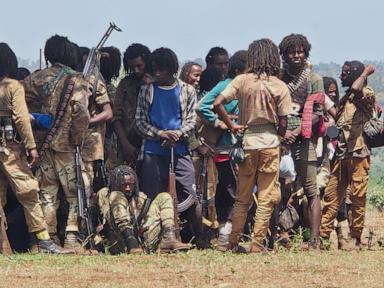
The proclamation delivered from the military headquarters in Addis Ababa carried the weight of a regime backing itself into a corner. When Ethiopia’s army chief publicly accused Eritrea, Sudan, and Egypt of actively fueling and sustaining the remnants of the Tigray insurgency, he was not merely pointing fingers across borders. He was exposing the fragile, volatile architecture of the Horn of Africa, where domestic collapse and international proxy conflicts bleed into one another. Addis Ababa faces an intractable internal security challenge, and its military leadership has chosen to internationalize the blame.
Understanding why these accusations matter requires peeling back decades of mutual distrust, shifting alliances, and geopolitical maneuvering across the Nile basin and the Red Sea corridor. The Tigray conflict, despite formal peace agreements, remains an open sore on the map of East Africa. To treat the violence solely as a localized police action is to misunderstand how porous borders and historical grievances keep insurgencies alive long after conventional battlefields go quiet.
The Geography of Insurgency and State Vulnerability
Borders in the Horn of Africa have never been mere lines on a map; they are economic lifelines, ethnic fault lines, and smuggling routes. When conflict erupted in Ethiopia’s northern Tigray region, the terrain dictated the nature of the resistance. Rugged mountains and deep valleys offer natural redoubts for fighters who know every goat path. Yet, terrain alone cannot sustain an armed movement without logistical oxygen, communication channels, and safe havens.
Addis Ababa’s military establishment points outward because the internal supply lines are increasingly difficult to choke off entirely. The accusation against Eritrea stems from a deep history of shared enmity and shifting coalitions. Asmara and Addis Ababa formed a tactical axis to crush the Tigray People's Liberation Front during the height of the conventional war. That marriage of convenience soured as regional dynamics shifted. Eritrea views a stable, centralized Ethiopia with deep suspicion, while elements within Asmara harbor historic scores to settle.
Sudan presents a different vector of friction. Caught in the throes of its own catastrophic civil war between rival military factions, Sudan’s borderlands have transformed into a chaotic zone of transit. Control over the Al-Fashaga agricultural strip and porous transit corridors means that armed groups can move across the boundary with relative impunity. When the Ethiopian army chief claims that neighboring states are offering sanctuary or logistical backing, he is describing the inevitable reality of a failed state border. A government in Khartoum fighting for its own survival lacks the administrative capacity—and perhaps the political will—to police its peripheries effectively on behalf of its neighbors.
The Hydro-Geopolitics of the Nile
No analysis of regional friction involving Ethiopia can ignore the elephant in the watershed. The Grand Ethiopian Renaissance Dam stands as a monument to national ambition and a catalyst for regional paranoia. Egypt views the massive hydroelectric project as an existential threat to its water security, controlling the downstream flow of the Nile upon which millions of Egyptian lives depend.
Cairo has spent years pursuing diplomatic pressure, international arbitration, and strategic posturing to halt or curtail the filling of the dam. In the calculus of statecraft, supporting internal adversaries of a defiant upstream rival has long been a low-cost, high-yield instrument of state pressure. While direct proof of Egyptian military aid to Tigrayan rebels remains largely circumstantial, the geopolitical incentive structure is impossible to ignore. Egypt wants a weakened, distracted Addis Ababa that is too consumed by internal fires to dictate the terms of water management on the Blue Nile.
By linking Egypt to the ongoing insurgency, the Ethiopian military command is framing domestic resistance not as a failure of national reconciliation, but as part of a broader, historic campaign to encircle and hobble the Ethiopian state. This narrative resonates powerfully with a domestic population weary of foreign interference, even if it conveniently absolves the ruling party of its own governance failures.
The Cost of Perpetual Securitization
Labeling domestic opponents as proxies of foreign enemies is a classic playbook maneuver. It hardens political lines, silences internal dissent, and justifies exceptional security measures. Yet, this strategy carries severe structural risks. When every local grievance is blamed on Cairo, Asmara, or Khartoum, the central government avoids the difficult, unglamorous work of political accommodation, disarmament, and transitional justice within Tigray itself.
The humanitarian cost of this securitized mindset is devastating. Communities trapped in the borderlands bear the brunt of military sweeps, intelligence crackdowns, and economic blockades. Trade routes remain strangled, food insecurity persists, and a generation of young people grows up knowing only the cadence of suspicion and reprisal.
Furthermore, rattling sabers against neighbors who are already unstable invites miscalculation. Sudan is a tinderbox. Eritrea is tightly controlled but economically fragile and strategically unpredictable. Egypt is a regional powerhouse with its own red lines. Waging a war of words across diplomatic channels while managing an unpacified northern frontier leaves little room for error. A stray border clash or a misread intelligence report could easily escalate from proxy friction into open regional confrontation.
The Illusion of Final Victory
The military leadership in Addis Ababa continues to promise total security through force of arms, projecting an image of absolute control. History across the Horn of Africa suggests otherwise. Insurgencies rooted in ethnic identity, historical marginalization, and regional geopolitics are rarely extinguished by communiques from the Ministry of Defense. They evolve, they wait, and they adapt to the shifting sands of external patronage.
Until Ethiopia’s leadership addresses the legitimate political grievances of its constituent populations and establishes functional diplomatic detentes with its neighbors, the shadow wars will continue. Accusing regional rivals of supporting rebels may rally the domestic base for a moment, but it does nothing to secure the border. The guns in the northern highlands remain quiet only until the next alignment of interests breathes new life into the old conflicts.