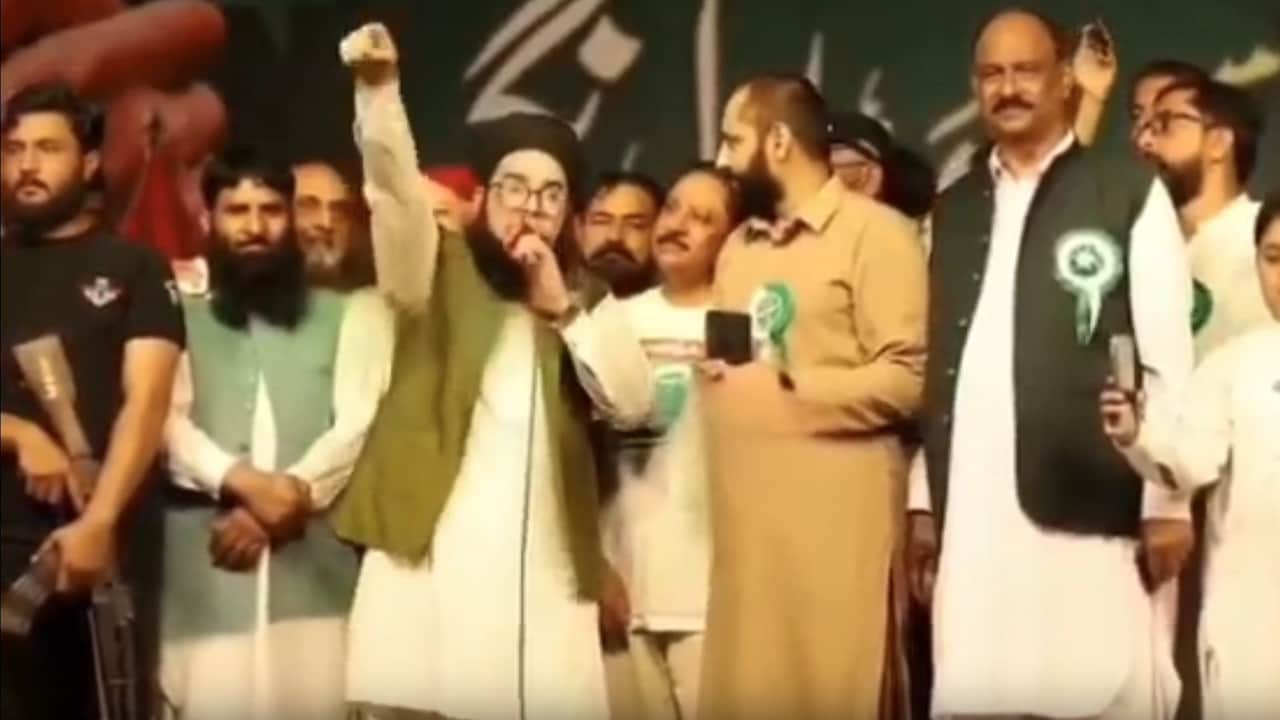
A chilling admission has recently emerged from the fringes of Pakistani political discourse, pulling back the veil on one of the most enduring security crises in South Asia. A prominent cleric, speaking at a rally for the Pakistan Markazi Muslim League, explicitly claimed that Hafiz Saeed—the notorious founder of Lashkar-e-Taiba—orchestrated the dispatch of over 10,000 militants into Kashmir. While observers of the region have long accused Saeed of fueling the insurgency, this internal acknowledgement serves as a blunt confirmation of the scale and industrial nature of the conflict. It transforms years of intelligence speculation into an explicit record of systematic destabilization.
The figure of 10,000 is not merely a statistic; it represents a gargantuan investment in human capital for the purpose of cross-border violence. For decades, Saeed operated with a level of impunity that baffled international observers. Even as global bodies like the United Nations Security Council placed him under sanctions, he remained a fixture in Pakistani public life, often addressing mass gatherings or managing expansive charitable networks that functioned as operational fronts. These organizations, most notably Jamaat-ud-Dawa, provided the administrative and financial scaffolding required to move thousands of fighters through training camps and into the treacherous mountain passes of the Line of Control.
Understanding the longevity of this network requires looking at the symbiosis between ideological fervor and tactical convenience. Saeed did not work in a vacuum. His early career as a lecturer at the University of Engineering and Technology in Lahore provided him with a platform, but his true influence blossomed when his ideology aligned with the regional security interests of the late 1980s. By the time the militancy in Kashmir surged in the 1990s, the infrastructure for recruitment, radicalization, and deployment was already well-oiled.
The mechanics of this "jihadi factory" were straightforward. Prospective recruits were funneled through seminaries—madrassas—where the focus shifted from traditional religious studies to the tactical requirements of a militant. The transition from a religious student to a combatant was often marked by a stint in training camps located in the North-West Frontier Province or deeper within the sanctuaries of Pakistan-administered Kashmir. From there, the ISI-backed logistical chain ensured these individuals could reach the Kashmir Valley.
What makes this latest admission so significant is the timing and the source. The speaker, aligned with the political wing of Lashkar-e-Taiba, essentially touted these deployments as "sacrifices" made by their leader. This framing is dangerous. It seeks to legitimize state-sponsored terrorism by rebranding it as a virtuous struggle. By boasting about the volume of fighters sent to the front lines, these actors are not just recounting history; they are signaling to a new generation that the ideology of armed insurgency remains alive, even if the man at the top is currently behind bars.
The legal saga of Hafiz Saeed, characterized by repeated arrests and subsequent releases by Pakistani courts, has long been a point of contention with the international community. His incarceration, currently totaling decades for various counts of terror financing, is frequently viewed by outside analysts as a performative response to pressure from entities like the Financial Action Task Force. The pattern is familiar: a high-profile arrest to satisfy international lenders, followed by years of legal maneuvering that ensures the organizational structure remains intact.
One must consider the implications for the future of the Kashmir region. If 10,000 fighters were indeed sent during the peak of the insurgency, the residual impact is a profound trauma that continues to color every political negotiation. The recruitment networks have evolved, and the digital methods of radicalization today are far more efficient than the analog efforts of the 1990s. The core issue is that the ideological infrastructure Saeed built was never truly dismantled. It was merely submerged.
Critics often point to the lack of "direct evidence" as the primary reason for his past impunity, yet this admission by a close associate suggests that the evidence was always in plain sight. It was just guarded by a wall of plausible deniability. That wall is now crumbling. The reality is that the militancy in Kashmir was not a spontaneous uprising but a managed, sustained campaign of attrition.
The geopolitical weight of this confession reaches far beyond the border skirmishes of the past. It speaks to a deeper decay in regional security, where non-state actors were granted the powers of a sovereign state to conduct proxy wars. As India and Pakistan continue their tense, often hostile, diplomatic dance, these revelations serve as a stark reminder that the ghosts of the past have not been buried. They are being kept in a holding pattern, ready to be invoked whenever it suits the political ambitions of those who benefit from the chaos.
Security experts have long argued that peace in Kashmir is impossible without the total evaporation of such logistical networks. Yet, as long as the underlying ideology is taught, and as long as figures like Saeed are lionized in public rallies, the cycle is likely to repeat. The admission of sending 10,000 fighters is a boast of past strength, but it is also a template for future conflict. The challenge for the region is not just managing the individuals who have been imprisoned, but untangling the institutionalized hatred that allowed them to be deployed in such staggering numbers in the first place.
This is the grim reality of the shadow war. It does not end with a jail sentence or a court order. It ends only when the political machinery that views human lives as disposable instruments of war is finally brought to a standstill.
Inside the Hafiz Saeed Network
This video provides critical context regarding the recent admission by the Pakistani cleric and the ongoing implications of Hafiz Saeed's militant activities.
http://googleusercontent.com/youtube_content/1