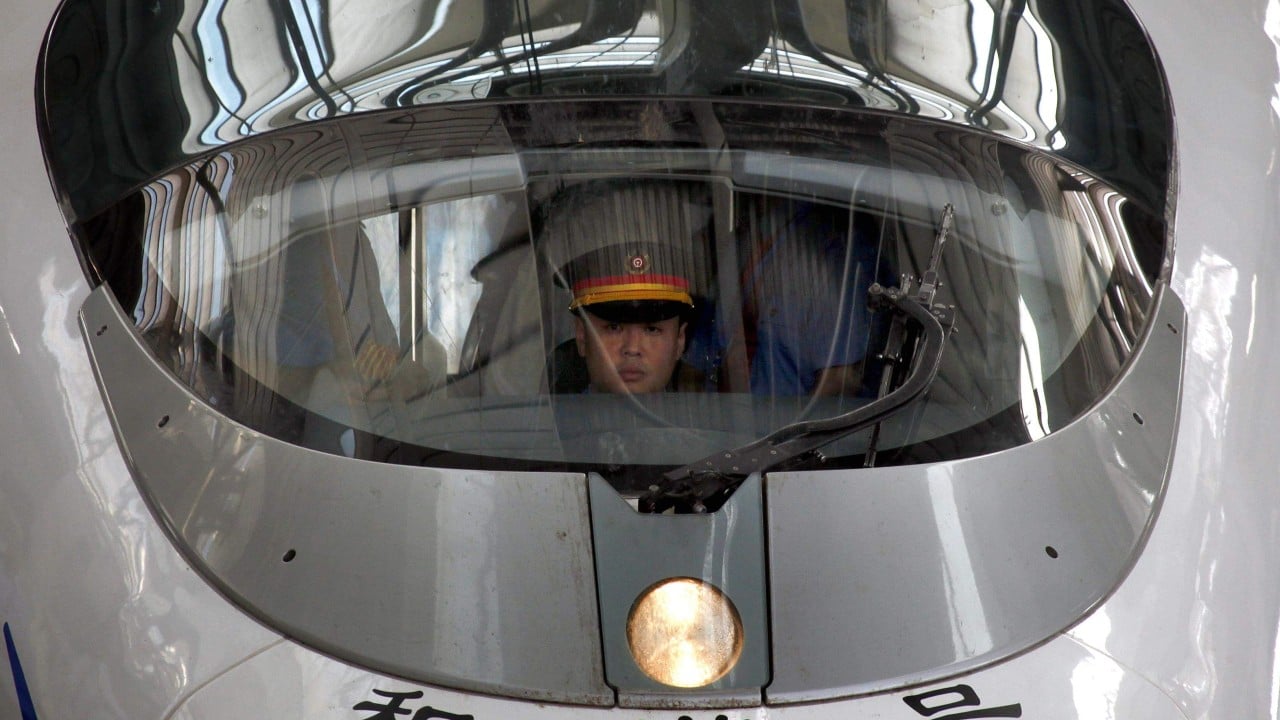
On June 30, 2011, a sleek white train slipped out of Beijing South Railway Station, bound for Shanghai. It clocked speeds up to 300 kilometers per hour. That single trip changed everything. It transformed how a nation moved, worked, and grew.
Most Western commentators at the time looked at the Shanghai-Beijing high-speed rail link with deep skepticism. They called it a massive white elephant. Critics predicted empty cars and financial ruin. They pointed to the eye-watering 220.9 billion yuan price tag. They thought people would stick to cheap, slow trains or slow-moving buses.
They were wrong. Dead wrong.
Today, this specific corridor is one of the most profitable railway lines anywhere on earth. It connects two powerhouse economic hubs. It moves tens of millions of people every single year. If you want to understand modern infrastructure, you have to look at what happened on this 1,318-kilometer stretch of track.
The numbers behind the line
Let's look at what this project actually involved. The railway stretches across seven provinces and municipalities. It crosses the Yangtze River and the Yellow River. To build it, engineers had to construct 244 bridges. In fact, the Danyang-Kunshan Grand Prix, a 164.8-kilometer structure along this route, holds the record as the longest bridge in the world.
Before 2011, traveling between Beijing and Shanghai by train took around ten hours. The fast option was a flight. But airports in both cities are notoriously plagued by weather delays and air traffic control gridlock. The high-speed line slashed the rail travel time to under five hours.
It changed the math for business travelers. Why waste three hours sitting at a boarding gate in Beijing Capital International Airport only to get delayed by summer thunderstorms? You can walk onto a bullet train, open your laptop, and count on arriving in central Shanghai exactly on time.
The line opened with an initial capacity to run dozens of pairs of trains daily. Within years, that wasn't enough. Demand exploded. The railway authorities had to keep adding departures, eventually running trains just minutes apart during peak morning and evening rushes.
Shifting the economic gravity
The real magic of high-speed rail isn't what happens in the mega-cities. It is what happens to the forgotten towns in between.
Consider places like Jinan, Xuzhou, or Bengbu. Before the line opened, these cities were economic afterthoughts for major corporations. They were too far from Beijing and too far from Shanghai. They sat in an awkward middle zone.
The train line altered that geography completely. Suddenly, a manufacturing executive in Shanghai could hop on a train, tour a factory in Xuzhou, hold a meeting, and return home for dinner. New business districts sprang up around every single high-speed rail station along the route. Local governments poured money into zoning areas near the tracks for high-tech manufacturing, logistics hubs, and corporate offices.
Economists call this spatial clustering. When you reduce travel time, you effectively bring cities closer together. You create a massive, interconnected labor market. Someone living in a lower-cost city can easily commute or collaborate with firms in the financial capital.
What the critics missed about commuter behavior
When the line launched in 2011, the global press focused heavily on safety concerns and high ticket prices. A few months prior to the launch, the government actually decided to lower the maximum operational speed from 350 kilometers per hour to 300 kilometers per hour to reduce operating costs and address public anxiety.
Western analysts thought the tickets were too expensive for ordinary citizens. A second-class seat cost around 555 yuan at launch. That was a significant chunk of money for a migrant worker or a young graduate back then.
The pundits failed to see the rapid rise of the Chinese middle class. People were willing to pay a premium for speed, comfort, and predictability. The traditional sleeper trains were cheap, but they cost you a full day of productivity. Time became the ultimate luxury.
The high-speed rail link didn't just steal passengers from older trains. It generated entirely new travel habits. Weekend tourism surged. Families who used to stay home during short public holidays began taking long-distance trips. Beijing residents started spending weekends exploring the historic gardens of Suzhou or the bustling streets of Shanghai.
Rail versus air
The aviation industry took a massive hit when the tracks went live. Airlines used to dominate the Beijing-Shanghai travel market. It was their golden goose route.
Once the bullet trains proved their reliability, air carriers had to slash prices to stay competitive. They lost the business travel market almost overnight for journeys under five hours. Trains offer bigger seats, steady cellular service, and no annoying security lines that require you to show up two hours early.
The impact spread beyond the airlines. By moving passenger traffic to the new high-speed tracks, the government freed up immense capacity on the older, conventional rail lines. Those older tracks didn't go to waste. They became dedicated pathways for freight trains.
This is a detail most casual observers miss. Shipping heavy goods, coal, grain, and industrial components across China used to suffer from severe bottlenecks because passenger trains always had priority on the rails. Moving the people to the high-speed network allowed cargo to flow much faster on the old lines. That gave a quiet, massive boost to the country's supply chain efficiency.
The engineering realities that kept it alive
Building a railway that maintains stability at high speeds requires extreme precision. The tracks cannot budge even a fraction of a millimeter.
To achieve this, engineers used ballastless track technology. Instead of laying rails on traditional gravel beds, they fixed the tracks onto massive, reinforced concrete slabs. This prevents the shifting that naturally happens over time due to weather and heavy use. It costs far more upfront, but it reduces the need for constant maintenance down the road.
The train sets themselves underwent massive evolution. The line started with modified foreign technology platforms, but it eventually shifted to entirely domestic designs like the Fuxing series. In 2017, the operating speed on the line was bumped back up to 350 kilometers per hour for the fastest express services. That brought the trip down to just four hours and eighteen minutes.
Think about that. You are covering a distance roughly equivalent to the gap between New York City and Jacksonville, Florida, in less than four and a half hours.
Practical takeaways for global infrastructure planning
If you look at the sluggish state of transit projects in North America or parts of Europe, the 2011 project offers sharp lessons. You can't build great infrastructure if you look at it purely through a short-term financial lens.
First, treat transit as a long-term economic catalyst, not just a line item that needs to turn an immediate profit from ticket sales. The true return on investment shows up in rising property values, increased tax revenue from newly developed cities, and massive gains in corporate productivity.
Second, commit to standardizing your designs. The reason this line came together so quickly was that the planners used standardized bridge designs, standardized concrete components, and uniform manufacturing techniques across hundreds of miles. Customizing every single mile of track ruins budgets and kills schedules.
If you are planning logistics, corporate expansion, or supply chains in East Asia, stop treating geography as a matter of kilometers. Treat it as a matter of minutes. The companies that won the last decade were the ones that positioned their offices and warehouses along these high-speed corridors, effectively turning a massive subcontinent into a single, tightly wound economic engine. Get a map of the station stops, analyze the local industrial subsidies, and build your regional network around the tracks. That is how you win in this market.