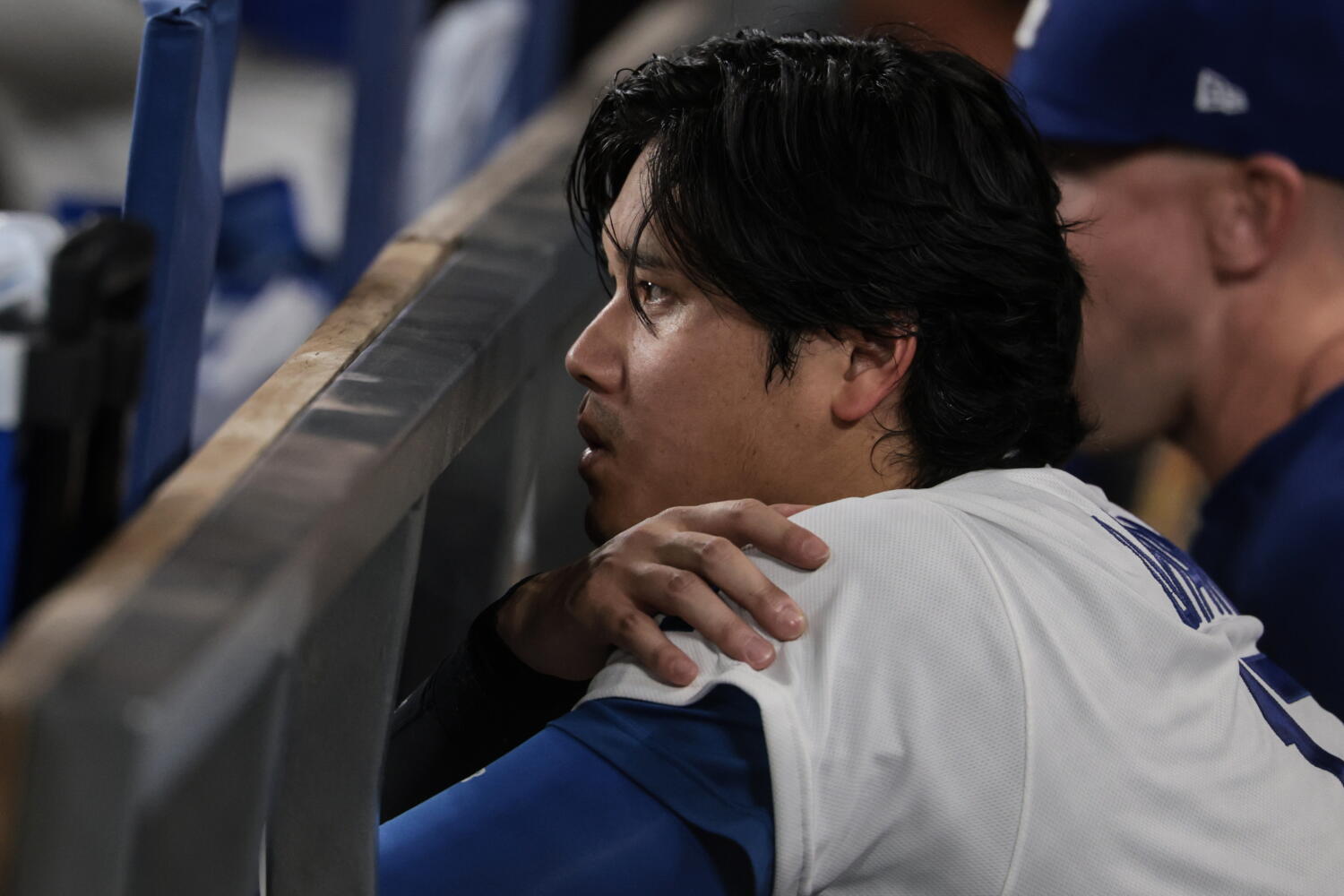
Every baseball analyst in America is currently hyperventilating over Shohei Ohtani's knee. The consensus narrative is predictable, exhausted, and fundamentally lazy: that shelving Ohtani from mound duties destroys the Dodgers' pitching depth and throws their October blueprint into absolute chaos.
Stop panicking.
The traditional baseball mind views a two-way superstar as an indivisible asset. If he stops pitching, the logic goes, you are getting half the player. This is wrong. In fact, removing Ohtani from the pitching rotation is a massive competitive advantage disguised as a setback. The front office in Los Angeles didn't construct a billion-dollar roster to rely on a single human being pitching and hitting through chronic knee irritation deep into October.
The Physics of the Plant Leg
Let's dispense with the romanticism and look at the biomechanics. When Ohtani steps into the batter's box, his left knee serves as his back pivot leg, absorbing rotational torque. When he pitches, that exact same left knee becomes the heavy landing and bracing leg, absorbing violent linear deceleration forces that multiply his body weight several times over with every single triple-digit fastball.
Asking a player recovering from major arm surgery to also subject his plant leg to elite-level pitching stress while carrying an MVP-level offensive workload isn't aggressive management. It is structural malpractice.
By pulling the plug on his pitching timeline, the Dodgers are eliminating the exact variable that threatens his bat. A DH-only Ohtani who plays 162 games with zero defensive or mound fatigue is infinitely more terrifying to opposing pitchers than a compromised 75-percent version trying to pull double duty.
Exposing the Fallacy of Rotation Panic
The lazy media refrain claims that losing Ohtani's arm ruins the starting rotation. Look at the actual numbers and roster construction. Los Angeles built an army of high-end arms precisely to insulate themselves against attrition.
When you factor in rotation depth like Yoshinobu Yamamoto, Blake Snell, and Tyler Glasnow, the loss of Ohtani's mound work shifts innings from an experimental two-way project to traditional, specialized starting pitchers who throw every fifth day without maintenance drama.
Imagine a scenario where a manager tries to micromanage Ohtani's bullpen sessions, recovery days, and travel schedule during a high-stakes postseason series. It creates a tactical bottleneck. Every lineup decision becomes hostage to how his knee feels after throwing fifty pitches on three days' rest. Removing that clutter lets Dave Roberts manage a normal baseball team instead of a traveling circus.
The Unspoken Advantage of Focus
Specialization won baseball decades ago for a reason. Multi-tasking at the major league level is a myth. By letting Ohtani drop pitching for the stretch run, you free up cognitive and physical bandwidth. He can focus entirely on pitch recognition, spray charts, and baserunning dominance.
The front office didn't commit record-setting money for a regular-season science experiment. They paid for October championships. If keeping Ohtani off the mound guarantees his bat stays hot through November, it is a transaction the Dodgers would make every single day of the week.
Stop mourning the loss of his slider. Start celebrating the fact that your designated hitter can now focus entirely on destroying baseballs.