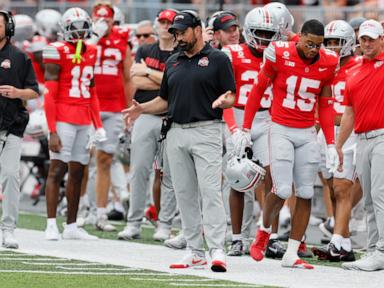
Every autumn, athletic directors stand at podiums with laminated transparency sheets and spreadsheets projecting multi-million dollar windfalls, pretending they can engineer predictability out of a sport built entirely on the fragile psyches of teenagers and twenty-year-olds. They talk about roster depth, strength-of-schedule metrics, and analytical models that allegedly account for variance. Then November arrives, a third-string quarterback gets hot on a freezing turf in West Lafayette or Ames, and a billion-dollar playoff projection turns into ash.
College football seasons do not unravel because coaches lack intelligence or resources. They unravel because the entire enterprise operates on a razor-thin margin of psychological and physical tolerance that no amount of advanced scouting can fully fortify.
The Illusion of Contained Roster Engineering
Modern programs spend fortunes hoarding four-star talent behind five-star starters, operating under the corporate assumption that depth is an insurance policy against disaster. Yet football remains a sport of extreme specialization and irreplaceable nodes. When an elite left tackle tears an ACL or a starting signal-caller loses his confidence after three consecutive road games under hostile lights, the structural integrity of an offense changes instantly.
The backup is rarely a miniature version of the starter. He is a different human being with a distinct release point, a divergent processing speed, and an entirely different relationship with the offensive line. Defenses that spent weeks studying tendencies suddenly face a scrambled puzzle. Sometimes that works to the underdog's advantage for a single quarter, but over sixty minutes, the coordinator who built a scheme around a specific skill set finds himself flying blind.
This is where the fragile nature of college football programs becomes glaringly obvious. NFL teams possess salary caps and veteran locker rooms capable of self-correction when a leader goes down. College programs rely on nineteen-year-old captains to hold the emotional floor of a roster when momentum shifts. Once doubt creeps into a facility, it moves faster than any transfer portal tampering window.
The Trap of Projected Superiority
Fans and media analysts commit the same fundamental error every week of the fall: they evaluate teams based on their ceiling rather than their floor. A powerhouse program that blows out three inferior opponents at home is anointed as a national title contender, while the underlying flaws—missed assignments in the secondary, sluggish third-down conversion rates, an overreliance on explosive plays—are politely ignored.
When that same team walks into an environment where the opponent has nothing to lose and everything to gain, those latent vulnerabilities surface with terrifying speed.
Consider how momentum operates in this sport. It is not a mystical force; it is a compounding loop of adrenaline, crowd noise, and referee discretionary calls. When a heavily favored team commits an early holding penalty that stalls a drive, the mental tax compounds. The sideline tightens. The play-caller becomes conservative, terrified of giving the opponent a short field. That conservatism communicates panic to the players, who stop trusting their training and start playing not to lose.
By the time the fourth quarter rolls around, the scoreboard often reflects a reality that defies preseason predictions, but makes complete sense to anyone who watched the nervous energy on the visiting sideline during the second possession.
The Weight of Expectations and the Unseen Fracture
The modern landscape of college athletics introduces a psychological tax that previous generations of players never had to navigate. Social media scrutiny, aggressive betting markets, and immediate transfer portal availability mean that every mistake is magnified in real time.
When a program begins a season with championship aspirations, every single snap carries the crushing weight of public judgment. For young athletes, the pressure to maintain perfection is suffocating. A single dropped pass or blown coverage is no longer just a mistake in a game; it is digital content, fuel for message boards, and a threat to a player's future market value.
Coaches spend massive portions of their work weeks managing external noise rather than executing game plans. They act as crisis communications directors for teenagers who are trying to balance organic chemistry midterms with preparing for a blitz package from a desperate defensive coordinator.
When a season finally turns—when the unexpected upset happens or the dark horse contender surges past the blue blood—it is rarely because of a clever tactical adjustment alone. It is usually the result of one team playing with absolute freedom while the other plays with the paralyzing fear of failure.
The standings at the end of November do not care about recruiting rankings or institutional prestige. They are brutal ledgers of survival, written by whichever program managed to keep its composure while the ground gave way beneath its feet.