Pity is cheap. Systems are hard.
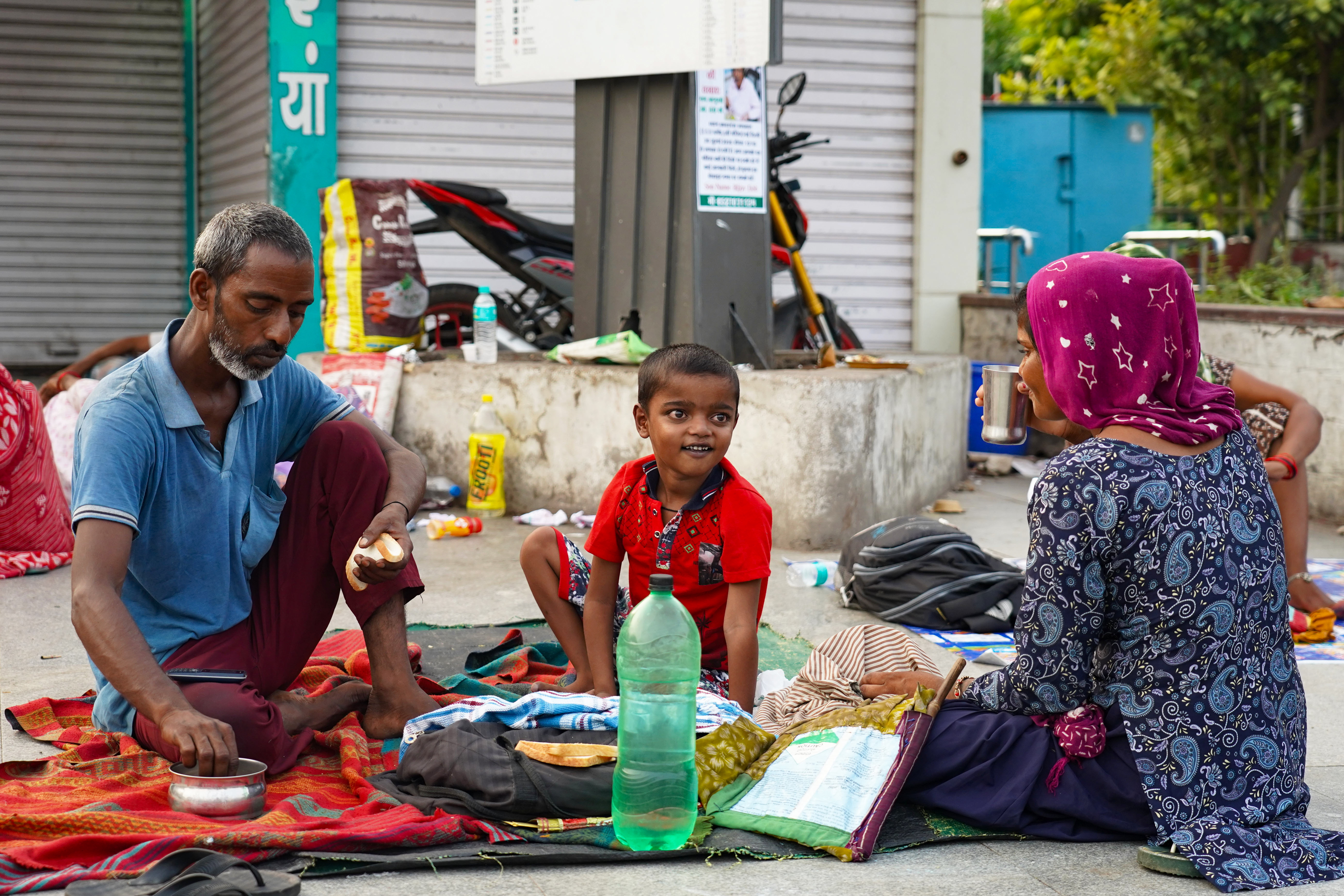
Every time a local news outlet runs a tearjerker about sidewalk sleepers camped outside a medical center while a spouse or parent fights for life inside, the consensus arrives right on cue. Look at these devoted family members. They have nowhere else to stay. Hospitals need more charity beds. Building on this idea, you can find more in: Why Obsessing Over a Senegal-Sized Antarctic Glacier Misses the Real Threat.
That framing feels noble. It reads like empathy. In reality, it is lazy analysis that lets hospital boards, city planners, and non-profit directors off the hook.
Most people sleeping on concrete outside a hospital are not there because not a single bed exists within ten miles. They are there because the financial math, logistics, and institutional design of lodging near major medical centers break down under acute stress. Calling it a simple shortage of rooms misses why families end up on the pavement in the first place. Analysts at Reuters have also weighed in on this situation.
I have spent years inside healthcare operations, municipal housing audits, and hospital community-benefit reviews. I have watched health systems pour millions of dollars into shiny new wings and executive bonuses while treating family lodging as an afterthought or a PR headache. I have seen well-meaning non-profits run guest houses with rules so rigid that exhausted relatives get turned away at 11 p.m. over a missing form.
When you look closely at what actually happens between an emergency room admission and a family member stretching out on a bench or sidewalk, the standard story falls apart.
The Lazy Consensus Around Hospital Lodging
The standard narrative goes like this: a family travels from out of town or gets stuck in an urban medical hub during a crisis. Hotels near tertiary care centers cost $180 to $350 a night. Charity hospitality houses are full. Therefore, people have nowhere else to stay.
Part of that is true. Urban hospital districts are expensive. Guest houses often have waitlists.
Yet treating "nowhere else to stay" as a literal statement of fact hides three bigger failures:
- Information failure: Families often do not learn about sliding-scale rates, social work vouchers, or community lodging networks until day three or four—after they have already burned through savings on full-price rooms or stayed awake in waiting areas.
- Friction failure: A family member sitting in an intensive care unit waiting room at 2 a.m. cannot easily navigate a three-step application, an online portal requiring a credit card deposit, or a shuttle schedule that stops running at dusk.
- Incentive failure: Hospitals get reimbursed for clinical care and measured on readmission rates and patient satisfaction scores. Lodging for relatives rarely sits on the core clinical scorecard unless a major donor pushes it.
When a system forces stressed people to solve a complex logistics puzzle at midnight with zero sleep, "no options" is often just "options buried behind friction."
Why "Just Build More Free Rooms" Misses the Mark
Whenever stories about sidewalk sleepers gain traction, the reflex answer is to demand more free rooms right next to the hospital. Sounds great on paper. In practice, real estate next to major medical centers is some of the priciest land in any city.
Building and staffing a dedicated hospitality facility costs millions upfront and hundreds of thousands every year in housekeeping, security, front-desk coverage, and maintenance. Even when a hospital or charity builds one, demand spikes unpredictably. A major trauma surge, a transplant cluster, or a multi-week pediatric stay can fill twenty rooms overnight.
More importantly, a bed five blocks away does nothing for a family member who cannot afford transit fare, fears leaving a loved one's side, or cannot pass intake screening. Supply matters, sure. Ignoring access, timing, and cost structure guarantees waste.
Are Families Actually Out of Options or Out of Liquidity?
Let us test the premise behind one of the most common "People Also Ask" questions on this topic: Do families sleeping outside hospitals truly have nowhere else to go?
Sometimes, yes—especially during sudden disasters, winter storms, or peak occupancy in smaller regional hubs. Most of the time, though, the real wall is liquidity, not pure physical vacancy.
Imagine a scenario where a working parent drives two hours to a regional medical center after a partner suffers a stroke. The partner is stabilized in neuro-ICU for an estimated ten days. The parent has $600 in checking, a car payment due in five days, and an hourly job that does not pay if they miss shifts.
A nearby chain hotel wants $165 a night plus a $100 incidental hold per stay. Two nights wipes out half their cash before they even buy food or gas. Asking for a discount at the front desk rarely yields real relief without a corporate or negotiated rate. Meanwhile, the hospital's social worker has a caseload that leaves little time for proactive outreach unless a nurse flags the distress early.
To that parent, a $165-a-night room with a $100 hold might as well be on the moon. Saying they "have nowhere else to stay" is shorthand for they cannot float the cash without blowing up their household finances.
The Hidden Trap of Short-Term Crisis Pricing
Standard travel lodging is built for leisure tourists and business travelers expensing trips to a company card. Medical families do not fit either model.
A hospital stay has no fixed checkout date. A patient expected to move to a step-down unit in two days might stay for three weeks. Families hesitate to book a week ahead when they do not know if their loved one will be discharged tomorrow or transferred to another facility. Booking day by day guarantees higher nightly rates and constant checkout stress.
That mismatch turns ordinary market pricing into a financial trap.
What Hospitals Get Wrong About Family Presence
Here is a nuance most commentators miss: hospital administrators often have mixed, unspoken feelings about family members hanging around the campus overnight.
On one hand, patient- and family-centered care is standard rhetoric in modern medicine. Families catch medication mix-ups, notice subtle cognitive changes, and provide emotional stability that overworked staff cannot match.
On the other hand, security teams, facilities managers, and clinical units worry about liability, crowd control, noise, and people sleeping in lobbies or along perimeter sidewalks. When unhoused individuals or distressed relatives camp near entrances, security gets called to move them along.
Think about the contradiction baked into that posture. Hospitals want engaged families involved in recovery, yet they frequently treat family lodging as external to the care mission. If a relative sleeps on a sidewalk outside the building, gets exhausted, gets sick, or leaves early because they cannot afford to stay, the care ecosystem suffers—even if the hospital's accounting ledger never records the cost.
The Community Benefit Blind Spot
In the United States, tax-exempt hospitals are expected to provide community benefit in exchange for their tax status. Researchers who study hospital community benefit—such as health policy scholars tracking IRS Schedule H filings—have long pointed out how loosely those dollars are defined and how heavily they can skew toward broad marketing, health fairs, or clinical write-offs rather than targeted social determinants of health.
Helping a low-income family afford safe sleep two nights during a critical care stay is not a luxury perk. Sleep deprivation impairs decision-making, spikes blood pressure, and makes it harder for caregivers to absorb complex discharge instructions. A family member who hasn't slept in thirty-six hours cannot safely manage post-discharge wound care, medication schedules, or warning signs at home.
Ignoring family lodging is not just a housing issue. It is a clinical readiness issue.
Dismantling the "People Also Ask" Myths
When people search for answers around sidewalk sleepers near hospitals, the same questions pop up repeatedly. Most answers give soft, generic platitudes. Let's strip those down.
"Can hospitals stop people from sleeping on sidewalks outside?"
Legally and practically, a private hospital usually controls its own campus property, while municipal police and city ordinances govern public sidewalks. Moving people off a sidewalk does not solve why they are there; it just shifts them a block over or creates a tense standoff in front of cameras.
Security sweeps without a warm handoff to housing, shelter, or family support resources are theater. They look like action for a day and change nothing by week two.
"Why don't social workers just get everyone a room?"
Because hospital social workers and case managers are often stretched thin across dozens of complex discharges, guardianship cases, abuse screenings, and insurance disputes. Many do not work overnight shifts. By the time a family realizes they cannot afford another night at a motel, the social worker's office may be closed until Monday morning.
Blaming frontline social workers for systemic understaffing and fragmented resources is like blaming a lifeguard for a rip current.
"Are charity guest houses the real solution?"
Organizations like Ronald McDonald House Charities and local hospitality houses do vital work, especially for pediatric and long-term specialty care. Credit where it is due: they have kept thousands of families afloat during brutal stretches.
Still, relying on charity beds as the sole safety net has limits. Waiting lists happen. Eligibility rules vary—some focus on pediatric patients, others require a minimum distance from home, and many cannot accommodate every family dynamic or pet/caregiver constraint. A safety net built almost entirely on charitable real estate and donations will always have holes during surges.
Where My Contrarian Take Can Backfire
A sharp critique is useless if it pretends there are no trade-offs. Pushing hospitals and cities to treat family lodging as a core operational priority comes with real downsides.
First, cost shifting is real. If a hospital subsidizes hotels or expands lodging programs without clear guardrails, those costs can get baked into healthcare prices, charity care budgets, or overhead—which eventually affects patients and insurers too.
Second, misuse and boundary strain can happen if programs lack clear eligibility and time limits. Any lodging assistance program near a major medical hub has to balance compassion with security, clarity, and fair access so rooms go to people actively supporting hospitalized patients rather than turning into indefinite unmonitored housing.
Third, hotels are not always a magic fix. A budget motel three miles away with high crime, bad transit, or poor safety is not an upgrade over a hospital lobby for a vulnerable family member. Proximity and safety matter just as much as price.
Acknowledging those friction points keeps the solution grounded. Good policy accounts for abuse, safety, and cost rather than wishing them away.
What Actually Works Instead of Pity
If we stop treating sidewalk sleepers as a tragic mystery and start treating it as a solvable systems failure, better moves jump right out.
- Negotiate pre-set medical rates with nearby hotels: Large health systems have massive purchasing power. Negotiating capped, tax-exempt or discounted medical-family rates—and waiving punitive incidental holds when verified by the hospital—beats ad-hoc scrambling every single time.
- Put lodging info at intake, not in crisis: Give every admitted patient's family a plain-language lodging and assistance sheet at admission, complete with 24/7 contact numbers, transit options, and emergency voucher rules. Waiting until day four wastes precious cash.
- Build flexible voucher triggers for nights one through three: The biggest cash crunch often hits right at the start of an unexpected stay. Fast, low-bureaucracy short-term vouchers for the first 48 to 72 hours give social workers time to arrange longer-term solutions while families catch their breath.
- Map transit and safety, not just room counts: A cheap room that requires a risky late-night walk or an unreliable bus creates new problems. Partner with local transit or rideshare programs for verified caregiver trips between approved lodging and the hospital.
- Track caregiver stability alongside patient outcomes: Hospitals already track patient experience and readmissions. Adding simple metrics around family lodging referrals and caregiver support closes the loop between clinical care and real-world recovery.
None of this requires inventing new technology or writing sweeping speeches. It takes clear ownership, practical contracts, and a refusal to accept preventable hardship as inevitable.
Stop writing sad stories about people having nowhere else to stay and start fixing the broken math that put them on the pavement.