Morning arrives without ceremony in South Los Angeles. It spills over cracked asphalt, dusts the hoods of parked sedans, and stretches long shadows across concrete yards where dogs bark at nothing. It is a working landscape, loud with the low hum of distant traffic and the sharp rattle of screen doors.
On a Tuesday, that routine morning fractured.
A dumpster. A grey metal bin, baking under a heavy Southern California sun, indifferent to its contents. Inside, shielded from the light, lay a life that had barely begun. Six months. Six months of soft coos, of tiny fists clutching at loose cotton, of eyes just beginning to recognize the world. Instead of a crib, a cold enclosure. Instead of a morning bottle, the sterile perimeter of police tape.
Detectives arrived, their unmarked sedans pulling up quietly, doors opening with familiar thuds. They stepped out into the glare, adjusting notebooks and glancing at the perimeter guards. They are veterans of quiet tragedies. They have seen the city at its most fractured. Yet, walking toward that dumpster, even hardened investigators felt the familiar, heavy chill that accompanies the unthinkable.
Homicide.
The word hangs in the humid air, heavy and sharp. It is a legal term, clinical and precise, designed to catalog the end of a human trajectory through unnatural means. But behind the statutory definition lies an abyss. How does a life that weighed barely a few pounds, a life defined entirely by utter dependence, end in a place reserved for refuse?
To understand the weight of this moment, you have to look past the flashing lights and the yellow tape. You have to look at the invisible architecture of vulnerability that surrounds families pushed to the absolute brink.
Consider the modern urban margin. In neighborhoods like South Los Angeles, systemic pressures do not arrive with sirens; they arrive quietly. They arrive as rising rents, as fractured support networks, as the suffocating isolation of young parents navigating postpartum darkness without a safety net. Postpartum depression and acute psychological distress are not abstract medical theories confined to glossy journals. They are heavy, silent storms that rage inside small apartments with broken air conditioning.
When a society strips away the cushions that protect the most fragile, the fall is steep.
Investigators do not start with answers. They start with questions whispered by neighbors who heard nothing, saw nothing, and wanted nothing to do with the commotion. Neighbors keep their distance out of self-preservation. In neighborhoods over-policed yet under-protected, distrust is a second skin. People lock their doors a little tighter. They turn up the television to drown out the sirens wailing down the boulevard.
Yet, beneath the silence, a collective grief pulses.
At the edge of the police tape, a small crowd gathers. A woman clutches a grocery bag to her chest, her knuckles white. She doesn't know the baby. She doesn't know the parents. But she knows the streets. She knows what it feels like to run out of money, to run out of patience, to feel the walls of a small room closing in while a child cries endlessly into the dark.
"People are breaking," she murmurs, her gaze fixed on the flashing blue lights reflecting off the metal bin. "They just break."
That is the unwritten truth of the tragedy. It is not merely an isolated monster in the dark; it is often a human being who has snapped under an invisible, unbearable weight, falling completely through the cracks of a society that stopped paying attention long ago.
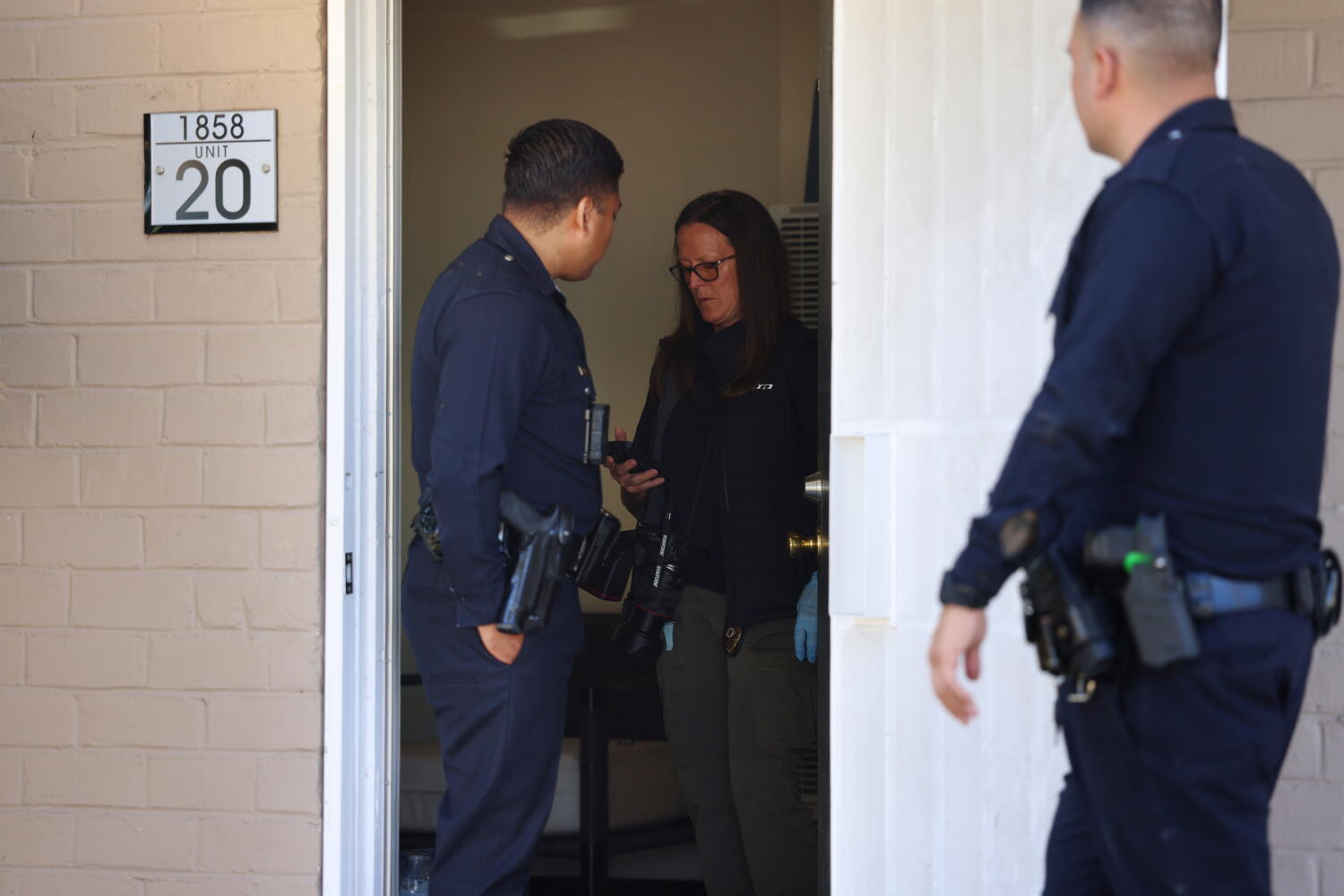
The investigation grinds forward. Forensics teams comb the scene with meticulous care, dusting handles, bagging fibers, logging every microscopic trace of evidence. Detectives knock on doors, canvassing apartment complexes, showing photographs, searching for a mother, a father, a relative, anyone who might anchor this ghost baby to a name, a birth certificate, a history.
Every hour that passes deepens the mystery. Where were the pediatric visits? Where were the family checks? In a functioning community, a child is a node in a web of interconnected lives. When a child vanishes from that web, alarms should ring. But in the shadows of the city, webs can fray until they disappear entirely, leaving isolated individuals drifting in deep space.
We search for villains because villains are easy to understand. Monsters have horns; they wear scowls; they make sense in a moral universe. But human beings in distress are far more terrifying. They look like us. They walk past us in the grocery store aisles. They stand behind us in line at the DMV, exhausted, hollowed out, hanging on by a single thread.
When that thread snaps, the resulting drop is absolute.
The sun climbs higher, burning away the morning haze, baking the asphalt until the air shimmers. The police vans prepare to leave. The media crews pack up their tripods and check their audio levels, chasing the next breaking headline in a city too vast and too fast to dwell on yesterday's sorrow.
Soon, the street will return to its normal rhythm. Cars will pass. Children will walk home from school, kicking pebbles down the sidewalk. The dumpster will be emptied, washed down, and forgotten.
But the question remains, suspended in the quiet air of South L.A., refusing to dissipate with the exhaust fumes.
What happens to a city when it loses its youngest? Not just in body, but in the collective conscience?
The investigation continues. Detectives follow leads into the labyrinth of the city, searching for truth, searching for justice, searching for an explanation in a place where explanations rarely suffice. But the true reckoning is ours. It lives in the quiet spaces between houses, in the unspoken struggles of neighbors we never check on, and in the heavy, lingering silence left behind by a child who was here for only six short months, and gone before the world even learned how to protect her.