The human ear is remarkably adept at filtering out noise, but it freezes when it encounters absolute silence where life-saving information should be.
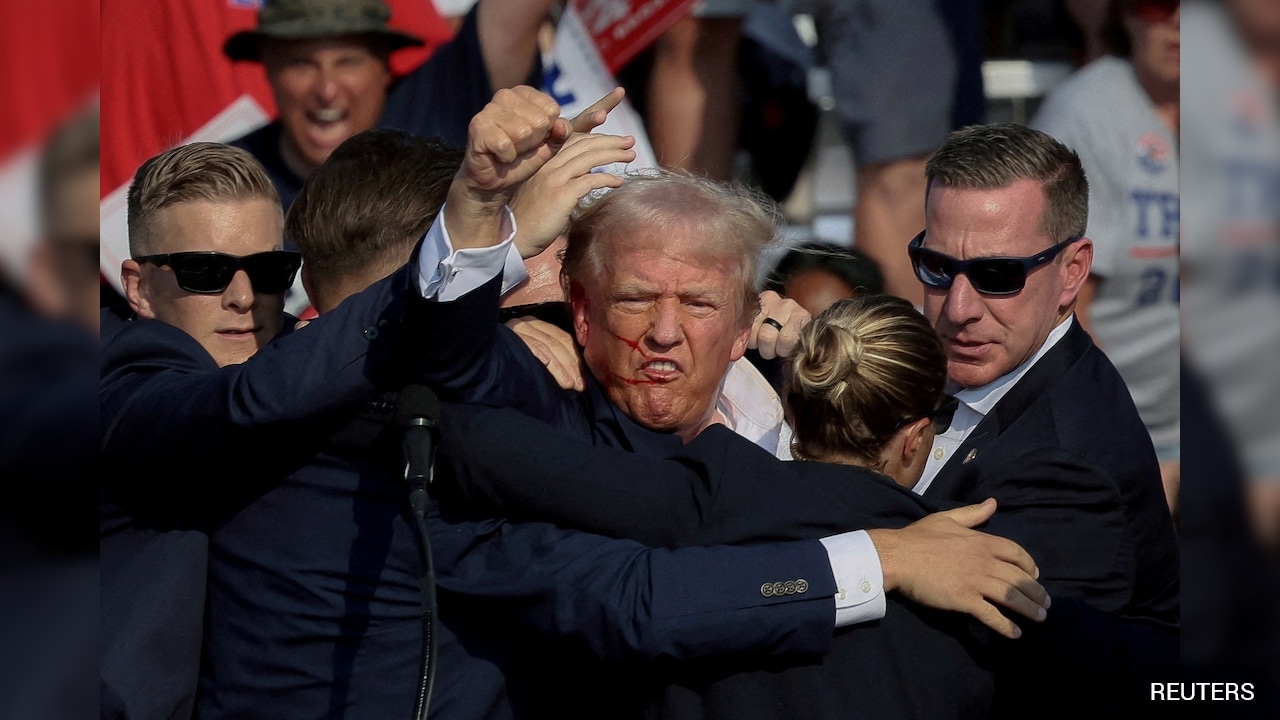
Imagine a sweltering July afternoon in Butler, Pennsylvania. The air is thick, the crowd is roaring, and a former president is speaking on stage. Underneath the overt spectacle lies a hidden infrastructure of security—an invisible web of radio frequencies meant to bind local police, state troopers, and the Secret Service into a single, flawless shield.
For that shield to work, the airwaves must be pristine. Radio communication in high-stakes security operations is not just utility; it is oxygen.
On July 13, 2024, the oxygen ran out. One hundred and two times.
A damning federal investigation recently pulled back the curtain on the catastrophic security failures surrounding the attempted assassination of Donald Trump. While initial reports focused on physical vantage points and line-of-sight gaps, the true breakdown was digital. It was a failure of transmission. During the critical hours surrounding the shooting, exactly 102 radio calls from local law enforcement went completely unheard by the Secret Service command post.
One hundred and two moments where a voice cried out with vital intelligence, only to be swallowed by a void of static and bureaucratic incompatibility.
The Anatomy of a Dropped Word
To understand how a tragedy unfolds in real-time, you have to look at the mechanics of panic.
Picture a local tactical officer. He is sweating, scanning a crowd, and he spots something wrong. A man is pacing near an AGR International building roof, acting suspiciously, carrying a rangefinder. The officer keys his radio microphone. He speaks clearly, his adrenaline spiking, expecting his words to flash instantly to the federal agents standing mere feet from the stage.
Instead, his voice hits a digital brick wall.
The investigation revealed that local law enforcement and the Secret Service were operating on entirely different radio frequencies without a unified communication channel. To bridge the gap, a makeshift solution had been patched together: a single local officer was stationed inside the Secret Service command post with a local radio, acting as a human translator.
If that local officer stepped away, looked down, or became overwhelmed by the sheer volume of cross-chatter, the bridge collapsed.
It did collapse. When local police began frantically reporting a suspicious person, and later, a gunman on the roof, those alerts bounced around local channels like an echo chamber. One hundred and two times, an officer pressed a button, spoke into a lapel mic, and trusted that the system would protect the man on the stage.
Silence.
The Secret Service command post remained blissfully, terrifyingly unaware. They were guarding a target based on an outdated reality because their technology had isolated them in a bubble of ignorance.
The Myth of the Unfailing Agency
We have been conditioned by Hollywood to view federal protection agencies as omniscient. We see the earpieces, the dark sunglasses, the grim countenances, and we assume an underlying perfection. We believe their tech is flawless.
The reality is far more fragile, grounded in the messy prose of government procurement, overlapping jurisdictions, and human error.
Radio encryption and interoperability have been recognized flaws in American emergency response since the September 11 attacks. For decades, commissions have warned that if local, state, and federal entities cannot seamlessly speak to one another during a crisis, people die. Yet, two decades later, the premier protection agency in the world walked into an open-air rally without ensuring a shared radio frequency with the very police department securing the perimeter.
Consider the sheer weight of those 102 missed transmissions. This was not a single glitch. This was a sustained, systemic blackout lasting through the most critical window of the timeline. It represents a terrifying disconnect between the boots on the ground and the hands on the levers of power.
The local officers knew. They knew a threat was escalating. They were actively looking for him. They were even confronting him on the roof. But because the communication pipeline was severed, the Secret Service detail surrounding Trump kept him on that stage, exposed, a sitting target for a shooter who had already found his mark.
The Price of Flawless Retrospect
It is easy to look back with anger. It is harder to acknowledge the chilling truth that our most critical systems are often held together by duct tape and hope.
When the gunfire finally cracked through the Pennsylvania air, it was not the technology that saved lives; it was raw, desperate human instinct. The agents threw themselves into the line of fire, executing their physical training perfectly. But physical bravery should never have to compensate for technological negligence.
The 102 missed radio calls are a stark reminder that in the modern age, information failure is just as lethal as a physical security breach. A locked gate matters very little if the gatekeeper is deaf to the warning that an intruder is already scaling the wall.
As the agency faces intense scrutiny and mandated overhauls, the focus must shift away from standard political posturing and toward the quiet, unglamorous work of technical integration. Hardware must match. Protocols must be absolute. The invisible web must be unbreakable.
Because the next time a voice crackles through a radio frequency with seconds to spare, the world will be waiting to see if anyone is actually listening.