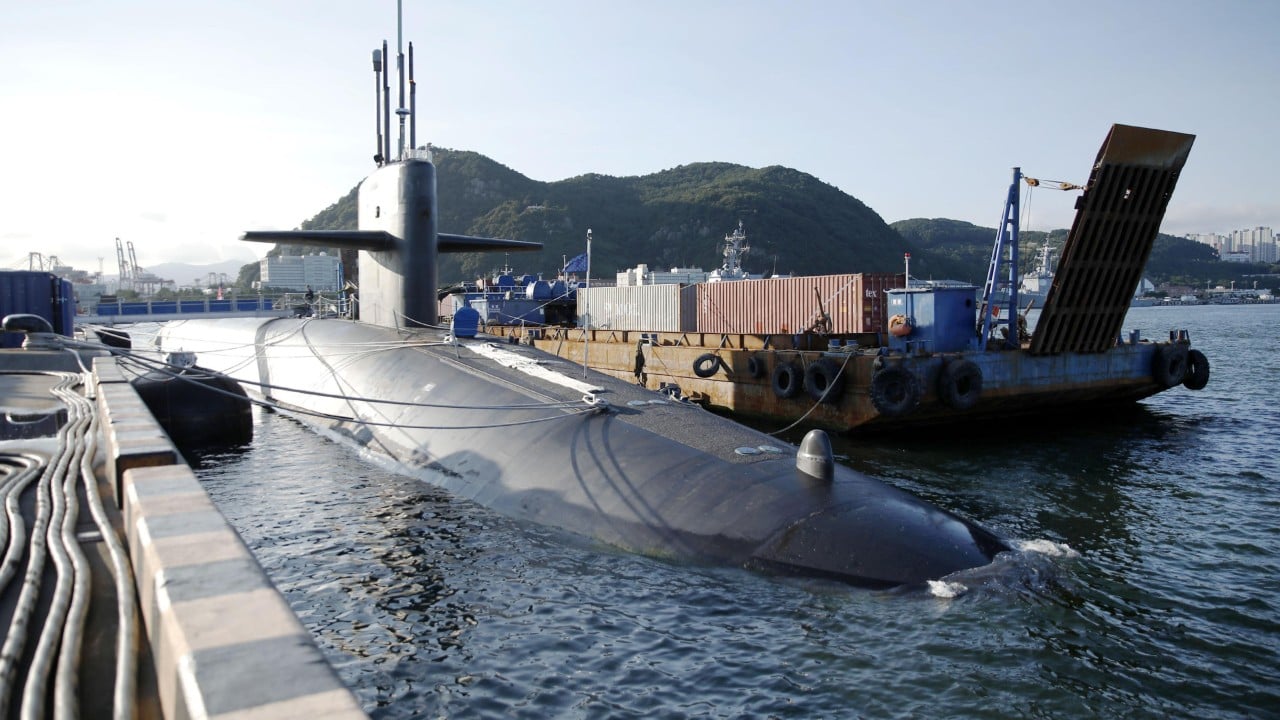
The sea off Yokosuka does not look like a place where centuries of quiet doctrine die. It looks like gray silk pulled tight over deep, cold water. Destroyer masts scrape the low, salt-heavy clouds. Gulls wheel and shriek above hulls painted the color of wet slate.
To stand on the breakwater at dawn is to feel the weight of an old geography. For decades, the script was written in simple ink. Japan would build the shield; others would hold the sword. Article Nine of the post-war constitution sat like a heavy anchor in the seabed, holding the nation back from the dark, prowling shapes that other empires favored. Diesel-electric submarines—the Soryu and Taigei classes—glided out of these very docks, marvels of battery-silent engineering, but they were built for defense. They were guard dogs on a very short chain. They could bite hard if an intruder crossed the garden gate, but they could not hunt across oceans. They could not project power into the deep blue trenches where the real balance of the world is decided.
Then the world tilted.
(As a hypothetical exercise, imagine a radar operator sitting in a cramped bunker carved into the limestone cliffs of Kanagawa, watching a cluster of amber blurs slip past the first island chain. Those blurs do not care about legal semantics. They run silent on nuclear fuel, capable of staying submerged for months, unbound by the tyranny of snorkeling masts or diesel breathing tubes. They belong to neighbors who measure peace in terms of leverage and intimidation.)
Tokyo is waking up to a chilling arithmetic. When your rivals operate underwater vessels that can circumnavigate the globe without breaking the surface, a defensive shield made of conventional steel begins to feel dangerously thin.
The conversation in the corridors of the Ministry of Defense has shifted from what is comfortable to what is survivable. Japan is quietly, deliberately exploring the concept of acquiring or developing nuclear-powered submarines. It is a tectonic shift. It is the kind of pivot that historians look back on as the moment the weather changed.
To understand why this matters, you have to understand the physics of the hunt.
Conventional submarines—even Japan’s magnificent lithium-ion-powered marvels—are runners. They are built for sprints. They run on stored energy. Eventually, they must raise a mast, gulp air, and run their diesel generators to recharge their batteries, exposing a fragile electronic signature to the sky. Nuclear submarines are marathoners. Their reactors generate immense heat through controlled fission, driving steam turbines that turn screws without needing oxygen from the atmosphere. They can cross the Pacific at twenty-five knots, buried a thousand feet down in the absolute black, listening to the heartbeat of the ocean.
For an island nation dependent on maritime trade routes for ninety percent of its energy and food, the difference between these two machines is the difference between locking your front door and owning the street.
Yet, stepping across this threshold brings ghosts.
Talk to older diplomats who remember the nightmares of the twentieth century, and you hear the sharp intake of breath. Japan renounced nuclear weapons with a religious fervor born of Hiroshima and Nagasaki. The three non-nuclear principles—not possessing, not producing, and not introducing nuclear arms—are stitched into the national psyche.
Here is where the distinction must be drawn with surgical clarity. Using nuclear fuel to propel a submarine hull is not the same as arming it with nuclear warheads. The reactor is a power plant, not a bomb. Australia understands this. Under the AUKUS pact, Canberra is acquiring conventionally armed, nuclear-powered submarines designed to patrol the Indo-Pacific. Canberra is not seeking the bomb; it is seeking endurance.
Japan is watching Australia’s gamble with intense, calculating eyes.
But Tokyo’s geopolitical neighborhood is vastly more combustible than the South Pacific. China’s People's Liberation Army Navy is expanding at a pace not seen since the naval races before the First World War. Beijing’s nuclear attack submarines routinely push through the Miyako Strait, slipping out of the East China Sea and into the vast expanse of the western Pacific, testing the perimeter, mapping the thermal layers, measuring the reflexes of the Japan Maritime Self-Defense Force.
North Korea continues to tinker with missile-firing submersibles, adding an erratic, unpredictable vector to an already crowded maritime theater.
In this pressure cooker, hesitation is a luxury with a very short shelf life.
Consider what happens next if Tokyo decides to build or buy the boats. The technical hurdles alone are staggering. Japan possesses some of the finest shipyards and metallurgists on the planet, but building a naval nuclear reactor requires an industrial ecosystem entirely separate from commercial nuclear power. It requires a mastery of shielding, primary coolant loops, and reactor safety that cannot be outsourced. It takes decades to build the institutional knowledge to safely operate and maintain a fleet of nuclear-powered vessels.
Then there is the political cost. Every neighbor from Beijing to Seoul will seize upon the announcement as proof of a resurgent, militaristic nationalism. State-controlled media will run file footage of wartime destroyers, playing the old tapes to frighten domestic audiences and rally diplomatic pressure against Tokyo.
Yet, the alternative is worse. The alternative is obsolescence.
If you are an island nation facing rivals who can station silent, nuclear-propelled hunters just off your continental shelf for months at a time, your conventional fleet is like a wooden fence in a hurricane. You can paint it, you can reinforce the posts, but when the wind hits, it splinters.
The debate in Tokyo is not about swagger. It is about survival in a century that has lost its guardrails.
Down at the dockyards in Yokosuka, the sparks from welding torches still light up the evening drizzle. The men and women who build Japan’s gray ships do not talk about geopolitics while they work. They talk about tolerances measured in microns. They talk about weld integrity. They talk about bringing the crew home alive.
When the first nuclear hull finally slides down these ways—if it ever does—it will not happen with fanfare or triumphal marches. It will happen quietly, behind closed doors and diplomatic briefings, born of necessity rather than ambition.
The sea will swallow it whole, leaving only a white wake on the dark water, and the map of the world will quietly redraw itself in the deep.