The coffee in Marcus Vance’s office is lukewarm, but the temperature is the last thing on his mind. Across a polished mahogany table that has seen better decades, a junior accountant slides a single sheet of paper toward him. It is a forecast. It is red.
For twelve years, Marcus has run a mid-sized manufacturing plant in the Midwest, turning raw steel into the structural ribs of modern warehouses. He knows the weight of iron. He knows the rhythm of a stamping press. What he does not know—what he is struggling to comprehend this Tuesday morning—is how a line item labeled "interest expense" managed to swallow his entire operating margin in less than eighteen months.
"We refinanced the equipment line back in twenty-two," Marcus says, his voice flat, testing the edges of a reality he refuses to accept. "The rate was manageable."
"It was," the accountant replies quietly. "It was three and a half percent. The new adjustment hits at eight point two. On a twelve-million-dollar debt service, that isn't a rounding error, Marcus. That's payroll."
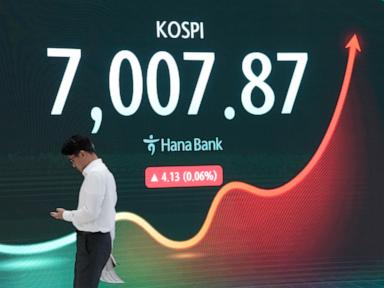
This is not a story about Wall Street tickers flashing red in the humid glow of the New York Stock Exchange. This is a story about the quiet, heavy machinery of American commerce grinding to a halt under a blanket of invisible lead. Across the country, corporate America is waking up to a stark, unyielding truth: the era of cheap money is dead, and the bill has finally arrived.
The Anatomy of a Pivot
To understand the current constriction, one must look backward to a decade that taught businesses a very dangerous lesson. For most of the 2010s, money behaved like tap water. You turned the handle, and it poured freely, cheaply, and endlessly. Central banks, attempting to thaw an economy frozen by past trauma, flooded the system with liquidity. Interest rates hovered near zero.
Corporations—from multinational conglomerates with glass towers in Manhattan to regional trucking fleets in Ohio—did what any rational entity would do. They borrowed. They borrowed to buy back stock, to fund acquisitions, to build new distribution centers, and, crucially, to weather the sudden storms of a global pandemic. Debt was not an anchor; it was a sail.
Then the weather changed.
Inflation roared back to life, aggressive and stubborn, forcing the Federal Reserve to slam on the brakes with the heaviest foot seen in forty years. The federal funds rate climbed rapidly, pushing borrowing costs to levels not witnessed since the turn of the century.
Suddenly, corporate debt stopped being a cheap tool for growth and turned into a ticking clock.
Imagine you built a house on a variable-rate mortgage during a historic dry spell, confident that the weather would always be warm and mild. Then the rain came. Not a gentle summer shower, but a relentless, rising flood that tests every seal and timber. That is corporate America today. Companies that locked in fixed-rate debt years ago are insulated for the moment, breathing a temporary, nervous sigh of relief. But corporate bonds mature. Credit lines need renewal. And when those obligations roll over into the current high-rate environment, the math turns brutal overnight.
The Invisible Strain
Consider a hypothetical logistics firm—let’s call it Vanguard Freight—operating three hundred semi-trucks across the interstate corridors of the Sun Belt. Their business model depends on thin margins and high volume. Every quarter, they need to roll over a portion of their short-term credit to cover maintenance, fuel price spikes, and fleet upgrades.
Three years ago, servicing that revolving credit cost them two million dollars annually. Today, under the weight of higher benchmark rates, that exact same debt service costs nearly five million.
Nothing changed in the warehouse. The trucks still roll. The drivers still haul. The customer contracts are still signed. Yet, an extra three million dollars vanishes from the ledger every single year, diverted not into wages, not into R&D, and not into safety upgrades, but straight into the vaults of lenders.
This is the hidden cost of the surge in borrowing costs. It does not announce itself with sirens. It announces itself through silence.
It is the expansion plan that gets quietly filed away in a drawer marked Pending. It is the hiring freeze that turns a department of four into a department of two, burning out the remaining staff through sheer exhaustion. It is the factory floor where an aging milling machine continues to limp along because replacing it requires borrowing at rates that make the return on investment look like a mathematical joke.
economists call this monetary transmission. They speak of it in clinical, antiseptic terms, drawing smooth curves on whiteboards and debating the nuances of quantitative tightening. But on the ground, transmission feels less like a mechanism and more like gravity. It pulls everything down.
The Great Sorting
Not every company is suffering equally. Herein lies the cruel paradox of the current financial climate: the giants survive while the middle class of business suffocates.
Mega-corporations with pristine balance sheets and billions in cash reserves are actually benefiting in some ways. They can afford to ignore the credit markets entirely, funding their operations out of retained earnings. In fact, many of them are currently sitting on mountains of cash earning high yields in money market funds—making more money on their savings than smaller competitors make on their sales.
But for small-to-mid-sized enterprises, which employ nearly half of the American workforce, the options are shrinking.
When credit is expensive, risk is punished mercilessly. Venture capital has grown cautious, demanding profitability today rather than market share tomorrow. Private equity firms find themselves holding leveraged buyouts structured in a different economic universe, scrambling to restructure debt piles that no longer make fiscal sense.
We are witnessing a great economic sorting. The companies built on operational efficiency and genuine cash flow are surviving. The ones that relied on a continuous intravenous drip of cheap debt to mask underlying structural weaknesses are being ruthlessly exposed.
Yet, even healthy companies are feeling the pinch. When borrowing costs rise, the cost of capital ripples through every single layer of the supply chain. A plastics manufacturer pays more to borrow, so they raise prices on the injection-molded parts sold to an electronics maker, who in turn passes that cost down to the consumer standing in the electronics aisle. Inflation may be cooling in headline reports, but the underlying cost of doing business remains elevated, sustained by the high price of money itself.
The Human Equation
Back in Marcus Vance’s office, the coffee has gone completely cold.
The spreadsheet on the table doesn't care about the twelve years Marcus spent building his reputation for quality. It doesn't care that his employees have kids in local schools or that his suppliers are family-owned shops three towns over. Numbers operate in a vacuum of cold logic.
Marcus leans back, the old leather of his chair groaning in protest. He has two choices. He can look for ways to cut costs—which realistically means freezing raises or trimming his workforce—or he can gamble on the hope that central bankers will pivot, that interest rates will tumble back down to the comforting basement levels of the past.
He knows betting on a pivot is a fool's errand. Markets are stubborn things. They care little for hope.
He picks up a pen, clicks it once, and draws a firm line through a proposed plant expansion that would have created forty new jobs in his community. The ink feels heavy on the paper.
Outside his window, a delivery truck rumbles down the access road, carrying steel that is more expensive to buy, manufactured with equipment that is more expensive to finance, delivered by a company paying more to borrow. The engine hums, fights the grade, and pushes forward into the afternoon light, carrying the invisible weight of a shifting economic tide.