Diplomacy rarely smells like steamed sea bass and reduction sauce, yet high-stakes statecraft often boils down to the room where corporate power intersects with geopolitical friction. When Washington rolls out the red carpet for foreign leadership, the guest list tells a far more compelling story than the press releases ever admit. Beneath the polished veneer of formal dinners lies a calculated exercise in industrial positioning. Silicon Valley chief executives do not break bread with visiting heads of state simply to admire the silverware. They sit at those tables because the boundary between sovereign foreign policy and corporate balance sheets has effectively dissolved.
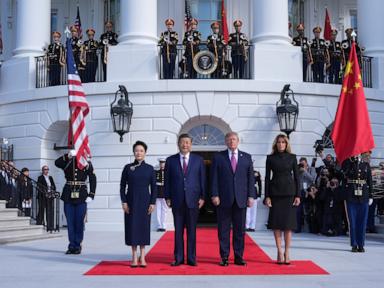
The modern alignment between the American tech oligarchy and executive branch diplomacy represents a structural shift in global leverage. Decades ago, diplomats managed trade routes and tariff schedules while industrialists built products in isolation. Today, the code written in Menlo Park dictates supply chain vulnerabilities, national security postures, and intelligence capabilities. When a state dinner features an assembly of the nation's most influential technology figures alongside a visiting leader like Xi Jinping, the symbolism is unmistakable. It is an exercise in corporate lobbying masqueraded as state hospitality, staged where national interests and corporate ambitions collide. If you liked this post, you should check out: this related article.
The Anatomy of Access
Access remains the ultimate currency in modern capitalism. Securing a seat at a high-level state dinner is not about enjoying a multi-course meal prepared White House chefs. It is about proximity. For executives steering multinational conglomerates dependent on foreign manufacturing hubs and massive consumer markets overseas, physical presence in the room signals alignment or at least open dialogue with political arbiters.
Consider the operational reality facing tech giants. Their manufacturing ecosystems rely heavily on foreign infrastructure, while their growth strategies depend on global market expansion. At the same time, national security agencies view these exact same companies as critical vectors for technological dominance or vulnerability. When regulators scrutinize supply chains, intellectual property theft, and export controls on advanced semiconductors, a direct line to executive decision-makers becomes invaluable. For another look on this story, see the latest coverage from The Motley Fool.
The guest list at such dinners functions as a financial register of influence. It reveals who holds the ear of the administration and whose commercial interests align closely enough with national strategy to warrant a seat at the table. Critics often dismiss these gatherings as mere photo opportunities, but veteran observers recognize them as high-stakes pressure valves. When political tensions run hot, commercial leaders often step in where traditional diplomats stall, utilizing economic interdependence to prevent total diplomatic fracture.
The Semiconductor Chokepoint
You cannot understand these high-level summits without examining the physical bedrock of modern computation: silicon. The ongoing friction between Washington and Beijing is fundamentally a battle for supremacy over semiconductor manufacturing, advanced lithography, and artificial intelligence hardware. Every major player in the tech sector knows that a single regulatory adjustment in export controls can wipe out billions of dollars in market valuation overnight.
When executives from major hardware and software firms mingle with political leaders, the conversation inevitably centers on national security versus market access. Corporations want freedom to sell high-performance chips to lucrative foreign buyers. Security hawks in government argue that every advanced processor shipped abroad erodes national defensive advantages. This friction creates a peculiar dance. Companies lobby aggressively against broad export restrictions while simultaneously positioning themselves as patriotic champions of domestic innovation to secure federal subsidies through legislation like the CHIPS Act.
The menu at a state dinner may feature seasonal vegetables and delicately prepared fish, but the unstated main course is always market share. The titans of industry present at these events operate in a perpetual state of tension. They are citizens of a specific nation-state, yet their operational footprints, revenue streams, and supply chains are thoroughly globalized. Navigating this contradiction requires constant diplomatic balancing acts, executed both in congressional hearing rooms and during formal evening banquets.
The Illusion of Sovereignty in the Boardroom
National sovereignty assumes a government dictates terms within its borders. Yet, when tech monopolies control the digital infrastructure upon which governments rely for communication, logistics, and defense, the traditional hierarchy of power reverses. States find themselves negotiating with corporations that possess larger market capitalizations than the gross domestic products of many developed nations.
This dynamic alters the nature of state dinners entirely. The government is no longer simply hosting corporate guests; it is courting them. Maintaining domestic leadership in artificial intelligence, quantum computing, and cloud infrastructure requires a harmonious partnership between the public sector and private capital. If regulatory burdens become too heavy, capital and talent simply migrate elsewhere. Consequently, political leaders must tread carefully, offering praise and dining invitations to executives whose market dominance they simultaneously attempt to antitrust.
The public views these dinners through the lens of etiquette and social pageantry. Behind the scenes, however, they serve as transactional forums where regulatory compromises are subtly floated and geopolitical alignments are reinforced. The tech titans arrive in tailored suits, but they carry the weight of entire supply chains, labor forces, and data empires on their shoulders.
Beyond the Banquet Hall
Once the plates are cleared and the press corps departs, the real work of global enterprise resumes. The handshakes exchanged over dessert do not erase deep-seated strategic rivalries, nor do they resolve fundamental disagreements over intellectual property rights, data sovereignty, and state-backed industrial subsidies. What they do accomplish is the maintenance of a diplomatic channel when formal governmental channels experience severe strain.
As the global economy moves deeper into an era defined by technological nationalism, the mingling of political and corporate elites will only intensify. The state dinner remains a fascinating relic of diplomatic tradition adapted to serve the imperatives of the digital economy. It is a reminder that in the twenty-first century, foreign policy cannot be divorced from technological capability, and the fate of nations is increasingly written by the architects of code and silicon.