Imagine walking into a clinic for routine help with heavy bleeding, only to walk out months later having lost healthy organs to a cancer you never actually had. It sounds like a medical horror movie. Unfortunately, it is the stark reality for Cassandra Barksdale, a 43-year-old Georgia resident.
Her ordeal exposes terrifying vulnerabilities in modern pathology labs. A simple mix-up of tissue sample labels can cascade into life-altering surgeries. When you trust the medical system with your body, you assume the basic safety checks work. Barksdale’s case proves they don't always hold up.
The Anatomy of a Laboratory Mix-up
Barksdale went to the Kaiser Permanente Southwood Medical Center in Jonesboro, Georgia, back in early 2025. She was dealing with fibroids and heavy bleeding, common issues that require careful evaluation. A biopsy was performed on March 10, 2025.
A week later, the results came back showing an aggressive form of endometrial uterine cancer. But that diagnosis belonged to an entirely different patient. Somewhere between the examination room and the microscope, a labeling error occurred.
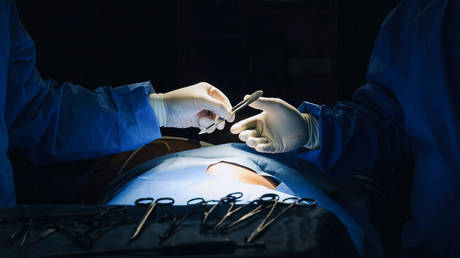
Because pathology labs handle thousands of tissue specimens daily, they rely heavily on strict barcoding and tracking protocols. When those protocols fail, the human cost is catastrophic. Barksdale didn't question the pathology report because patients aren't equipped to doubt high-level lab findings. She trusted the paperwork. On May 15, 2025, she underwent a full hysterectomy. Healthy organs were permanently removed based on a phantom diagnosis.
The Heavy Emotional and Physical Toll
Months of psychological devastation followed the operating room procedure. Believing she had a terminal or aggressive form of cancer, Barksdale spiraled into a deep depression alongside her sons. She sat down with her children to map out funeral arrangements. She prepared them for a world without her.
Think about the psychological weight of that preparation. Every ache or pain felt like a countdown.
It wasn't until September 2025—months after the surgery—that DNA analysis finally exposed the truth. The tissue sample tested positive for an aggressive malignancy, but subsequent genetic checks proved it belonged to someone else. Barksdale's actual body was cancer-free.
The physical consequences of a total hysterectomy at age 43 are permanent. She entered forced medical menopause overnight. Her healthy reproductive organs are gone forever. No apology from a healthcare provider can reverse a permanent surgical alteration.
Holding Healthcare Systems Accountable
Barksdale and her legal team filed a lawsuit against Kaiser Permanente in August 2026, seeking accountability for the profound negligence. Representatives for the healthcare provider admitted that she should never have experienced such a failure. They claimed to have thorough safety processes and noted that steps were taken afterward to prevent repeats.
Yet, an apology and procedural tweaks ring hollow when a patient's life has been upended. Lawsuits like this one push past corporate platitudes. They force institutions to answer for systemic oversights.
What happens to the other patient whose real cancer diagnosis was delayed by this exact same mix-up? Medical privacy laws keep those details hidden from public view. That lingering question makes the error even more unsettling. One swapped label threatens two completely different lives at once.
Protecting Yourself in a Flawed System
Medical errors happen more often than large hospital networks care to admit. While you cannot micromanage every laboratory technician, you can take specific steps to safeguard your health during major diagnoses:
- Always ask for a second opinion. If you receive a life-altering diagnosis like cancer, request that your physical slides or tissue blocks be sent to an independent, outside pathology lab for a re-read.
- Request your pathology report. Do not just accept a phone call or summary. Read the actual pathology report to verify your name, medical record number, and specimen details match your identifiers.
- Question discrepancies. If a lab report contradicts your imaging or clinical symptoms—such as a clean CT scan versus a severe biopsy result—ask your doctor to reconcile the difference before booking surgery.
Healthcare is a massive industry driven by efficiency, speed, and volume. Mistakes slip through the cracks when speed replaces caution. Stay vigilant, ask hard questions, and never assume a major medical facility is infallible.