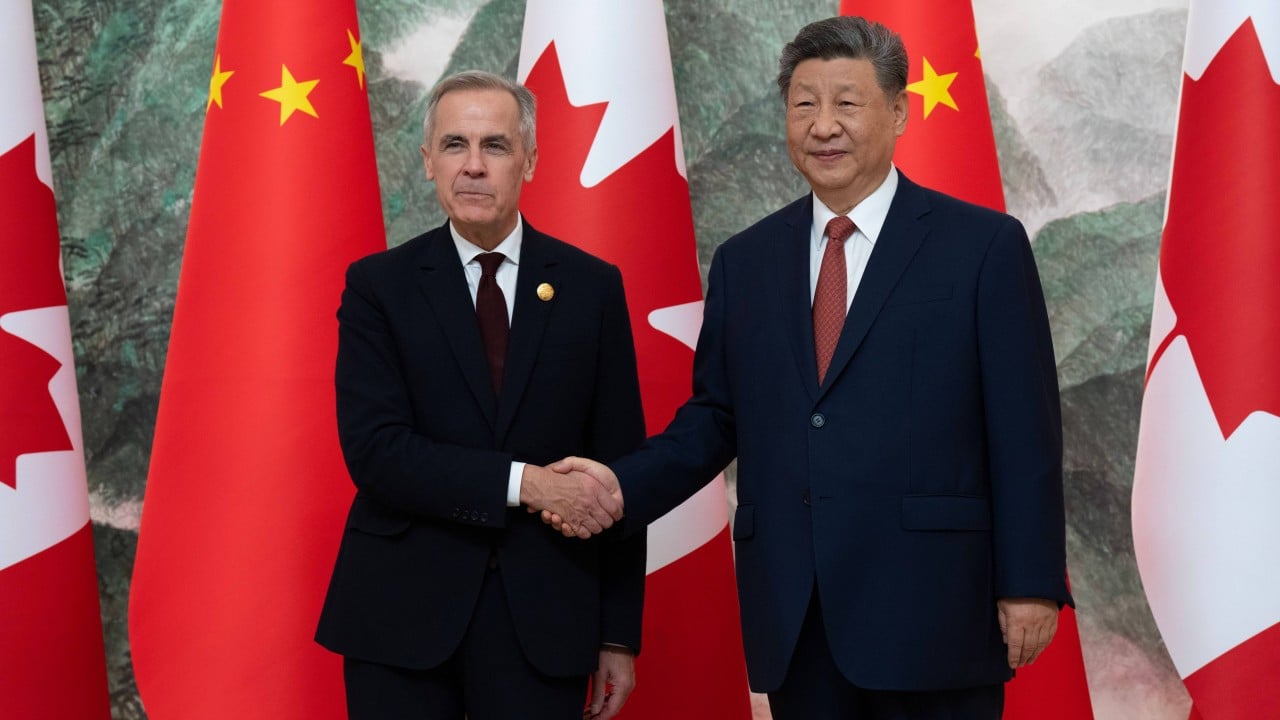
Structural Determinants of the Sino-Canadian Trade Thaw
The resumption of bilateral economic dialogue between Beijing and Ottawa represents a calculated pivot from ideological containment to economic stabilization. Rather than signaling a fundamental shift in geopolitical alignment, the tariff relief negotiated between Mark Carney and Xi Jinping reflects a structural response to domestic supply chain pressures, inflationary head-winds, and trade diversification imperatives.
To evaluate this policy adjustment, bilateral trade relations must be analyzed not as a binary state of hostility or cooperation, but through an asymmetrical cost function. Both nations operate under distinct economic constraints and strategic timelines:
- Canada’s Economic Trilemma: Balancing security integration with the United States against agricultural export dependencies, alongside domestic cost-of-living adjustments.
- China’s Resource Supply Function: Securing stable inputs for food production and industrial manufacturing while mitigating vulnerability to Western coalition tariff enforcement.
- The Tariff Elasticity Gap: The disparity between Canada's reliance on specific export sectors (e.g., canola, pork, minerals) and China's capacity to substitute suppliers via alternative bilateral channels (e.g., Brazil, Australia, Russia).
[Domestic Supply Inflation] + [Sectoral Export Losses]
                           ↓
              [Policy Friction Threshold]
                           ↓
     [Selective Tariff Exemption Negotiations]
                           ↓
         [Targeted Margin Relief in Key Sectors]
The Economic Architecture of Selective Tariff Exemption
Tariff policy between asymmetric powers functions as a sequence of targeted friction adjustments. The recent consensus does not eliminate existing baseline tariffs; rather, it introduces surgical exemptions designed to optimize domestic consumer surplus while preserving geopolitical leverage.
1. Agricultural Sector Liquidity and Input Cost Normalization
Agricultural commodities, particularly Canadian oilseeds and meat products, represent the primary transmission mechanism of reciprocal trade actions. When Beijing imposed restrictions on Canadian imports, the friction generated two distinct structural failures:
- Canadian Supply Glut: Producer price margins compressed due to sudden excess capacity, requiring emergency domestic credit facilities or alternative market subsidies.
- Chinese Substitution Costs: Importing alternative oilseed inputs from South America introduced higher freight expenditures and variable quality metrics, increasing costs for domestic processing entities.
By granting targeted tariff relief, China reduces input costs for its agricultural processing sectors, while Canada restores price stability to western agricultural producers. The mechanism operates on a direct trade-off: agricultural market access in exchange for diplomatic normalization.
2. Strategic Materials and Industrial Value Chains
Canada's supply of critical minerals, forestry products, and energy inputs occupies an essential position in the Asian manufacturing supply chain. Selective tariff adjustments in these categories isolate industrial inputs from consumer-facing geopolitical tensions.
China's manufacturing ecosystem relies on steady pricing for intermediate inputs to maintain global export competitiveness. Conversely, Canada requires access to high-volume manufacturing hubs to monetize its natural resource extraction industries. Removing secondary tariff structures restores baseline profit margins for extraction operators without requiring either nation to alter its broader security or regulatory posture.
Risk Assessment and Structural Limitations
This tactical agreement faces clear boundary conditions. De-escalation is bounded by external political pressures and institutional constraints:
- Third-Party Regulatory Spillovers: Canadian trade concessions toward China are constrained by US-Canada-Mexico Agreement (USMCA) provisions, specifically clauses regarding non-market economies. Any significant bilateral integration triggers regulatory friction with Washington.
- Asymmetric Enforcement Mechanisms: China retains the capacity to unilaterally re-impose non-tariff barriers (such as phytosanitary inspections or customs delays) faster than Canada can deploy reciprocal measures.
- Sectoral Exposure Vulnerability: Relying on bilateral tariff relief creates capital misallocation risks for domestic producers who expand capacity based on short-term policy shifts rather than long-term contractual guarantees.
Strategic Execution Framework for Market Operators
For enterprise executives, supply chain strategists, and agricultural export entities navigating this transitional window, commercial strategy must decouple from macroeconomic headlines and focus on exposure mitigation.
+-----------------------------------------------------------------------------------+
|                        EXECUTIVE STRATEGY MATRIX                                  |
+------------------------------------+----------------------------------------------+
| OPERATIONAL DIRECTIVE              | RISK MITIGATION MECHANISM                    |
+------------------------------------+----------------------------------------------+
| 1. Arbitrage Short-Term Relief     | Lock in long-term supply contracts during    |
|    Windows                         | temporary tariff exemption phases.           |
|                                    |                                              |
| 2. Implement Dual-Track Logistics  | Maintain secondary non-Chinese export paths  |
|    Structures                      | to prevent margin collapse during sudden     |
|    (Canada Export Side)            | regulatory reversals.                        |
|                                    |                                              |
| 3. Buffer Against Regulatory       | Price non-tariff compliance costs directly   |
|    Friction                        | into forward-looking profit margins.         |
+------------------------------------+----------------------------------------------+
- Capitalize on Forward Contracting During Exemption Windows: Exporters must secure multi-year off-take agreements while the current exemption regime remains active, effectively hedging against potential diplomatic friction during future election cycles or regulatory reviews.
- Establish Structural Substitution Triggers: Import-export firms should set explicit policy triggers based on non-tariff barrier intensity (e.g., customs clearance latency exceeding 14 days) to automatically re-route cargo to alternative regional hubs before inventory depreciates.
- Internalize Security-Driven Friction Costs: Corporate treasury units operating within bilateral trade flows must price geopolitical risk as an ongoing operational expense rather than a tail-risk event, factoring potential baseline tariff snaps into long-term capital allocation models.


