The phone rings at four in the morning in a quiet corner of Toulouse. For thirty years, Marc has answered this sound with the same knot tightening in his stomach. He is not a pilot. He does not wear epaulets or walk the tarmac with a swagger. Marc is a production scheduler, a man who spends his days staring at Gantt charts that stretch across three giant monitors, worrying over the exact millimeter where a titanium spar meets a composite wing.
When he picks up the receiver, he already knows the news from Seattle. Or rather, he knows the silence coming from Seattle.
That silence is worth billions.
Right now, high above the Atlantic, hundreds of white-bodied tubes streak through the stratosphere, carrying families, executives, and cargo across continents. To the person staring out the cabin window at the endless blue, an airplane is simply a room that flies. It smells of stale coffee, low-altitude air, and recycled anxiety. But to the thousands of workers on the ground in Europe and North America, that same airplane is the physical manifestation of a decade-long chess match. A match where one player is slowly, methodically clearing the board.
Airbus is pulling away. Boeing is stumbling.
These are the dry financial headlines flashing across tickers in London and New York. They talk about order books, delivery backlogs, and market share percentages. They speak of the European titan widening its lead over the American icon. But numbers on a screen fail to capture the human weight of what is happening on the factory floor.
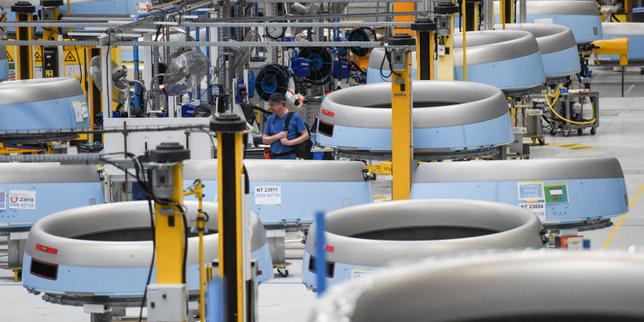
To understand why Airbus is widening the gap, you have to walk the sprawling concrete expanse of the Jean-Luc Lagardère plant in Toulouse. You have to hear the rhythmic thrum of automated riveting machines and smell the sharp, metallic tang of fresh sealant.
Imagine standing beneath the belly of an A321neo. It looms overhead like a silver cathedral ceiling. A technician named Claire stands on a scaffolding platform, her hands wrapped around a torque wrench, checking the same bolt for the third time. Her shift started hours ago. Her back aches. Yet there is a quiet focus in her eyes, a steady rhythm to her work that has been refined over years of repetition.
Stability. That is the invisible currency of aviation manufacturing.
For the past several years, Airbus has managed to keep its industrial heartbeat steady, even when the world outside shuddered. They build planes with a predictable cadence. When an airline CEO in Dubai or Frankfurt signs an order for fifty narrowbody jets, they want a date. Not a vague estimate, not a hopeful guess, but a calendar day years down the road when they can paint their logo on the tail and sell tickets to passengers.
Boeing, conversely, has spent those same years fighting fires of its own making.
Quality control crises. Whistleblower testimonies. Congressional hearings. Leadership shuffles. Every time the American manufacturer takes one step forward on the assembly line, a safety incident or a regulatory crackdown forces them to take two steps back. The FAA stands over their shoulders with a magnifying glass, and rightly so. Trust, once fractured, does not mend with a press release. It mends slowly, painfully, bolt by bolt.
While Boeing scrambles to stabilize its factories and regain the confidence of regulators, Airbus keeps building.
The backlog tells the story better than any corporate presentation. Airbus sits on an order book stretching past eight thousand aircraft. Think about that number for a moment. Eight thousand metal birds waiting for their turn to take flight. It represents nearly a decade of guaranteed work for machinists in France, Germany, Spain, and China.
It also represents a profound vulnerability.
Success on this scale brings its own quiet terror. How do you supply enough engines when your suppliers are struggling? How do you source rare aerospace-grade alloys when global supply chains remain fragile? Marc knows this terror intimately. Every Tuesday morning, his inbox fills with red warning flags: a delayed shipment of fasteners from a small foundry in Italy, a shortage of specialized microchips, a bottleneck in cabin interior installations.
The gap between the two aerospace giants is not merely about who sells more planes this quarter. It is about momentum.
In physics, a heavy body in motion tends to stay in motion. Airbus achieved critical mass years ago with its single-aisle workhorse, the A320 family. They made a massive bet on the stretching of that fuselage, creating variants like the A321neo that can fly transatlantic routes once reserved for lumbering widebodies. Airlines loved it. Passengers barely noticed the difference, but airline accountants wept tears of joy. A narrowbody that crosses the ocean with the fuel efficiency of a domestic commuter hop is the holy grail of modern aviation economics.
Boeing answered with the 737 MAX, an aircraft whose tragic history is burned into the global consciousness. The subsequent fallout crippled Boeing’s delivery rhythm. Even now, production caps imposed by regulators keep the Seattle assembly lines moving at a fraction of their potential speed.
So the ledger grows one-sided.
Month after month, the order tally trickles in. An Indian carrier here, a European low-cost giant there, a Middle Eastern flag carrier dropping billions at an airshow. The totals mount. The gap widens.
Yet, walking through the hangars of Toulouse, you will not find champagne corks popping. There is no arrogance here, only a deep, weary understanding of how fragile industrial supremacy truly is. One major structural defect, one catastrophic supply chain failure, one geopolitical shock can turn a winning streak into a disaster overnight. Aviation is a game played in decades, not quarters.
Back in his office, Marc closes his laptop as the first gray light of dawn spills over the runway outside. Across the Atlantic, the night shift in Washington state is handing over their tools, facing the same heavy machinery, the same impossible standards, the same relentless pressure to get it right.
The sky remains indifferent to who is winning. It demands only precision, patience, and absolute perfection. For now, one giant is simply meeting that demand a little faster than the other.