The air inside a commercial airliner at thirty-thousand feet is an illusion. It is a manufactured atmosphere, pressurized and filtered, designed to keep hundreds of strangers breathing in a fragile, cylindrical cocoon hurtling through the stratosphere at six hundred miles per hour. We accept this miracle of modern engineering with staggering nonchalance. We recline our seats. We plug our ears with noise-canceling foam. We pretend, with the stubborn optimism unique to modern travelers, that we are safe in our individual bubbles.
Then, the illusion cracks.
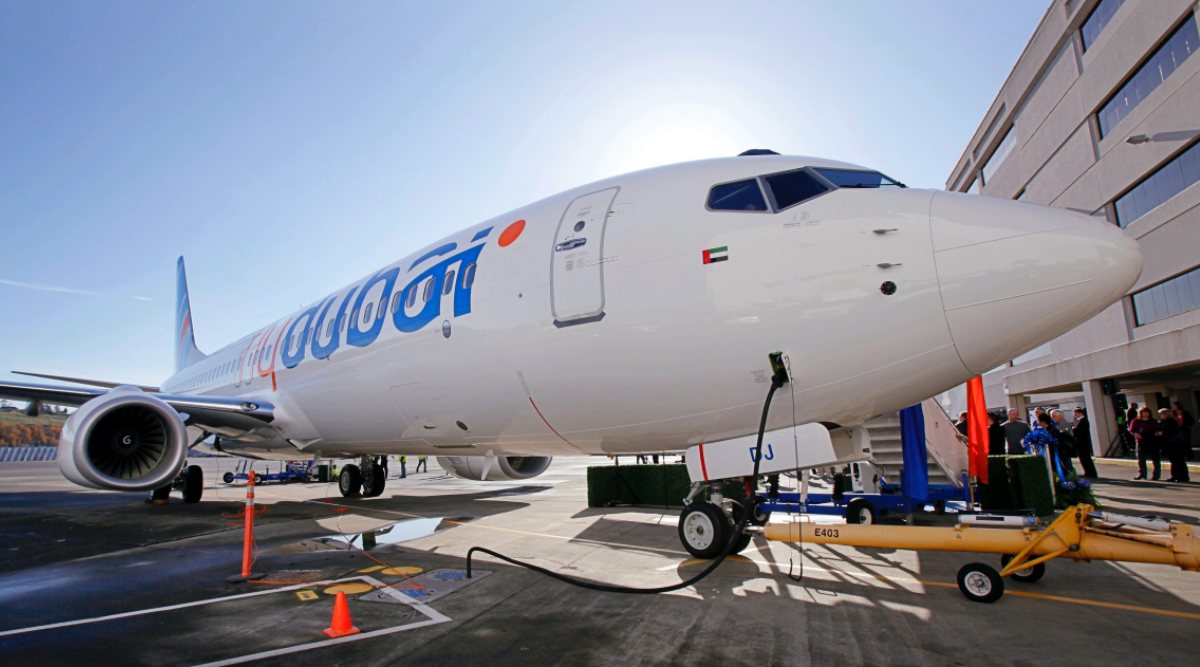
Consider the journey of a typical commercial flight cutting across the Middle East. On paper, it is a sequence of neat coordinates. Departure: Dubai. Arrival: Tel Aviv. A routine hop over regional geography, a bridge built on shifting diplomatic sands. For the passengers on board this particular Flydubai service, the cabin air was thick with the ordinary hum of transit—the quiet rustle of magazines, the muted glow of smartphone screens, the distant clinking of plastic cups from the galley.
Among them was a man we can call Yael, returning from a business trip. To Yael, the flight was merely an administrative bridge between two demanding halves of his life. He sat in row fourteen, staring blankly at the back of the seat ahead of him, lost in the heavy fog of mid-flight exhaustion. Up until that moment, aviation was physics and logistics.
It was about fuel burn, tailwinds, and arrival slots.
Then came the sound.
It did not start with a roar. It began as a jagged tear in the ambient drone of the engines. A sharp escalation of tone. Voices rising above the white noise, carrying a frantic, metallic edge that instantly triggers the primitive survival wiring in every human brain.
Upfront, near the center galley, the social contract of the cabin dissolved.
An altercation. In the close quarters of a wide-body aircraft, personal space is a myth. Every movement is communal. When tempers flare at sea level, people can walk away, slam a door, or step out into the open air to cool down. In a pressurized tube suspended over a patchwork of deserts and borders, there is nowhere to retreat. Every gasp of air is shared. Every escalation echoes against the aluminum hull.
What triggers a mid-air confrontation? Usually, it is a toxic cocktail of exhaustion, dehydration, alcohol, and the simmering anxieties of an interconnected world where people feel perpetually cornered. A petty dispute over overhead bin space or a careless remark can metastasize in the thin air. Oxygen saturation drops slightly at cruising altitude, subtly fraying tempers and amplifying impulse over reason.
According to verified accounts of the incident, the verbal sparring escalated with terrifying speed. Shouts pierced the cabin. Passengers in nearby rows instinctively shrank back, pulling their knees to their chests, shielding their screens, wishing themselves invisible. Flight attendants rushed to the scene, their training tested to the absolute limit. These are professionals whose primary public image involves serving coffee and demonstrating safety belts, yet their true, hidden mandate is managing human chaos at the edge of the atmosphere.
They stepped into the breach. They deployed de-escalation tactics honed through rigorous crisis drills. But the combatants were deaf to reason, blinded by adrenaline.
In the cockpit, three rows ahead and behind a reinforced, bulletproof door, the atmosphere was entirely different. Here, it was sterile, focused, and deeply clinical. The pilots lived in a world of green needles, digital readouts, and autopilot telemetry.
Until the intercom buzzed.
A frantic voice from the cabin crew. A description of an out-of-control situation. Physical contact. A threat to the safety of the flight.
In aviation, there is a sacred hierarchy of priorities: Aviate, Navigate, Communicate. But safety overrides everything else. The captain is absolute sovereign of the aircraft, invested with legal and moral authority that transcends international borders. At that moment, the destination ceased to matter. Tel Aviv was no longer a geographic coordinate on the flight management computer. It was a secondary concern.
The primary concern was simple and brutal: containment.
Imagine sitting in row fourteen as the realization ripples through the cabin. You feel the aircraft bank sharply. The gentle, monotonous vibration of straight-and-level flight gives way to a decisive, aggressive turn. The engines whine as power is adjusted. The nose drops slightly.
The plane was coming down.
Panic has a specific physical weight. It settles in the chest like cold lead. Conversations die instantly. Necks crane backward. Eyes lock onto the faces of the flight crew, searching for reassurance that their uniform caps can no longer provide. People calculate the remaining fuel, the altitude, the desert below.
The geopolitical reality of the region added an invisible, electric tension to the diversion. This was not a routine landing at Ben Gurion Airport. This was an emergency diversion into Saudi airspace, culminating on the tarmac of Riyadh.
For decades, the skies above the Arabian Peninsula were a chessboard of division. Flight paths bent around invisible political walls. Commercial aviation between the Gulf and Israel was a historical impossibility until very recently. Even as diplomatic shifts opened these corridors, the underlying currents remained charged with historical memory and regional friction.
Now, a commercial flight carrying a fractured community of travelers was plunging toward an unscheduled landing in the heart of the Saudi capital, driven not by diplomacy or politics, but by the raw, unpredictable volatility of human behavior.
The descent felt agonizingly long. The desert landscape outside the scratched windows shifted from a uniform, sun-bleached expanse of amber sand to the sprawling, geometric grid of urban infrastructure. Riyadh rose up to meet them.
When the landing gear locked into place with a mechanical thud and the tires screeched against the concrete of King Khalid International Airport, a collective, audible exhale swept through the cabin. It was the sound of three hundred people simultaneously remembering how to breathe.
Yet, the danger had only transformed, not vanished.
The aircraft taxied to a remote stand, the engines spooling down to a low, dying whine. The flashing amber lights of security vehicles painted the cabin walls in rhythmic pulses. The door swung open, and the sterile desert air rushed in—hot, heavy, and undeniably real.
Local security forces boarded. The transition from the artificial sanctuary of the sky to the uncompromising authority of ground law was jarring. The individuals responsible for the onboard altercation were escorted off the aircraft. Eyewitnesses later described a stunned silence as the handcuffed passengers were led down the aisle, their earlier fury reduced to hollow shock.
For the remaining passengers, the hours that followed were a masterclass in bureaucratic limbo. They sat on the tarmac, trapped in a stateless zone of uncertainty. Can you step outside? No. Will the flight continue? Maybe. What are the legal implications of an emergency diversion in a sovereign airspace governed by laws vastly different from those of your departure or arrival points?
These are the hidden friction points of modern globalization. We live in an era where we expect seamless movement across borders, as if the globe were nothing more than a giant touchscreen waiting for our commands. We forget that the earth is divided by laws, languages, borders, and deeply human insecurities. We forget that civilization is a thin veneer, easily cracked by a raised voice and a closed-loop ecosystem.
Hours ticked by. The cabin grew warm as the auxiliary power units strained against the desert heat. Snacks were exhausted. Water supplies dwindled. People began to talk to their neighbors—not out of friendliness, but out of a shared, primal need for solidarity. The artificial barriers of nationality, class, and destination melted away. In that grounded tube on a Saudi tarmac, they were simply survivors of a collective panic.
Eventually, clearance was granted. The security protocols were satisfied. The aircraft taxied back out to the active runway, its fuel tanks topped off, its crew rotated or cleared to continue.
When the plane finally lifted off from Riyadh and climbed back into the dark, indifferent night sky toward Tel Aviv, the mood on board was fundamentally altered. The casual indifference of the first leg was gone. People looked at each other with wary, knowing glances. Every rustle in the aisle caused heads to snap around.
Yael sat in row fourteen, staring out the window into the pitch-black void of the night. Below, the dark expanse of the desert stretched endlessly, hiding its borders, its history, and its conflicts beneath a blanket of stars.
We measure our technological triumphs by how fast we can cross the globe, how high we can fly, and how easily we can connect disparate corners of the earth. But technology cannot outrun human nature. The fragility of the flight is not a mechanical failure of the engines or the wings; it is the unpredictable, volatile architecture of the human heart, packed tightly into rows of three, searching for a place to land.