The air inside the walls always smells the same. Stale floor wax, laundered cotton, heavy iron, and the permanent, low-frequency hum of human lives paused mid-sentence. It is a sterile smell. It belongs to concrete and strict schedules.
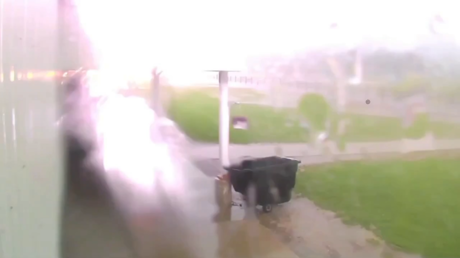
Then came the flash.
Storms do not ask for permission before they cross the perimeter fence. In Ohio, a summer squall can turn from a distant, bruised shadow on the horizon into a violent, roaring ceiling of black water in a matter of minutes. On that afternoon, the sky did not just rain; it cracked. And somewhere in the chaotic architecture of the atmosphere, a path of least resistance opened up between the charged ions of the clouds and the earth below.
Electricity is impartial. It does not care about badges, uniforms, gray institutional sweatshirts, or razor wire. It obeys only physics.
Sixteen.
That is the number that came across the radios first. Sixteen inmates. Not a statistic drawn from a quarterly report, but sixteen human bodies carrying ninety percent water, sudden conductors for millions of volts of raw, untamable energy.
Consider what happens when a lightning strike hits a building housing hundreds of people. You rarely see the actual bolt if you are inside. You hear the concussive slam—a sound so heavy it feels less like noise and more like a physical blow to the sternum. The lights flicker and die, plunging rows of cells and common areas into a sudden, disorienting dusk. Emergency generators kick in with a low, mechanical cough, casting everything in an eerie, yellowish pallor.
In that sudden blackout, fear moves faster than electricity.
To understand what followed, you have to look past the stone walls and the heavy steel doors. You have to look at the fragility of the human nervous system. When an electrical surge travels through a facility—whether channeled through plumbing, electrical grids, or the ground itself—it carries enough current to disrupt the delicate rhythm of the human heart.
Cardiac arrest. Severe burns. Muscle spasms so violent they can fracture bone. Neurological fog.
The guards on duty did not hesitate. Protocols are written in ink, but crises are handled in adrenaline. Within minutes, the routine of the facility evaporated. Sirens wailed, piercing the heavy air with a frantic urgency. Medical staff rushed toward the epicenter, bags in hand, stepping into spaces smelling of ozone and singed rubber.
Imagine standing in a crowded dayroom when the air suddenly tastes like copper. The metallic tang of ozone is unmistakable. It is the scent of split air, of molecules torn apart and forced back together in a fraction of a second. For the sixteen men who were hit directly or caught in the secondary ground surge, that scent was the prelude to chaos.
Some collapsed instantly. Their legs simply forgot how to hold them up, dropping them hard against the concrete floor. Others remained standing for a terrifying second, eyes wide, confused by the sudden numbness radiating up their arms and chest.
Panic is contagious, but so is professional calm. The medical responders moved with a practiced, grim efficiency. Triage happened on cold floors beneath flickering emergency lights. Chest compressions. Oxygen masks. The frantic, rhythmic pulse checks.
Ambulances lined up outside the gates, their emergency flashers painting the stone walls in alternating bars of red and white. One by one, stretchers rolled through the heavy security checkpoints—a rare breach of the routine, carrying inmates out into the very storm that had struck them down.
Hospitals in the surrounding area received the alert: mass casualty event originating from a correctional facility.
In the emergency rooms, the barriers that usually separate the incarcerated from the rest of society temporarily dissolved. Stripped of their institutional clothing and hooked up to banks of monitors, they were simply patients whose hearts were beating too fast, too slow, or not at all. Doctors and nurses worked with quiet intensity, tracking telemetry screens, administering fluids, running EKGs to check for hidden myocardial damage. Electricity leaves scars that are not always visible on the skin. Internal burns, rhythm abnormalities, and the lingering shadow of neurological shock often take days to surface.
Back at the facility, the storm rolled eastward, leaving behind a washed-out landscape of dripping asphalt and grey puddles reflecting the broken clouds.
The power returned. The hum of the ventilation systems resumed. The heavy doors locked back into place with their familiar, metallic thud.
Yet the air in the common areas was different. Quieter. The men who had witnessed their peers drop to the floor sat in stunned silence, staring at the concrete beneath their feet as if expecting it to bite again.
We build walls to keep the world out. We stack concrete, string razor wire, and draft rules designed to govern every second of the day. We trick ourselves into believing that inside these boxes, human lives are shielded from the wild, unpredictable violence of the natural world.
We are wrong.
When the sky splits open, the divisions we draw on maps and institutional charts vanish. The storm does not distinguish between the free and the confined. It reminds us that beneath every uniform, every label, and every layer of stone, we are all just fragile vessels made of bone and current, waiting for the weather to clear.
The rain stopped. The trucks cleared the gates. But deep within the stone, the memory of the flash remained, burning quietly in the dark.