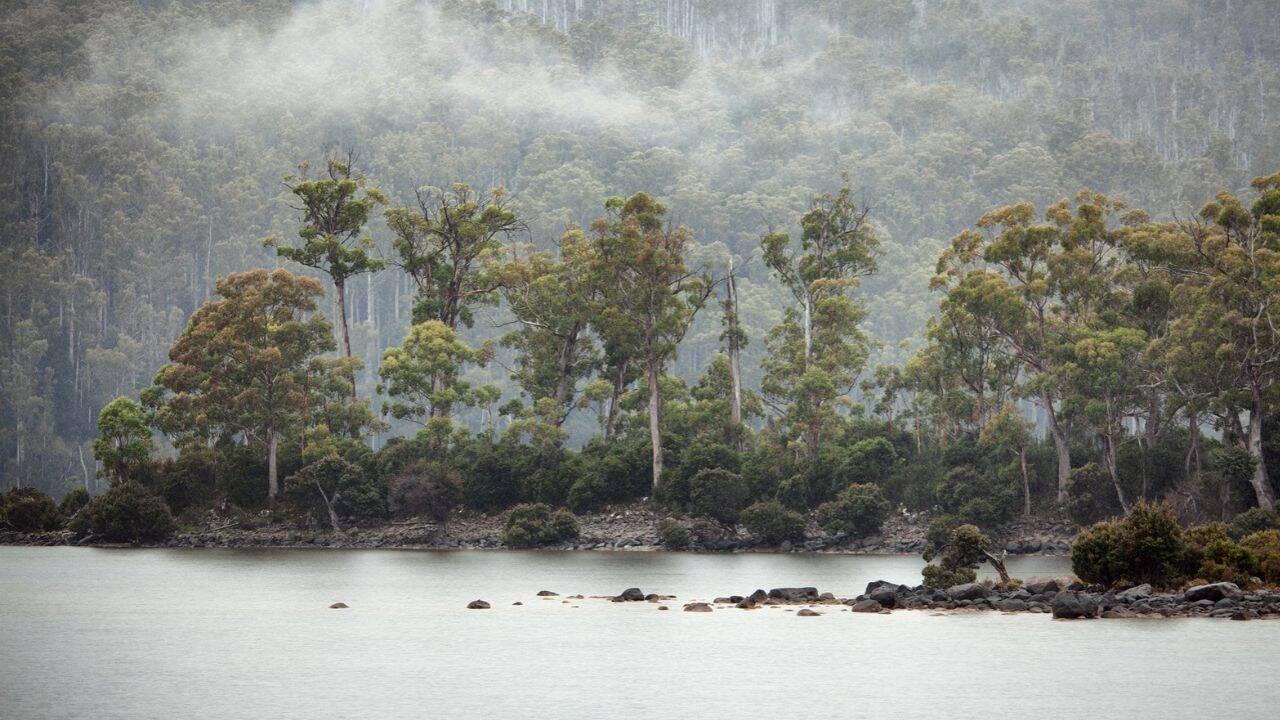
The air up there doesn't just feel cold; it feels heavy, ancient, and entirely indifferent to human presence. When you step off the beaten track in Tasmania's wilderness, the silence doesn't welcome you. It swallows you.
Consider what happens next when two hikers watch the sun slip below a jagged ridge, leaving behind an indigo dusk that rapidly turns to absolute black. They thought they would be back at the trailhead by four. Now, it is past eight. The temperature is plummeting. Their phone screens show a flat, unforgiving line of zero signal bars. Panic is a quiet thing at first. It starts as a slight tightening in the chest, a dryness in the throat, and the sudden, terrifying realization of how small a human body really is against millions of acres of eucalyptus forest, dense scrub, and granite peaks.
We have all felt that urge to push just a little further, to chase one more view before turning back. The trail looks innocent enough in the afternoon light. But the Tasmanian bush does not negotiate. Weather rolls in off the Southern Ocean with breathtaking speed, turning a gentle hike into a survival test in a matter of minutes.
This is where the story usually splits into two very different endings. In one version, two cold figures spend a freezing night huddled beneath an outcrop, listening to the wind howl, hoping against hope that someone noticed they were missing. In the other version, a tiny plastic device no larger than a candy bar sits in a jacket pocket, waiting for a single thumb press.
Let us look at what actually happened to those two hikers in the wilderness recently. They found themselves disoriented, stranded, and running out of time as darkness locked around them. But they carried a personal locator beacon. When they activated it, a faint, coded radio pulse shot straight up into the clear night sky, bouncing off satellites orbiting miles above the earth. That signal raced down to mission control centers, translating into precise coordinates longitude and latitude, cutting through the vast, trackless green below.
Police and rescue coordinators did not have to guess which valley they were in. They didn't have to sweep thousands of square miles of blind forest hoping to spot a faint flashlight. The beacon drew a bright, unmistakable bullseye on the map.
Rescue teams deployed immediately. Hours later, warmth returned in the form of heavy wool blankets, hot tea, and the steady, reassuring voices of professionals who do this work in the dead of night.
Yet, police across the region continue to issue the same urgent plea, almost weary in their repetition: carry safety gear. Why? Because for every rescue that ends with a hot cup of tea, there are others where the beacon was left behind in a car glovebox, deemed "too heavy" or "unnecessary for a short day walk."
Weight matters when you are climbing. Every ounce counts. But the heaviest thing you can ever carry into the wild is the crushing weight of regret.
Think about the gear checklist not as a bureaucratic annoyance, but as a conversation with the future. A whistle, a waterproof shell, a headlamp with fresh batteries, navigation tools, and above all, a signaling device. These items are extensions of your own common sense. They whisper a promise to the people waiting back home: I am coming back.
The wilderness is not a gym. It is not a theme park. It is a living, breathing ecosystem that operates entirely by its own rules. When we step into it, we are guests. And good guests respect the host enough to pack for the worst while hoping for the best.
The next time you lace up your boots and hear the crunch of gravel underfoot at the trailhead, pause for just a second. Look down at your pack. Ask yourself if you are carrying the tools that turn an emergency into a minor, cold inconvenience rather than a tragedy.
Because out there, when the light finally dies and the temperature drops to freezing, the difference between a statistic and a survivor often fits right in the palm of your hand.