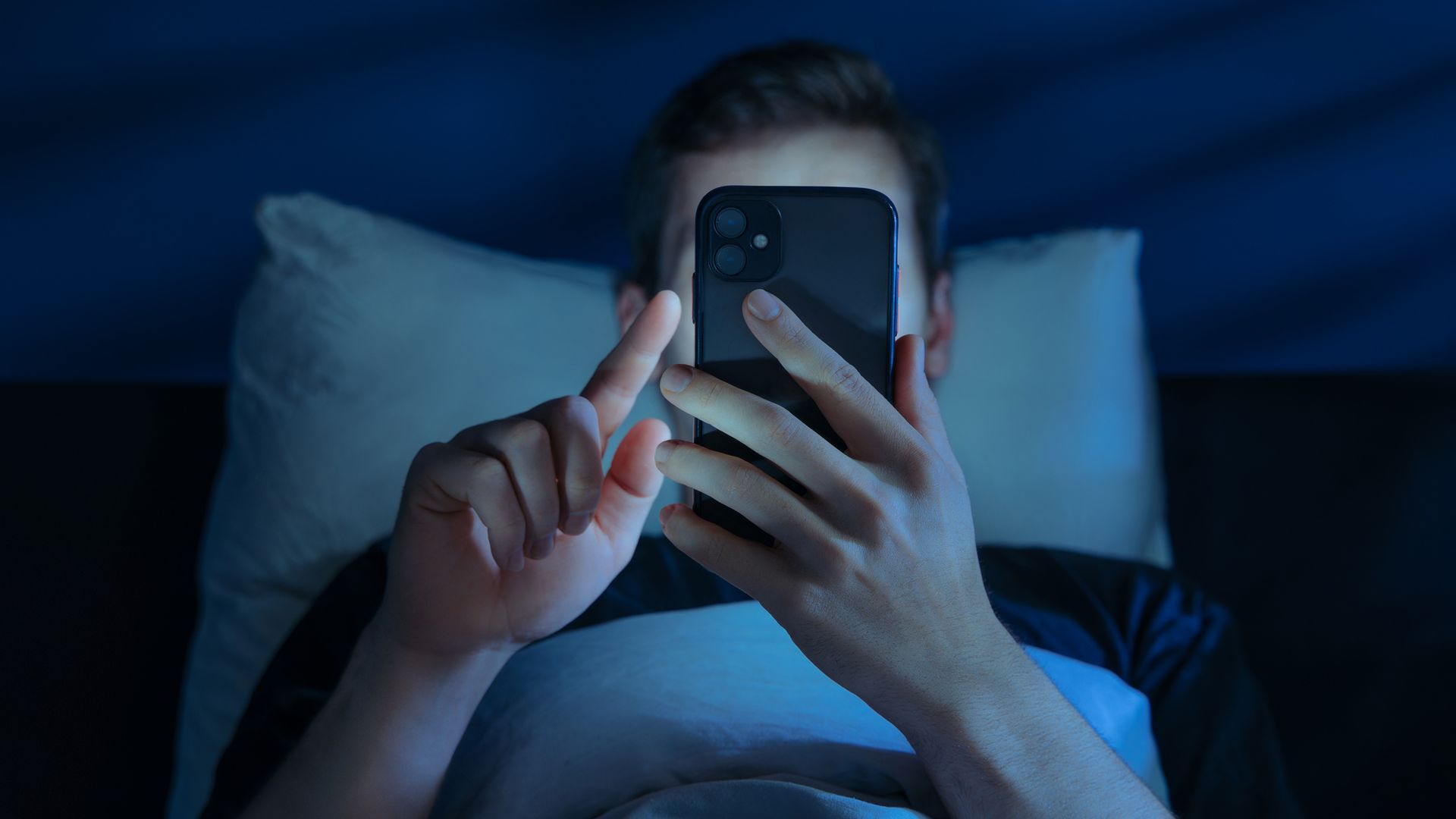
The modern tech punditry loves a good victim story.
You have read the articles. You have seen the solemn op-eds lamenting that you are staring at your screen right now without knowing why. They paint a picture of helpless humans hypnotized by the digital boogeyman, dopamine-depleted zombies trapped in a matrix of infinite scroll. They blame the design. They blame the notifications. They blame the Silicon Valley executives who engineered these "addictive" loops. For a different look, see: this related article.
It is a comforting narrative. It absolves you of agency. It means your fractured attention span is not your fault.
It is also complete nonsense. Related insight regarding this has been provided by The Verge.
The lazy consensus dominating the technology discourse insists that screen time is an external pathogen infecting our pristine minds. The reality is far colder: your phone is not hijacking your brain. You are using your phone as a cheap emotional shield because modern life requires cognitive heavy lifting that you are actively trying to avoid.
Stop blaming the glass slab. You know exactly why you are on your phone. You just hate the alternative.
The Myth of the Slot Machine Brain
Let us dismantle the foundational lie of the "digital detox" movement. Popular culture relies heavily on the work of critics who compare the smartphone to a pocket-sized slot machine. They point to variable reward schedules—the psychological mechanic where intermittent validation (like getting a notification only sometimes) keeps you hooked.
But this analogy falls apart under basic psychological scrutiny.
A slot machine exploits financial desperation and skewed probability metrics. Your phone exploits boredom. There is no financial payload waiting for you at the end of a Threads scroll. When behavioral psychologists like B.F. Skinner studied operant conditioning, they isolated organisms in barren boxes where the only stimulus was the lever.
Your life is not a Skinner box. You have choices. You have a mountain of work, a stack of unread books, a relationship to nurture, or a workout to finish. You choose the phone not because the algorithm is an omnipotent mind-control device, but because the alternative tasks require immediate psychic energy, and humans are hardwired for energy conservation.
I have spent fifteen years building digital products and watching user data. Here is the secret product managers will not tell you: users do not get sucked into apps; they flee into them.
The phone is not a vacuum pulling you in. It is an escape hatch. When a user opens an app, the data shows it happens most frequently during transitional friction—the exact moment a student opens a textbook, or an executive opens a blank spreadsheet. The phone does not create the distraction; it merely hosts the retreat.
Why Dopamine Detoxing is Scientific Theater
Wellness influencers love to preach about the "dopamine detox." They tell you to lock your phone in a timed safe, stare at a wall, and reset your neural pathways.
This is biological illiteracy.
Dopamine is a neurotransmitter essential for movement, memory, and baseline motivation. You cannot "detox" from a chemical your brain manufactures to keep you alive. More importantly, treating dopamine as a finite currency that apps "drain" misrepresents how human reward systems function.
Imagine a scenario where a writer sits down to draft a difficult chapter. The creative resistance causes mild anxiety. The writer reaches for their phone, opens a news app, glances at it for thirty seconds, and puts it down.
Did the algorithm hypnotize them? No. The writer experienced a spike in cortisol due to the friction of work, and used a micro-dose of digital novelty to self-medicate that specific moment of discomfort.
The problem is not that phones are addictive. The problem is that modern professionals have zero tolerance for cognitive discomfort. We have pathologized the natural boredom that precedes deep thought, labeling it an "attention crisis" rather than what it actually is: acute mental laziness.
The High Cost of the Screen Time Delusion
By framing screen time as an addiction, we have birthed a useless cottage industry of digital wellness tools that achieve absolutely nothing.
Consider the absolute failure of screen time limits. Apple and Google built native dashboards to track your minutes. Third-party apps block your access after thirty minutes of social media. What actually happens? Users click "Ignore Limit" 90% of the time.
Why? Because blocking the app does not solve the underlying reason you ran away from your life in the first place. If you block Instagram, you will just stare at your email inbox or check the weather five times.
| Solution Type | The Promised Cure | The Harsh Reality |
|---|---|---|
| App Blockers | Enforced discipline through software lockdowns. | Easily bypassed; users find alternative distractions. |
| Grayscale Mode | Removing color to make the screen unappealing. | Treats the symptom; does not alter the user's aversion to effort. |
| Digital Detox Weekends | Total starvation to reset focus metrics. | Leads to heavy binge behavior the following Monday. |
I have consulted for enterprise firms that banned personal devices during working hours to boost productivity. The result? Productivity did not budge. Employees simply spent more time walking to the water cooler, doodling, or daydreaming. The screen time was a symptom of a deeper operational malaise—cluttered workflows, vague objectives, and a lack of genuine engagement with the work itself.
The Brutal Truth: You Prefer the Easy Novelty
Let us stop pretending we are victims of predatory design. You are an active participant in this transaction.
The human brain evolved in an environment of scarcity. We are optimized to seek out high-value information with the lowest possible expenditure of caloric energy. A smartphone is an evolutionary jackpot: infinite social and environmental data for the cost of a thumb twitch.
When you pick up your phone "without knowing why," your subconscious knows exactly why. It evaluated the immediate environment, decided that parsing a dense document or sitting with your own thoughts required too much metabolic investment, and chose the high-efficiency alternative.
You do not need an app blocker. You do not need a dumbphone. You need to admit that you prefer easy novelty over meaningful friction.
How to Actually Regain Focus (Without the Wellness Grift)
If you want to change how you interact with technology, you have to throw out the entire digital wellness playbook. Stop tracking your minutes. Stop looking at your charts. Stop feeling guilty.
1. Identify the Trigger Friction
Next time you find your phone in your hand without a clear purpose, do not put it away immediately. Look at what you were doing exactly three seconds before you picked it up. Were you about to write an email? Were you waiting for a meeting to start? Identify the specific discomfort you were trying to escape. Labeling the escape route robs it of its subconscious power.
2. Lower the Activation Energy of Real Work
The phone wins because it requires zero effort. To compete, your actual priorities must have a lower barrier to entry. If you want to read a book, leave it open on your desk. If you need to write, keep the document open on your screen overnight. If you make your real-world tasks 10% easier to start, your brain will stop treating the phone as its default refuge.
3. Embrace Cognitive Boredom
Stop filling every transitional gap with stimulation. Step into an elevator and look at the door. Stand in line for coffee and look at the back of someone's head. Allow your brain to experience the baseline state of human existence: absolute, unvarnished boredom. This is not about resetting dopamine; it is about building endurance for the moments when your mind is not being actively entertained.
The narrative that your phone has broken your brain is a crutch. It allows you to mourn your lost productivity while doing nothing to change it. Your attention span isn't stolen. You are giving it away because holding onto it is too hard.