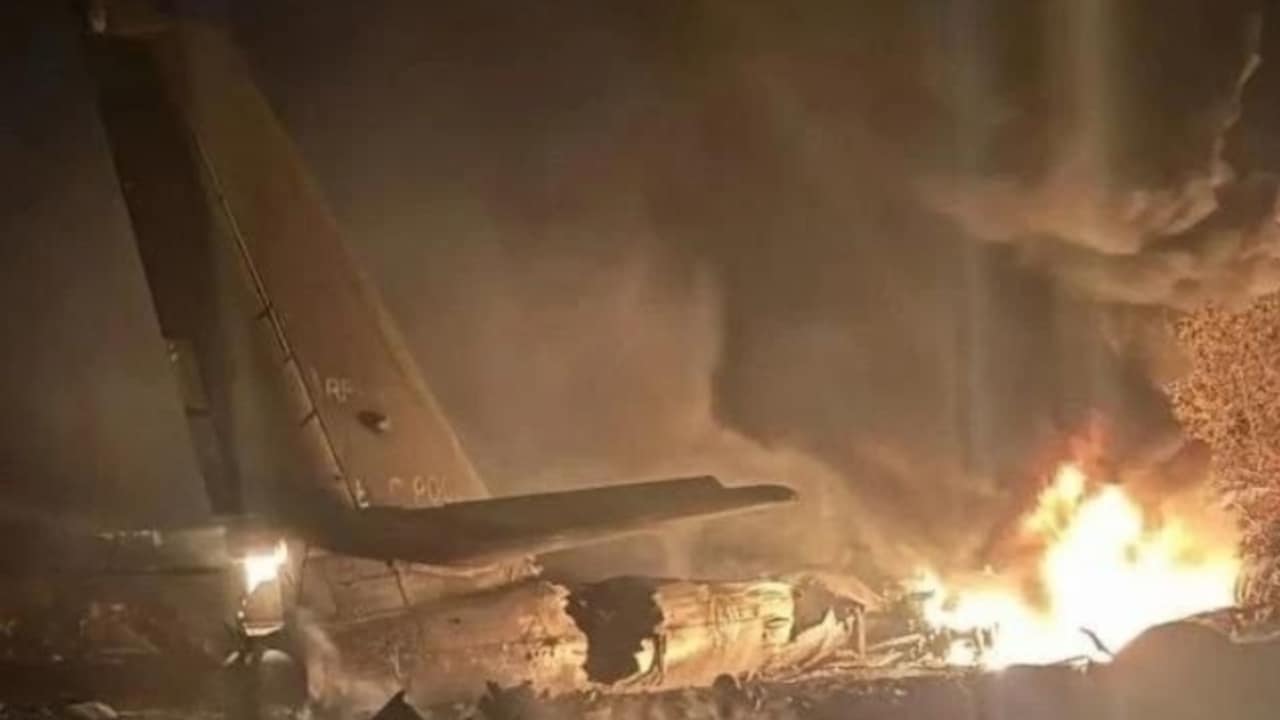
The night smelled of damp pine needles and burnt plastic.
In a nondescript workshop tucked away in an industrial park outside Tallinn, the security camera didn't blink. It recorded a shadow moving against the concrete, a flicker of orange flame, and then the frantic dance of smoke against a Baltic sky that refuses to get truly dark in the middle of summer. This wasn't a random act of suburban vandalism. It was a calculated strike against the quiet machinery of modern survival.
The target was a workshop assembling eyes for the sky. Small, unglamorous quadcopters and fixed-wing reconnaissance drones destined for the muddy trenches of eastern Ukraine.
When Estonian intelligence officials stepped through the soot-stained doors the following morning, they didn't just see melted plastic and ruined lithium batteries. They saw fingerprints that led straight back to Moscow.
The Anatomy of a Shadow War
To understand why a drone assembly line in a peaceful Baltic nation became a battleground, you have to look past the grand strategies discussed in Brussels or Washington. Look instead at the scale of a workbench.
Imagine a young engineer named Mihkel. He is twenty-four years old, wears a faded hoodie, and spends his nights soldering circuit boards that will eventually guide a drone through a wind-swept ravine to drop medical supplies or spot artillery. Mihkel does not think of himself as a soldier. He thinks of himself as a problem solver. He drinks lukewarm black coffee from a chipped mug and curses under his breath when a microscopic resistor slips from his tweezers.
On the night of the fire, Mihkel was asleep three miles away. When his phone buzzed with an alert from the workshop's security app, he thought it was a false alarm—a stray cat tripping a motion sensor or a passing truck rattling the corrugated iron walls.
It wasn't a cat. It was a proxy.
Estonia’s internal security service, Kapo, would later lay out a chilling narrative. The arsonists were not Russian Spetsnaz commandos dropping from the clouds in night-vision goggles. They were local operatives, recruited via Telegram channels, paid in cryptocurrency, and directed by Russian intelligence handlers sitting thousands of miles away in offices that smell of old paper and cheap tobacco. They were disposable actors in a gray-zone war designed to bleed the West without ever triggering Article 5.
This is what modern conflict looks like. It is not always marked by rolling armor divisions or thunderous artillery barrages. Sometimes, it smells like scorched lithium in a suburban garage.
Why Estonia Matters
Estonia is a country of paradoxes. It is a digital utopia where you can vote, start a business, and file your taxes online in the time it takes to brew an espresso. Yet, it is also a frontline state. Its eastern border is a jagged scar of history, memory, and tension.
For centuries, empires have rolled back and forth across this flat, forested land. The Estonians know what happens when you are small and your neighbor is vast, angry, and convinced of its own historical destiny. That is why, when Russia launched its full-scale invasion of Ukraine in 2022, Estonia did not merely offer thoughts and prayers. It gave what it could. It gave money, it gave diplomatic cover, and above all, it gave velocity.
Estonian startups—nimble, hyper-educated, and fiercely independent—began pivoting their engineering talent toward the defense sector. They built drones that could resist electronic jamming, thermal cameras that could pierce the fog of war, and software that could navigate without GPS.
To Moscow, these workshops are legitimate military targets. To Tallinn, they are existential shields.
When the fire was put out, the Estonian Prime Minister did not mince words. The blame was laid squarely at the feet of the Kremlin. It was an acknowledgment of a harsh reality: the front line is no longer a trench in the Donbas. The front line is everywhere.
The Economics of Cheap Destruction
Consider the asymmetry of the act.
Building a reconnaissance drone takes weeks of precision engineering, sourcing microchips through convoluted supply chains, testing firmware, and calibrating sensors. It requires thousands of euros and hundreds of hours of human focus.
Burning that same workshop down takes a gallon of gasoline, a match, and fifteen minutes of absolute disregard for human consequence.
Russia has mastered this asymmetry. By outsourcing sabotage to low-level criminals, drug addicts, and ideological malcontents across Europe, Moscow creates a deniable campaign of chaos. Warehouses in London burn. Rail signals in Poland fail. Data cables in the Baltic Sea are severed. And now, a drone workshop in Estonia goes up in smoke.
It is a campaign designed to exhaust us. It wants the insurance premiums to skyrocket. It wants the venture capitalists to hesitate. It wants engineers like Mihkel to look at their soldering irons and wonder if the risk to their families is worth the paycheck.
Every act of arson is an attempt to manufacture a psychological climate of fear.
The Human Cost of Resilience
Yet, something unexpected happens when you try to intimidate a society that has spent the better part of the last century fighting for its right to exist.
I spoke with a defense tech founder in Tallinn who asked to remain anonymous. We sat in a glass-walled conference room overlooking the medieval spires of the old town. Down below, tourists ate pastries and children chased pigeons.
"They think burning a workshop stops us," she said, stirring a sugar packet into her tea with deliberate slowness. "They don't understand how software works. They don't understand how decentralized our networks are. The blueprints aren't in that garage. They are in the cloud. They are in our heads."
She looked out the window, watching the clouds drift over the Gulf of Finland.
"If they burn one workshop, we open three more. In basements. In abandoned Soviet bunkers. In places they can't spell, let alone infiltrate."
That is the invisible narrative of this war. It is not just about the hardware; it is about human obstinacy. It is about the refusal to be small.
When Mihkel returned to the charred shell of his workspace the morning after the fire, he didn't cry. He walked over to his workbench, picked up a scorched oscilloscope, and tossed it into a dumpster. Then he pulled out his phone, called a commercial real estate agent, and asked about empty warehouse space on the other side of the city.
The smoke had barely cleared from the ceiling timbers before the Wi-Fi router was plugged back in.
The Long Echo
We are living through a hinge in history. The old rules of sovereignty and peace are fraying at the edges, singed by the fires of hybrid warfare.
When a state-sponsored arson attack hits a drone maker in Estonia, it is easy to view it as a localized crime story—a minor footnote in a massive, distant war. But that is a mistake. That fire was a signal flare. It illuminated the dark corners of a world where supply chains are battlefields and every citizen is a potential target in an undeclared struggle for the future of democratic order.
The investigation in Estonia continues. Arrests will be made. Handlers will change their burner phones. Telegram channels will go dark and reappear under new names. The dance of shadows will persist in the electronic and physical underbrush of Europe.
But somewhere in a damp industrial park, under the pale light of a northern dawn, a soldering iron is heating up. The tip glows a dull, steady red. A hand reaches out to guide it, steady and unblinking, repairing what was broken, welding together the tiny, vital connections that span the distance between a quiet Baltic workshop and the muddy fields of freedom.