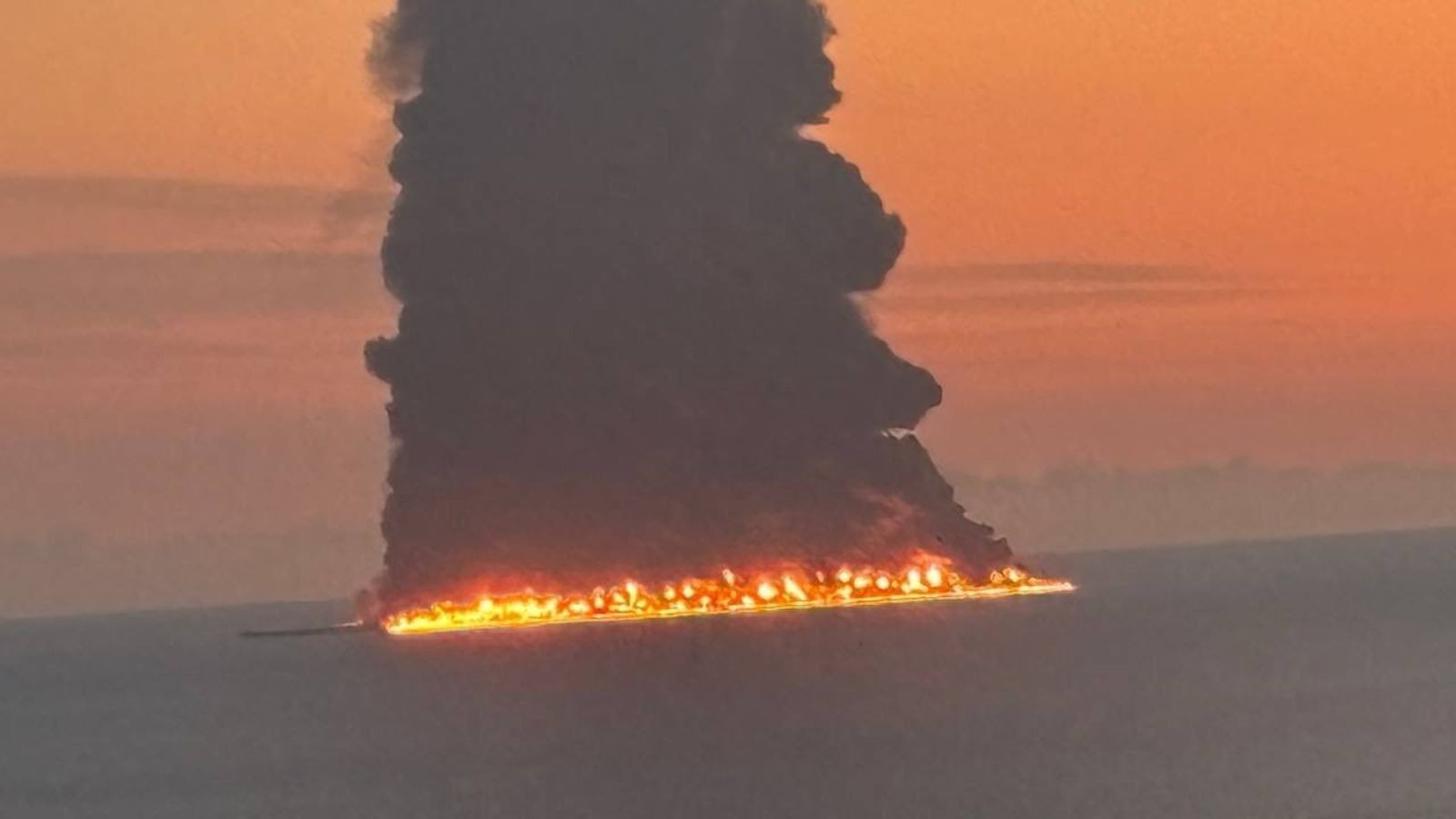
Saltwater tastes different when it is mixed with aviation fuel. It burns the back of the throat. It coats the tongue with a chemical slick that no amount of spitting can wash away.
Miles off the Russian coast in the Black Sea, twenty-three men from India woke up to a sound that shattered the predawn quiet. It wasn't the creak of structural steel or the familiar thrum of the engine room. It was the sharp, violent snap of a drone strike.
To the geopoliticians staring at satellite maps in Moscow, Washington, or Kyiv, a tanker carrying fuel is a data point. It is a logistical asset, a floating ledger entry, a tactical variable in an equation of supply and demand. To the sailors who scrub the decks and grease the pistons, it is simply home. It is where they sleep on narrow bunks, missing weddings back in Kerala or Punjab, calculating the exact month they can afford to build an extension on their parents' house.
Then, the sky tore open.
The Geography of Nowhere
The Black Sea has become a maritime graveyard of invisible lines. On navigational charts, it looks like a calm basin of blue. In reality, it is a contested corridor where the modern world's invisible wars collide with ancient maritime realities.
Consider what happens next when a vessel is hit. The explosion does not ask for your passport. It does not check whether you hold a political opinion on territorial sovereignty. It simply ignites.
When the unmanned aerial vehicle struck the tanker, the shockwave rippled through the hull with terrifying speed. Imagine standing in a steel chamber hundreds of feet long, weighing thousands of tons, only to feel it shudder like a dry leaf caught in a gale. For a moment, time stops. The mind refuses to accept the data. Not us. Not here. We are just crew.
Then the alarms begin.
In the engine rooms of modern cargo ships, the air is thick with the smell of diesel and hot oil. When fire breaks out, oxygen becomes an enemy. Every instinct tells you to run upward, toward the open sky and the salt air. But protocol demands discipline. You check the gauges. You look for your brothers.
For twenty-three Indian sailors, that morning transformed in a fraction of a second from a routine transit into a desperate struggle for survival.
The Anatomy of a Modern Maritime Crisis
Why were Indian nationals on a tanker navigating these perilous waters? The answer reveals the hidden architecture of global commerce. India supplies a massive share of the world’s trained merchant mariners. While cargo ships fly flags of convenience—often registered in small island nations for tax and regulatory reasons—their lifeblood is human. They are manned by skilled navigators, engineers, and deckhands from cities like Mumbai, Kochi, and Chennai.
They are the invisible gears of globalization. When you buy a product or fill a tank, you are downstream of their labor. Yet, until a plume of black smoke billows across international news feeds, they remain ghosts.
The attack off the Russian coast highlights a grim evolution in modern conflict. The battlefield has expanded to include civilian economic veins. Commercial vessels, carrying volatile cargo through restricted or contested zones, find themselves caught in the crossfire of automated warfare.
Let’s be honest about the terror of it. To be miles from shore, surrounded by freezing or choppy waters, with fire consuming the superstructure of your ship, is a primal nightmare. There is no quick commute to safety. There are only life rafts, firefighting foam, and the hope that a distress signal managed to cut through the electronic jamming that increasingly blankets the region.
The Human Core
Behind every headline of a "vessel incident" are human names, family group chats frozen in anxiety, and mothers waiting for a phone call that might never come.
In many homes across India, the phone is sacred. When a son or husband is at sea, the ping of a WhatsApp notification is both a comfort and a quiet terror. Are you safe? Did you pass the storm?
When the news broke about the burning tanker, those group chats went silent. Imagine the agonizing hours of waiting. The official reports trickled in slowly: fire contained, crew evacuated, injuries assessed, coordination with regional rescue authorities underway. But between those clinical bullet points lay a chasm of human fear.
These men are professionals. They train for emergencies. They drill for fire suppression, abandon-ship procedures, and medical triage. But muscle memory is tested differently when the fire is born of a weapon designed to tear through armor.
Beyond the Horizon
The fire on the Black Sea tanker will eventually be extinguished. The hull will be towed, repaired, or scrapped. Insurance adjusters will calculate the financial loss in millions of dollars. Analysts will write white papers on the security of maritime trade routes in Eastern Europe.
But the stain remains.
It sits in the lungs of those twenty-three men who swallowed the smoke of a war they did not choose. It lingers in the quiet apprehension of thousands of other mariners currently steering massive vessels through narrow straits and tense waters across the globe.
We live in an era that worships technology, speed, and automated efficiency. We track our packages by the minute and demand seamless delivery across oceans. Yet, those oceans are still crossed by human hands, vulnerable bodies, and fragile lives.
The smoke rising off the Russian coast was a stark reminder. Beneath the grand chessboards of nations and the cold mechanics of global trade, there are still men standing watch in the dark, hoping the night holds nothing worse than the usual tide.