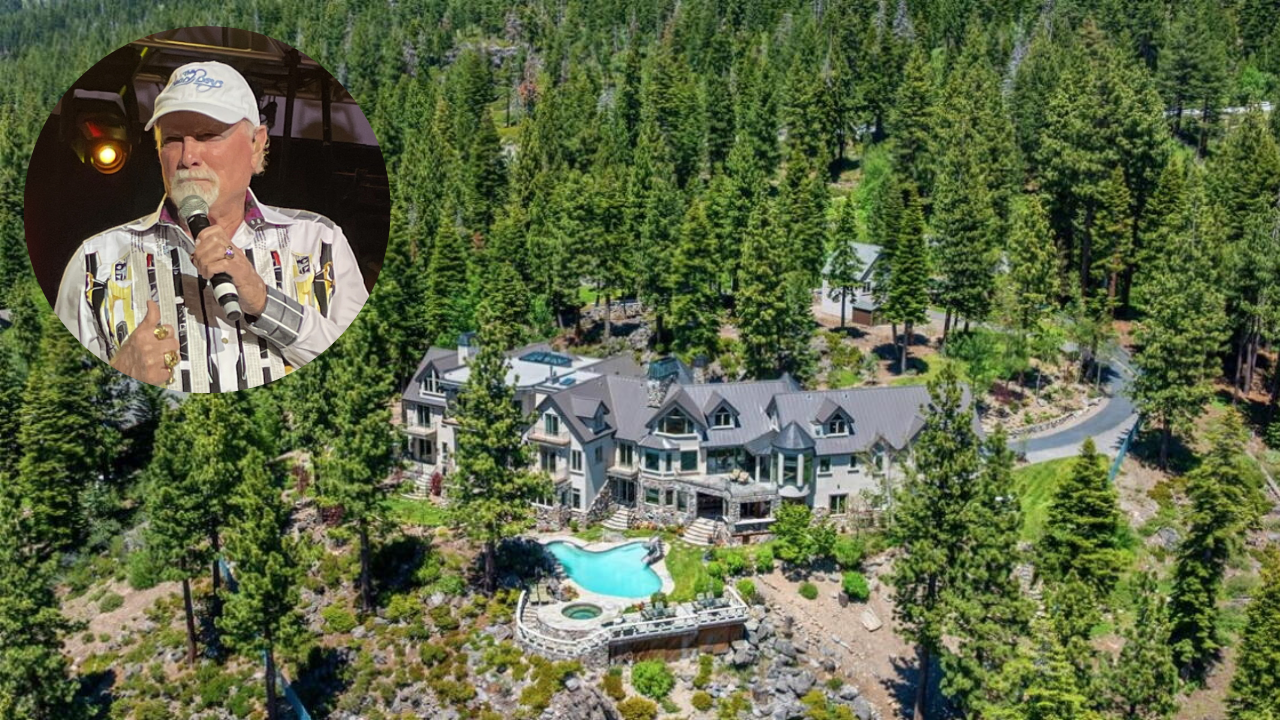
The air up there smells of high-altitude dust, granite, and an ancient kind of cold. In 1979, the world was spinning on a different axis. Gasoline lines snaked down American streets, disco was gasping its final neon breaths, and a man whose falsetto had helped soundtrack the endless summer of a generation looked out across a lake so blue it defied description.
Lake Tahoe does not care about charts. It does not care about gold records, platinum albums, or the frantic, teeth-gritting machinery of the music business. It simply sits in its basin, four hundred meters deep, cradled by the Sierra Nevada, reflecting an indifferent sky.
Mike Love bought a piece of it.
For $435,000, two and a half acres of earth anchored him to a shore that had seen Washoe baskets, timber barons, and gamblers chasing ghosts. It was 1979. The Beach Boys were no longer innocent boys singing about hot rods and California girls; they were veterans of a cultural war zone, battered by time, ego, and the cruel arithmetic of the rock and roll road.
Water changes a person. Standing on that shore, the noise fades.
Imagine the silence. Not the absence of sound, but the presence of something larger. The wind moving through the Jeffrey pines. The rhythmic slap of water against the rocky bank. To step away from the strobe lights and the suffocating roar of tens of thousands of screaming fans requires a specific kind of hunger. A hunger for quiet.
In 1979, $435,000 was a steep sum for dirt and trees. It represented a choice. You can keep running on the treadmill of relevance, chasing the ghost of your twenty-year-old self across coliseums, or you can drop anchor. You can stake a claim in a landscape that was old when humans first looked up at the stars.
Real estate is rarely just about square footage or appreciation rates. For artists who spend their lives projecting their interior emotional states into microphones, property is an external soul. It is a place where the echo finally stops.
The transaction itself was mundane. Paperwork, wire transfers, legal signatures. But the human reality beneath it was heavy. By the late seventies, the band that had defined the American dream was fractured. Relationships were strained, old wounds had scarred over, and the cultural landscape had shifted beneath their feet. Punk rock was snarling in urban basements. Synthesizers were replacing guitars.
Yet Tahoe remained.
Granite does not age the way skin does. The lake does not care about Billboard rankings. When you buy land like that, you are buying perspective. You are purchasing a reminder of your own smallness in the best possible way.
Think about what it takes to survive decades in the public eye. The relentless scrutiny. The expectation that you will remain forever frozen in the amber of your greatest hits, perpetually young, perpetually sunny. Behind the harmonies lay exhaustion. The harmonies required precision, breath control, total synchronization with other human beings. But the lake required nothing. It only asked that you stand there and look.
Over the decades, that 2.5-acre parcel witnessed the quiet chapters of a life far away from the footlights. Seasons turned with ruthless predictability. Winter dumped crushing loads of snow on the pines, bending their boughs until they snapped. Spring thawed the basin into a brilliant, blinding turquoise. Summer brought the amber heat of wildfire smoke drifting across the peaks from valleys far below.
We often misread the lives of famous people. We treat them as monoliths, characters in an ongoing tabloid serial. We forget they bleed, they age, they seek shelter from the storm just like anyone else.
When Mike Love signed on the dotted line in 1979, he wasn't just acquiring an asset. He was buying a vantage point. A place where the harmonies of the past could settle into a deeper, quieter resonance.
The water laps against the rocks today just as it did then. The trees are taller, the world is louder, and the digital noise of the twenty-first century screams for our attention every second of the day. But out there, in the high Sierra, the fundamental truth of the place remains untouched.
Some places hold your history. Others help you forget it long enough to remember who you are.