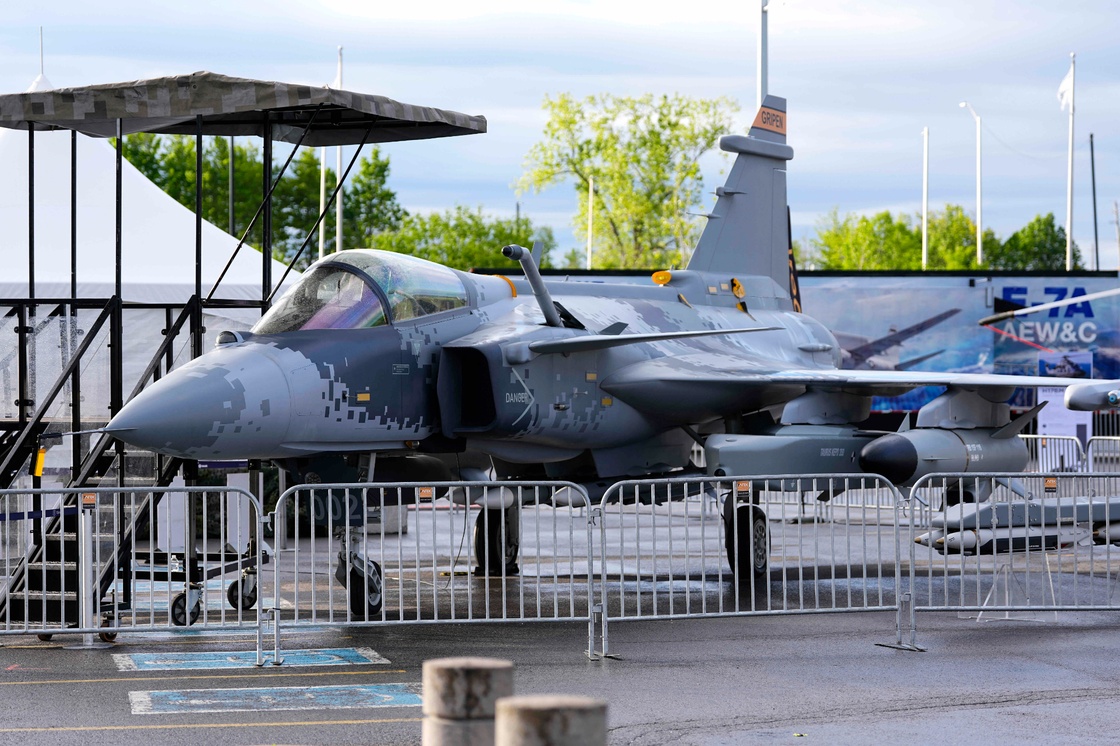
The procurement of modern fighter aircraft is fundamentally an evaluation of long-term industrial sovereignty rather than a mere transactional purchase of hardware. As the Canadian government re-evaluates its multi-billion-dollar commitment to Lockheed Martin's F-35 program, the alternative proposal presented by Swedish defense manufacturer Saab—anchored by a Memorandum of Understanding (MoU) with Montreal-based simulation firm CAE—repositions the debate from airframe performance metrics to sovereign data custody and domestic lifecycle management. The core value proposition of the Saab-CAE alliance lies in the establishment of an entirely domestic pilot and technician training ecosystem, a model designed to capture economic and operational value within Canadian borders.
To understand the strategic implications of this proposal, the offering must be deconstructed into its constituent financial, operational, and technological components. By examining the structural dependencies of modern fighter deployment, we can map exactly how a localized training infrastructure alters a nation's defense cost functions and operational readiness.
The Operational Control Framework: Data Custody vs. Foreign Dependency
The critical vulnerability of modern defense procurement is not the supply chain of physical components, but the governance of operational and mission-systems data. Foreign-managed aircraft fleets often require mission data, threat libraries, and algorithmic flight profiles to be processed, updated, and validated through external infrastructure located within the manufacturing nation. This architecture introduces a structural bottleneck where a sovereign air force must rely on foreign clearance and proprietary software releases to adapt to evolving threat environments.
The Saab-CAE framework alters this dynamic by establishing a localized data architecture. Under this model, the operational data generated by the Gripen E fleet remains structurally isolated within Canadian territory, managed by domestic personnel. This yields two distinct operational advantages:
- Zero-Latency Threat Reprogramming: The Royal Canadian Air Force (RCAF) gains the independent capability to modify electronic warfare libraries, radar signatures, and sensor fusion algorithms locally. When new threats are detected in critical operational zones like the Arctic, the update cycle is dictated by domestic intelligence processing speeds rather than foreign bureaucratic backlogs.
- Information Autonomy: Intellectual property and sensitive mission telemetry do not leave the sovereign network. This eliminates the risk of extraterritorial data access or regulatory restrictions imposed by foreign protectionist trade policies.
The Lifecycle Cost Function of Domestic Training Ecosystems
Fighter jet procurement costs represent a fraction of the total ownership expense; approximately 70% of a combat fleet's lifetime financial drain occurs during the sustainment and training phases. The standard procurement model involves exporting student pilots, maintenance technicians, and operational staff to centralized training facilities overseas, typically in the United States. This model incurs substantial structural costs:
$$\text{Total Training Cost} = C_{\text{Transit}} + C_{\text{Foreign Fees}} + C_{\text{Opportunity}} + C_{\text{Simulation Royalty}}$$
Where foreign fees and simulation royalties represent capital outflows that never reinvest into the domestic economy.
The localized strategy proposed by Saab and CAE builds an in-country ecosystem that captures these expenditures internally. CAE's role centers on developing Canadian-specific simulator capabilities, delivering live aircraft instruction, and providing technical training handled entirely by Canadian personnel.
[Saab Platform Architecture] + [CAE Domestic Simulation]
                    │
                    ▼
       [In-Country Pilot Training]
                    │
   ┌────────────────┴────────────────┐
   ▼                                 ▼
[Retained Capital Output]   [Sovereign Fleet Upgrades]
By substituting foreign training allocations with domestic simulation and live-flight infrastructure, Canada converts an operational expenditure into a domestic asset. The capital remains within the Canadian aerospace sector, financing local engineering roles, technical jobs, and domestic research and development initiatives.
The Mixed-Fleet Friction and Integration Bottlenecks
While the industrial benefits of a localized Gripen training ecosystem are clear, executing a split or alternative fighter strategy introduces severe operational friction that cannot be ignored. Canada has already committed to an initial order of 16 F-35 fifth-generation fighters. Introducing the Gripen E to create a mixed fleet yields highly complex systemic challenges.
The primary limitation is the total lack of pilot and technician interchangeability between the two platforms. A pilot certified on the F-35 cannot seamlessly step into a Gripen cockpit; their human-machine interface training, tactical habits, and muscle memory are hardcoded to a completely different software and aerodynamic paradigm.
The second limitation appears in the maintenance and logistics pipeline. A mixed fleet requires duplicate supply chains, distinct ground support equipment, separate spare-part caches, and isolated technical teams. The RCAF would effectively have to fund and run two parallel air forces, destroying the economies of scale that come with a single-platform fleet.
The integration problem extends deep into the command-and-control network. While both aircraft communicate via NATO-standard Link 16 data links, the underlying sensor-fusion engines operate on proprietary architectures. Ensuring that a Saab Gripen and a Lockheed Martin F-35 can share raw sensor data in real time without processing delays requires custom middleware development, introducing additional software vulnerabilities and verification expenses.
Industrial Clustering and the Arctic Strategic Shift
The partnership between Saab and CAE does not exist in isolation; it functions as a single component within a broader, calculated industrial alignment. The Canadian government’s recent negotiations to acquire Saab's GlobalEye airborne early warning and control aircraft—which utilizes Montreal-made Bombardier Global 6500 business jets as its base platform—signals a clear intent to construct a cohesive defense-industrial cluster.
By leveraging the same domestic supply chain across both the GlobalEye surveillance platforms and a potential Gripen E fighter fleet, Canada establishes deep technical commonality. The simulation networks built by CAE for fighter training can share underlying core architectures with the surveillance crew trainers, driving down software development costs.
This industrial strategy directly addresses Canada's primary defense priority: sovereign northern deterrence. The Gripen E was specifically engineered by Sweden to operate in harsh, sub-zero environments from short, austere, or improvised runways, requiring minimal ground support infrastructure. Pairing this rugged airframe capability with a completely domestic, localized training pipeline managed by CAE creates a highly resilient operational model for Arctic deployment. Under this framework, cold-weather operational data is immediately fed back into locally owned flight simulators, continually optimizing pilot preparation for the exact geographical conditions they are tasked to defend.
The immediate tactical play for Canadian procurement officials requires executing a comprehensive lifecycle cost-benefit analysis that weighs the friction of a mixed fleet against the absolute economic and sovereign gains of technology transfer, domestic data custody, and localized training infrastructure.