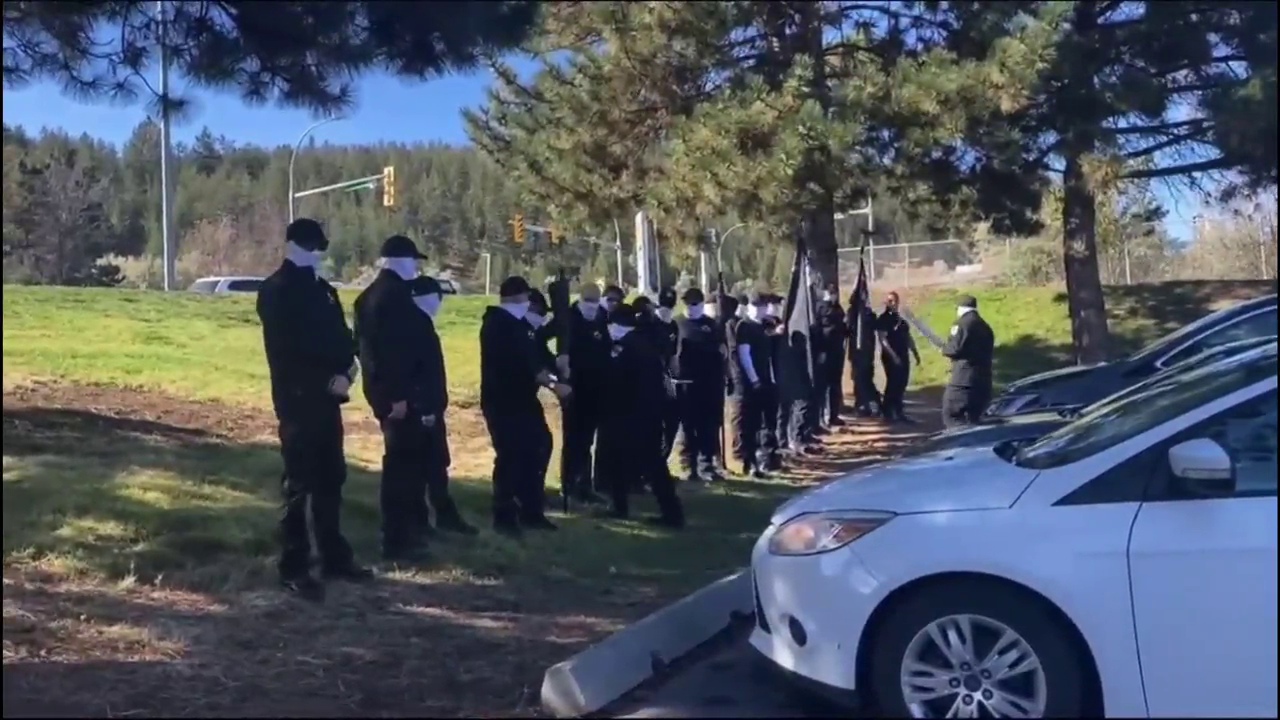
Public discourse surrounding territorial disputes in British Columbia routinely collapses into moral condemnation. When officials label masked groups operating on First Nation land as cowards, the rhetoric performs a specific political function: it individualizes a systemic structural failure. Condemnation replaces institutional analysis, masking the underlying jurisdictional ambiguities, enforcement vacuums, and economic pressures that generate such confrontations. To move past superficial moralizing, one must deconstruct the mechanics of territorial assertion, the limits of state policing frameworks, and the economic variables that incentivize direct-action interventions in remote resource corridors.
The Structural Anatomy of Jurisdictional Friction
The foundational vulnerability of remote land governance in British Columbia stems from a multi-layered jurisdictional overlap. Under Canadian constitutional law, Aboriginal title exists as a sui generis collective right, yet provincial crown tenure, federal regulation, and internal First Nation governance structures frequently collide. When a dispute arises over industrial access, pipeline routing, or territorial monitoring, this friction produces a legal vacuum. Don't miss our recent article on this related article.
State police forces operate under strict statutory mandates that prioritize property protection and public order, yet they routinely hesitate to intervene in complex land rights disputes without explicit political directives or clear civil injunctions. This hesitation creates a strategic opening for non-state actors. When formal authorities delay enforcement due to political risk or legal uncertainty, decentralized groups fill the void.
The appearance of masked actors on sovereign territory is not a random behavioral anomaly; it is a calculated tactical adaptation. Anonymity solves a specific operational problem for individuals engaged in contentious land defense or disruption: it minimizes individual legal exposure while maximizing collective signaling value. In economic terms, masking reduces the personal cost of participation while retaining the deterrent signal directed at corporate operators or rival factions. Officials who dismiss these groups as cowards ignore the cold rationality of risk mitigation employed by actors operating outside institutional protections. If you want more about the history of this, NBC News provides an in-depth summary.
The Economics of Territorial Control and Direct Action
Resource development corridors across Western Canada operate on predictable capital expenditure cycles. Billions of dollars in infrastructure investment depend entirely on project certainty. When a First Nation community experiences internal division regarding resource revenue sharing or environmental risk, project opponents utilize direct action to impose transaction costs on corporate proponents.
The economics of disruption rely on leverage asymmetry. A small group of individuals positioned at a strategic choke point—such as an access road, bridge, or remote camp—can halt capital flows exceeding millions of dollars per day. The cost of delay vastly exceeds the operational cost of maintaining a blockade or monitoring camp. Consequently, direct action functions as an economic veto where formal legal processes fail to satisfy dissenting factions within a community.
[Capital Investment] ──> [Jurisdictional Ambiguity] ──> [Direct Action / Blockade] ──> [Inflated Transaction Costs] ──> [Project Delay / Cancellation]
This dynamic explains why institutional authorities react with such frustration. State actors view the situation through the lens of criminal law and public order, while grassroots participants view it through the lens of sovereign self-determination and environmental protection. When these two frameworks collide without an effective mediation mechanism, escalation becomes the default mode of communication. The introduction of masked participants signals a breakdown in trust not only between the state and the community, but often within the community's own hereditary and elected governance structures.
Institutional Gridlock and the Limits of State Enforcement
The state response to territorial disputes is governed by risk aversion. Police agencies face an impossible optimization problem. Premature or aggressive enforcement risks violent escalation, civil rights lawsuits, and protracted political fallout. Conversely, delayed enforcement encourages further extra-legal assertions of control, eroding the state monopoly on the legitimate use of force.
This institutional paralysis generates a reactive policy cycle. Officials issue stern public statements, deploy liaison officers, and wait for corporate plaintiffs to secure civil court injunctions. Once an injunction is granted, the legal burden of enforcement shifts onto the police, transforming commercial disputes into high-stakes tactical operations.
Phase 1: Legal Ambiguity and Community Division
   │
   ▼
Phase 2: Emergence of Decentralized Monitoring (Masked Groups)
   │
   ▼
Phase 3: Escalation of Transaction Costs for Industry
   │
   ▼
Phase 4: Judicial Intervention (Civil Injunctions)
   │
   ▼
Phase 5: State Tactical Enforcement and Public Condemnation
This sequence reveals why moral labeling is analytically useless. Calling participants cowards does not alter the incentive structures that brought them to the land. It merely signals political exhaustion. As long as structural mechanisms for resolving internal Indigenous governance disputes remain weak, and as long as capital projects push into contested territories without prior, free, and informed consent that reconciles elected and hereditary authorities, direct action will remain a rational tactical choice for dissenters.
Strategic Realignment of Resource Governance
Resolving the underlying instability requires abandoning reactive security models in favor of institutional redesign. First Nation governance structures in British Columbia often bear the historical scars of the Indian Act, which established elected band councils that frequently conflict with traditional hereditary systems. Corporate proponents and provincial regulators exploit this dual-governance model by securing consent from one body while ignoring the other, creating internal community schisms that manifest as physical blockades and masked occupations.
To eliminate the conditions that spawn volatile territorial confrontations, policy makers and corporate actors must implement three structural adjustments.
First, commercial agreements must require absolute internal governance harmonization before capital deployment. If elected councils and hereditary systems hold conflicting mandates, project proponents must pause development until the community achieves internal consensus. Proceeding with split consent invites direct action.
Second, law enforcement agencies must decouple themselves from corporate dispute resolution. Utilizing public police forces as private security enforcers for industrial projects under civil injunctions erodes public trust in the administration of justice. Independent mediation bodies with binding authority over land use disputes must be institutionalized before ground is broken on disputed corridors.
Third, transparency in territorial monitoring must replace anonymous confrontation. When monitoring groups operate with masked identities, it degrades accountability on all sides—preventing both external verification of abuses and internal community dialogue. Fostering an environment where territorial oversight can occur without criminalization or intimidation requires formalizing community-based monitoring protocols recognized by all jurisdictional authorities.
The recurrence of masked groups on Indigenous land is a symptom of systemic failure, not an isolated behavioral defect. Until the structural fault lines between state jurisdiction, corporate capital, and Indigenous governance are systematically repaired, the frontier will remain a zone of friction.