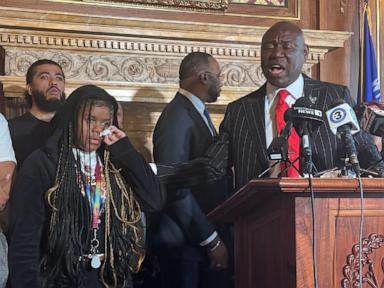
Grief has a distinct sound in a crowded room. It is not always a sharp cry or a loud demand for justice. Sometimes, it is the quiet rustle of a mother folding a sweatshirt that still smells faintly of laundry detergent and winter air, pretending for a brief, agonizing second that her son is simply running late.
Elsa Ruiz knows that sound.
On a Wednesday afternoon that began like any other on a busy Madison street, her thirty-eight-year-old son, Corey Ruiz, ran out of tomorrows. Four police officers swarmed him. A taser crackled. Shouts pierced the roar of afternoon traffic. And then, three shots cracked into the asphalt, ending a life in the span of a heartbeat.
What remains in the aftermath is a community caught raw, staring into the dark spaces where official reports collide with human reality.
Police stated that officers were responding to reports of someone attempting to enter parked vehicles. They said Corey fled on a bicycle before being cornered. They maintained that a struggle ensued, that a knife was drawn, that an officer was injured, and that lethal force became the final, tragic denominator of the afternoon.
The family sees something entirely different.
Standing beneath the high ceilings of the Wisconsin state Capitol, flanked by civil rights attorney Ben Crump, Elsa clutched a microphone and tried to put infinity into words.
"He was my love," she whispered, her voice fracturing against the quiet walls. "He loved his daughter, he loved his family. He did not deserve to be taken out like that. They took my baby from me."
Consider the geometry of grief for a thirteen-year-old girl. Kah'liyah Ruiz now lives just blocks from the exact patch of pavement where her father died. Every time she walks to school, she has to pass the ghosts of that Wednesday. She has to navigate the whispers in the hallways, the media vans parked at the corners, and the cold reality that the world is now measuring her father by his final, chaotic moments rather than the thirty-eight years that came before them.
"People are saying he's a criminal," Kah'liyah said through tears that carved paths down her face. "So what? He had a family, he had me."
In any tragedy involving law enforcement, the immediate aftermath becomes a brutal tug-of-war over narrative. Madison Police Chief John Patterson urged caution, noting that initial cellphone videos circulating online do not capture the exact perspective of the officers involved. Four officers have been placed on administrative leave while the Wisconsin Division of Criminal Investigation picks apart the timeline. A separate inquiry is underway by the city's independent police monitor, Aeiramique Glass, who has publicly voiced frustration over delayed evidence sharing.
Yet, a glaring structural absence hangs over the investigation. Unlike nearly every other municipality of its size, Madison does not mandate body-worn cameras for its police force.
There is no official audio from an officer's chest mount. There is no wide-angle lens capturing the precise angle of a hand or the exact shade of fear in a crowded street.
"Thank God there was video," Ben Crump remarked, pointing to the shaky, civilian-shot cellphone footage captured by startled bystanders. "If there wasn't video, imagine what the narrative would have been."
That single thought hangs heavy over Madison. It exposes a profound vulnerability in how modern justice is recorded and verified. When a city operates without standard body cameras, the burden of truth falls entirely on the random witness holding a phone, or the grieving family left piecing together fragments of security camera footage and hurried social media clips. It turns accountability into an accidental luxury rather than a guaranteed standard.
Protests have since flared. Makeshift memorials of flowers, candles, and handwritten signs have sprouted near the site of the shooting, mingling with the bitter echoes of past police killings in the city. Tension vibrates through local government meetings, where residents demand answers, transparency, and structural change.
State Representative Shelia Stubbs stood beside the family, offering a steady shoulder as Veronica Ruiz, Corey’s sister, wept openly. The room was a microcosm of a city divided between institutional process and human anguish. On one side stands the slow, bureaucratic machinery of state investigations and administrative reviews. On the other stands a mother who simply wants to wake up from a nightmare that refuses to end.
State investigations will take months. Reports will be written, redacted, and released. Attorneys will file motions, and officials will issue press statements behind polished wooden podiums.
None of those papers will help Kah'liyah tie her shoes in the morning. None of those administrative leaves will bring a father back to a dining room chair that now sits permanently empty.
The state can investigate the mechanics of the lethal encounter, but it cannot measure the weight of an exceptional life cut short in the middle of a ordinary week. That burden remains with the people who loved him, walking past the street corners of Madison, carrying a silence that no official report can ever fill.