Everyone is popping champagne because a giant steel tube survived a fiery descent and tipped over in a salty ditch. Let's look past the pyrotechnics. A successful splashdown is not a victory. It is an admission of defeat.
When you drop millions of dollars of aerospace hardware into an ocean, you aren't pioneering interplanetary travel. You are practicing glorified marine archaeology.
The media loves the drama. Fire, smoke, a triumphant explosion on a live stream, and a few billionaire cheerleaders tweeting emojis. But aerospace engineering isn't about how good things look on a 4K YouTube feed. It is about mass fraction, turnaround time, and brutal economic efficiency. If your reusable rocket requires a fleet of ships to fish charred metal out of the drink, you haven't built a reusable transport system. You have built an expensive fireworks display with extra steps.
The Ocean Recovery Illusion
Let's dismantle the lazy consensus. The narrative goes like this: catching a ship with mechanical arms on land is too hard right now, so splashing down in the sea is a necessary stepping stone.
Wrong.
Splashdown isn't a stepping stone. It is a dead end. Saltwater is the ultimate mechanical solvent. It eats welds, ruins avionics, and infiltrates seals. When a booster or a ship hits the ocean surface at terminal velocity minus a brief retro-burn, the structural loads are immense. Even if the vehicle stays mostly intact, the internal fatigue cycles multiply exponentially.
I have watched aerospace programs bleed cash because engineers fell in love with survivability over repeatability. Surviving a crash isn't the same as being ready to fly again tomorrow morning.
Look at commercial aviation. Imagine if a Boeing 737 successfully completed a flight from New York to London, but instead of pulling up to the gate, it belly-flopped into the English Channel, waited for a crane, and got towed to a dry dock for a six-month structural overhaul. Nobody would call that a revolution in transit. They would call it a bankruptcy waiting to happen.
SpaceX proved they can aim a skyscraper at a patch of water and keep it structurally upright long enough to tip over. That is an impressive telemetry feat. But telemetry doesn't pay for a Martian colony. Economics do.
The Economics of Saltwater Waste
To understand why ocean landings are a trap, you have to look at the ledger.
Rapid reusability is the entire thesis. Elon Musk didn't upend the launch industry by building better rockets; he upended it by amortizing manufacturing costs across dozens of flights per booster. Falcon 9 changed the game because those boosters land gently on dry concrete or drone ships, get inspected, and go back on the pad with minimal fuss.
Starship is supposed to scale that model by orders of magnitude. The stated goal is ten flights a day, point-to-point global travel, and cheap transit to orbit.
You cannot achieve a ten-day turnaround when your primary recovery zone is a marine graveyard. Every drop into the ocean introduces a nightmare of corrosion mitigation. Titanium and stainless steel handle thermal loads differently, and neither likes being quenched in cold brine after reaching Mach 25.
By accepting a splashdown as a success, engineers compromise the design envelope. They build structural reinforcements to survive the impact shock of water—which is remarkably similar to concrete at those speeds—adding dead weight that eats directly into payload capacity. Every pound of extra structure required to survive a watery grave is a pound of cargo you cannot take to Mars.
The Tower Catch Reality Check
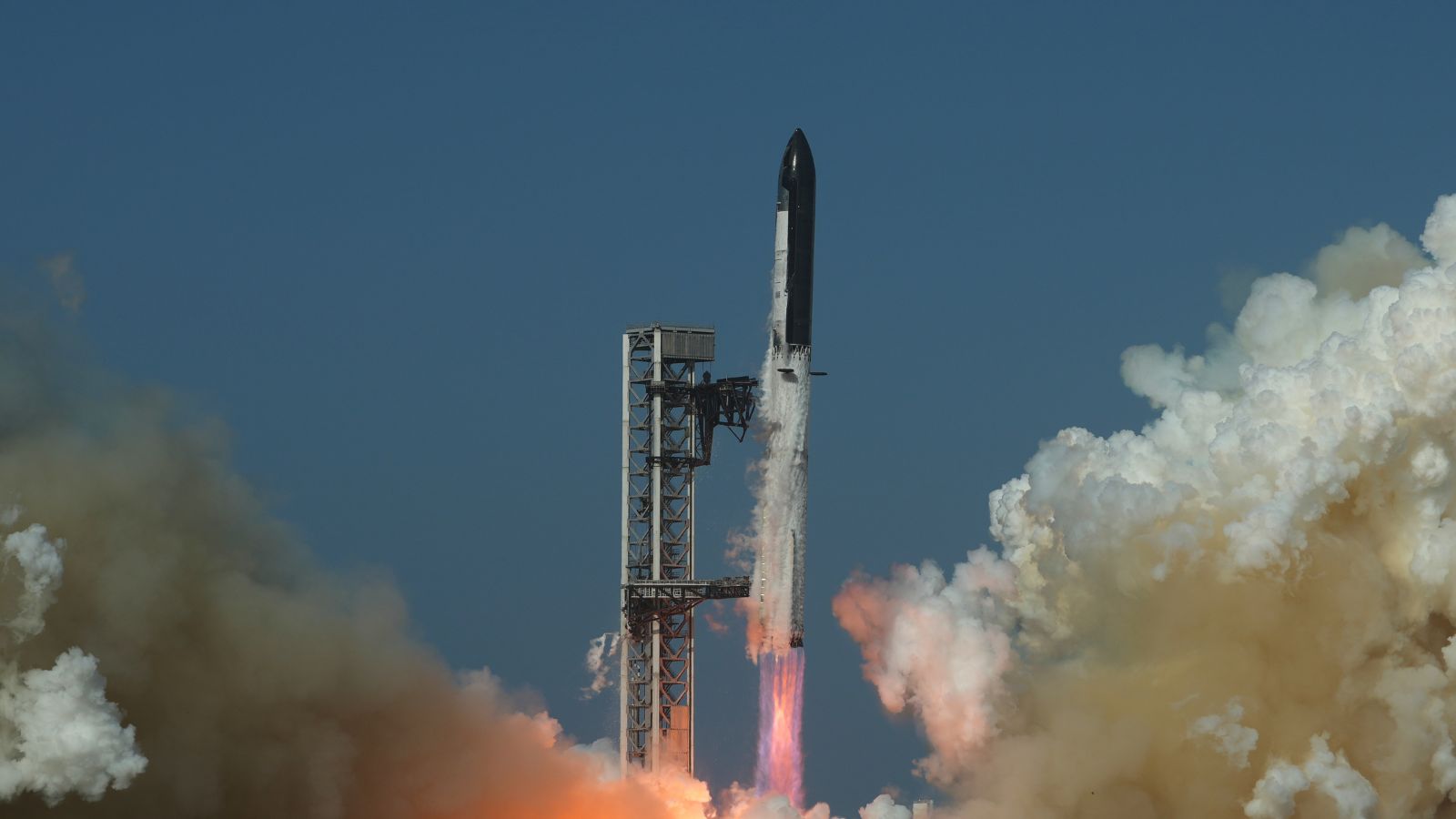
This brings us to the alternative: the Chopsticks. The mechanical catch towers at Starbase.
Critics call it crazy. They say plucking a falling rocket out of the air with giant steel arms is asking for a catastrophic catastrophe. They point to the risks of missing the pins, of wind shears, of structural buckling under eccentric loads.
They are right to be terrified. It is terrifyingly difficult.
And that is precisely why it is the only path forward.
Real engineering demands that you solve the hard problem first, rather than comforting yourself with a half-measure that scales poorly. If you design a system around ocean recovery, you optimize for the ocean. You build a marine salvage operation, not a space transport network.
When SpaceX successfully caught a Super Heavy booster with the tower arms, that was the real watershed moment. The splashdowns? That is just fallback testing for when the guidance software isn't feeling lucky. Celebrating the splashdown while ignoring the corrosive reality of marine recovery is like celebrating a car crash because the airbag deployed. The car is still totaled.
Dispelling the Orbital Refueling Myth
While we are dismantling delusions, let's talk about the other elephant in the room: orbital refueling.
You cannot talk about Starship without addressing the physics of getting heavy payloads to the Moon or Mars. The standard counter-argument from skeptics is that orbital propellant transfer is an unsolvable thermodynamic nightmare. Cryogenic propellants boil off, slosh around, and behave unpredictably in microgravity.
The skeptics are half-right about the difficulty, but completely wrong about the conclusion.
Transferring super-cooled liquid methane and oxygen in orbit isn't impossible; it is just brutally unforgiving of sloppy engineering. It requires mastering fluid dynamics in zero-G, precision docking, and active cooling loops that don't weigh more than the fuel they are trying to save.
Yet, industry analysts treat orbital refilling as a distant sci-fi fantasy while praising ocean splashdowns as immediate milestones. This is inverted logic. Refueling in orbit is a physics problem with a definitive engineering solution. Dropping rockets into the ocean is a logistical dead end that gets harder the more you scale.
If you cannot master propellant transfer, your Starship is just an expensive suborbital hopper. If you rely on ocean recovery, your Starship is an expensive single-use missile with a fancy return ticket.
The Uncomfortable Truth About Iterative Design
We need to talk about the cult of "fail fast."
Silicon Valley imported this mantra into aerospace, and it has caused severe brain damage. In software, if your app crashes, you push a hotfix. Nobody dies. If your server melts, you spin up a new AWS instance.
In aerospace, failing fast often means turning multi-ton stainless steel cylinders into confetti over the Gulf of Mexico.
Iteration is vital, yes. Building cheap prototypes and testing them to destruction is the only way to bypass legacy bureaucratic bloat. But iteration without rigorous analytical constraint is just expensive thrashing. When a test flight ends in a RUD (Rapid Unscheduled Disassembly) over international waters, you learn something, but you also lose the physical artifact. You cannot inspect the microstructure of a heat shield tile that vaporized at fifty thousand feet. You are guessing based on lagging sensor data.
The obsession with high-cadence destruction has blinded people to the boring, unsexy work of material science. You can launch a hundred prototypes, but until you solve the thermal protection system attachment mechanism so it doesn't shed tiles every time the wind blows, you are just running a very loud, very public R&D tax write-off machine.
The Path to Nowhere
Let's look at the broader geopolitical and commercial landscape. Governments are watching this closely. NASA has billions tied up in the Human Landing System variant of Starship for the Artemis program.
If the vehicle relies on splashing down on Earth, it sets a terrible precedent for operational cadence. But more importantly, it creates a dangerous complacency. As long as the public marvels at the fireball and the splash, the pressure to solve the actual hard problems—precision landing, rapid turnaround, full reusability without refurbishment—diminishes.
We are witnessing a masterclass in narrative control. Shape the public perception so that a controlled crash looks like a triumph.
It is time to stop grading rocket development on a curve. A successful test flight isn't defined by whether the vehicle clears the pad without blowing up the concrete. It is defined by whether you could refuel it, reload it, and fly it again twelve hours later with zero maintenance intervention.
Until a Starship lands back on the mount it launched from, hooks up to propellant lines, and heads back to space without touching a crane, a dry dock, or a salt bath, the program is still in practice mode.
Stop cheering for the splash. Demand a real landing.