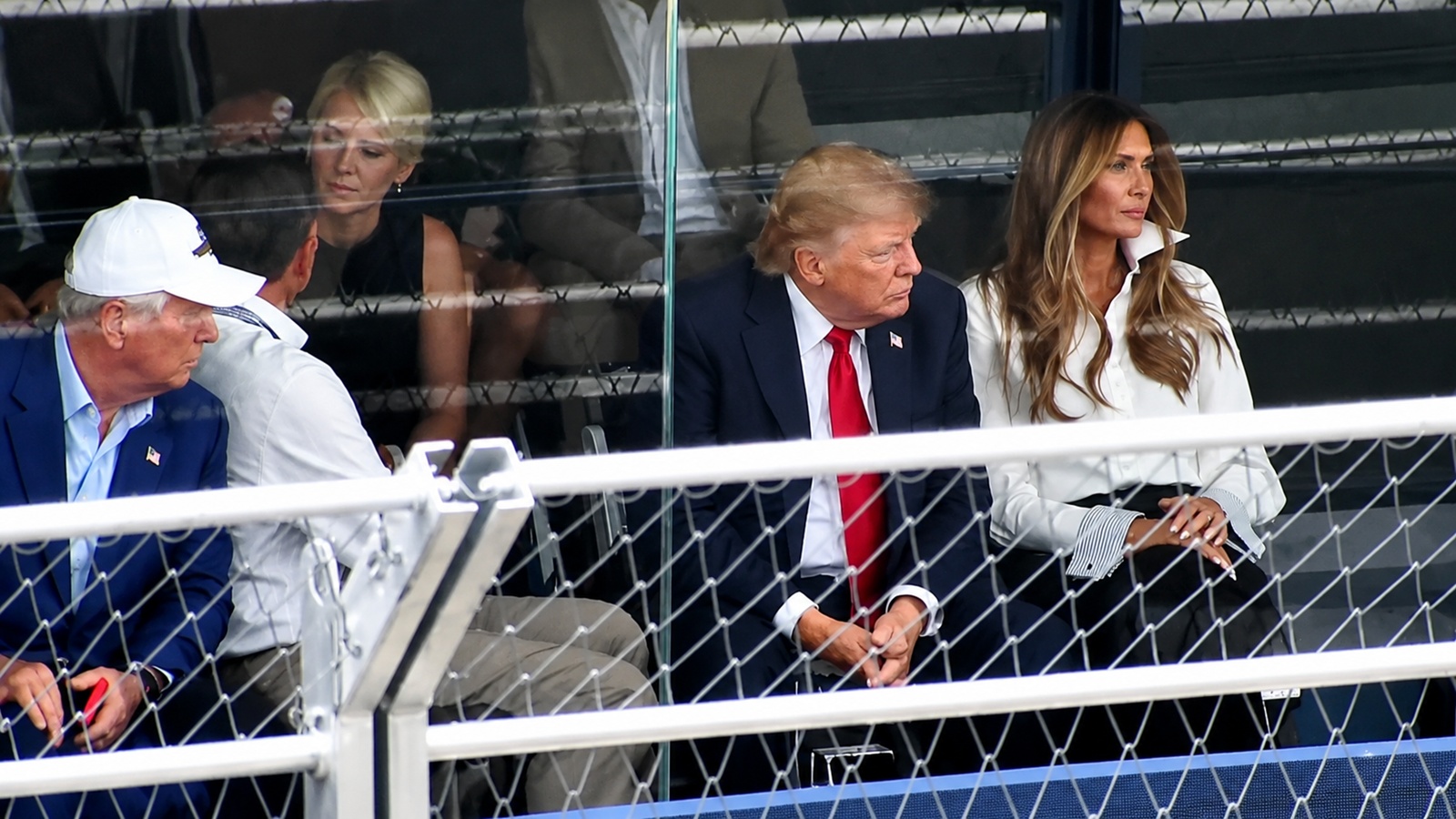
The stadium hums with a low, electric vibration that you can feel in your teeth before you ever hear it in your ears. Thousands of bodies pressed shoulder-to-shoulder create a singular, breathing organism. But high above the roaring floor, sequestered behind thick glass and velvet ropes, a different kind of reality plays out.
Look up.
There sits Natalie Harp, positioned deliberately within Donald Trump’s private VIP box. Down below, the sea of red hats and raised phones surges like a tide. Up here, the atmosphere is rarefied, cool, and intensely curated. Harp is not merely a spectator; she is a fixture of the inner orbit, a familiar face to anyone who tracks the digital slipstream of modern political theater. Her presence in that box is a deliberate signal, broadcasted to millions through camera lenses and split-screen television feeds.
Yet, a few seats away, a very different kind of drama unfolds quietly.
Melania Trump leans in.
Cameras catch the motion. A tilt of the head. A murmured phrase. In our era of high-definition surveillance, every micro-expression is seized upon, stripped of context, and tossed into the digital meat grinder. Within hours, that brief exchange fractures into a thousand competing narratives across social media feeds. Was it tension? Was it strategy? Was it nothing at all?
We crave meaning in the mundane. We dissect pixels the way ancient augurs read the entrails of birds.
To understand why a whispered conversation between a former First Lady and a casual glance from a loyal aide can captivate millions, we have to look past the political alignment cards and examine the raw mechanics of modern visibility. Power has always been theatrical, but today's theater is interactive, immediate, and painfully hyper-focused. Every movement is a message. Every empty seat is a scandal. Every shared look in a VIP box is parsed by amateur detectives armed with smartphones and infinite time.
Consider what happens next: the screenshot becomes a meme, the meme becomes an article, the article becomes a talking point on morning television. The machinery of attention spins faster and faster, grinding up human moments into digestible outrage and fascination.
Harp knows this machine intimately. Having transitioned from media commentary directly into the administrative and personal orbit of the former president, she represents a new archetype of political operative—one who lives natively in the crossfire of digital algorithms. When you stand next to the focal point of global attention, you become part of the lens. Every flashbulb illuminates your loyalty; every camera angle defines your status.
Meanwhile, Melania remains the ultimate study in calculated distance. Her presence is a paradox. She is simultaneously the most visible woman in the world and an enigma who chooses her words with surgical precision. When a simple conversation goes viral, it reminds us of our collective obsession with what goes unsaid. We assume strategy behind a sigh. We look for hidden alliances in a glance across a carpeted room.
Perhaps the truth is much simpler, and much more exhausting.
Imagine spending your life under glass. Every breath measured. Every companion vetted. Every casual remark scrutinized by analysts who know nothing of the fatigue behind the eyes.
The stadium lights flare. The crowd roars for another entrance. Down on the floor, the noise is deafening. But up in the box, the real sound is the quiet click of a thousand invisible shutters capturing a moment that will be argued over, distorted, and forgotten by tomorrow morning, replaced by the next shiny object in our endless parade of distractions.
The box remains sealed. The glass holds. And the watchers keep staring, convinced that if they look closely enough, they will finally see the strings.