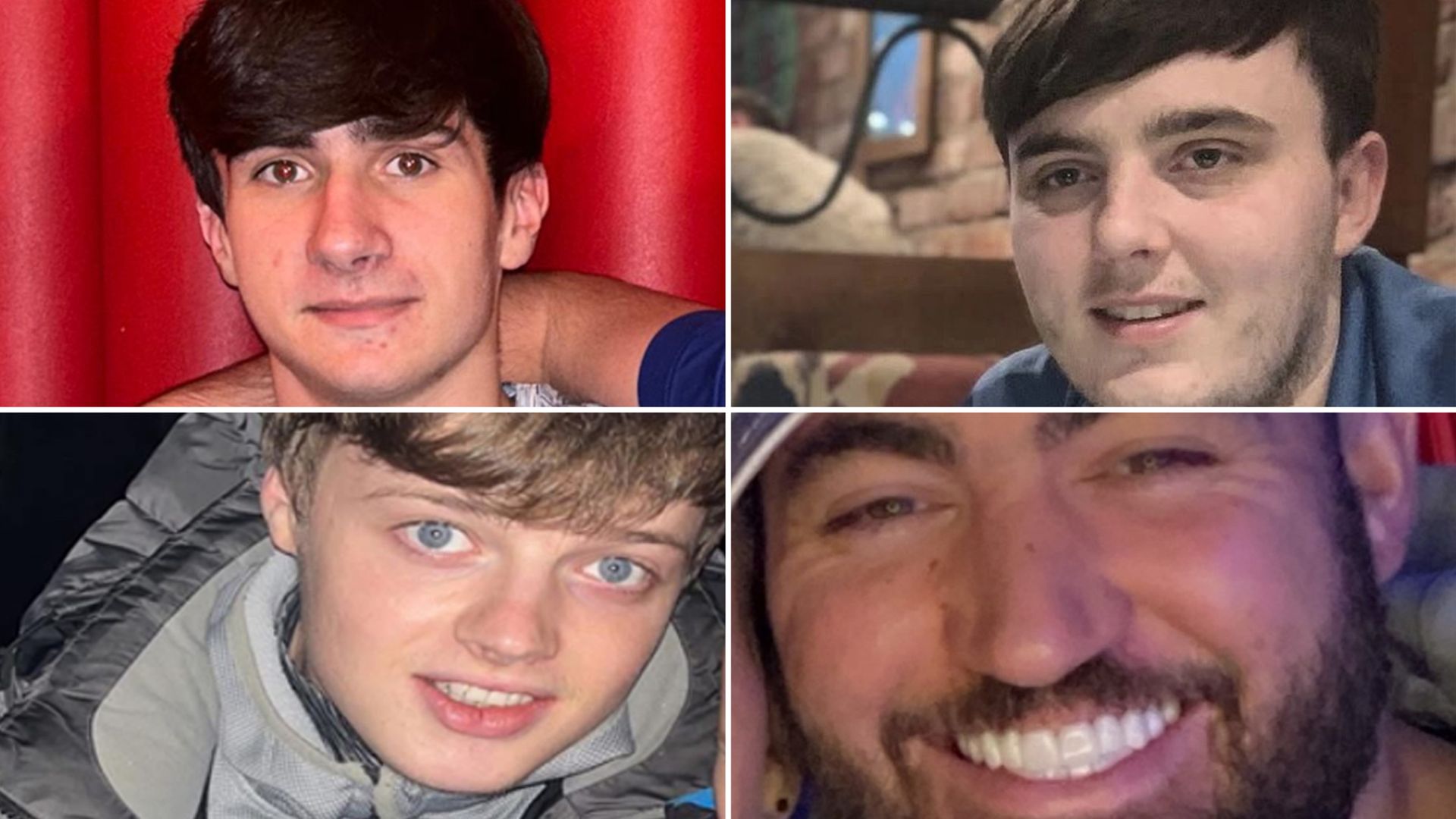
Midnight has a specific texture on asphalt. The tires hum a low, steady note against the cool surface, a sound that usually lulls passengers into a sleepy trance. Streetlights cast long, amber shadows that stretch and snap back, keeping a rhythmic time of their own. It is the hour when the world feels strangely private, as if the day's noise has been swept away and left only the open road.
Then, physics interrupts.
Metal meets steel with a violence that defies comprehension. In the span of a single heartbeat, an ordinary evening dissolves into an irreversible catastrophe. A car leaves the pavement. It strikes a lamppost.
Four lives vanish into the quiet dark.
When you stand at the edge of a scene like that, the air smells of scorched rubber, heated oil, and ozone. It is a sharp, chemical scent that burns the back of your throat. Sirens eventually carve through the silence, their red and blue lights painting the nearby brick walls in frantic strokes. But the emergency responders arrive too late to alter the ledger. They arrive only to measure the wreckage, to cover what cannot be saved, and to begin the grim arithmetic of blame.
A man has been charged.
Those five words appear on screens, in morning papers, and across hurried radio broadcasts. They sound clean, almost clinical. They suggest an orderly sequence of events: a crime, an investigation, an indictment, justice. But anyone who has ever stood behind police tape knows that the word "charged" is merely a punctuation mark on a tragedy that refuses to end. It does not capture the weight of a shattered steering wheel, the silence in a home where four toothbrushes sit waiting in a cup, or the hollow ache of a courtroom where no verdict can ever restore a heartbeat.
Consider what happens next in the quiet aftermath.
The authorities step in. Forensic investigators measure skid marks with laser precision, searching for the ghost of an intent or a mistake. Was it speed? Was it a momentary distraction? Was it the reckless gamble of a driver who thought the rules of mortality applied only to other people? The court documents will eventually spell it out in dense, legal paragraphs. They will talk about gross negligence, vehicular homicide, and criminal charges.
Yet, the legal system struggles to measure the invisible stakes of reckless driving. Every time someone slides behind the wheel after a drink, or taps a glowing screen while hurtling down a highway at seventy miles per hour, they are playing a game of Russian roulette with physics. We treat automobiles like domestic appliances, comfortable living rooms on wheels, forgetting that a two-ton machine is essentially a missile fueled by gasoline and momentum.
Driving requires an almost unnatural level of sustained vigilance. Human biology was never designed to hurtle across the earth at speeds that outrun our reflexes. We rely on habits, peripheral vision, and a fragile trust that the strangers coming toward us in the opposite lane are paying attention.
When that trust breaks, the cost is catastrophic.
I remember the sound of a crash from my own childhood, a block away from my bedroom window. It was not a loud explosion; it sounded like a heavy crate dropping from a great height, followed by a hiss of escaping steam. My father walked out into the cool night air to look, but he stopped at the corner and turned back. He looked sick. He did not need to see the twisted metal to know that lives had been unraveled. He saw it in the sudden, eerie stillness that followed the impact.
That stillness is the true signature of such tragedies.
The man now facing charges for the deaths of those four individuals steps into a different kind of darkness. Whether the crash was the result of malice or a catastrophic lapse in judgment, he now carries an anchor that he will drag for the rest of his days. Even if he walks free from a courtroom, he is bound to a ghost story of his own making.
We search for answers in these moments because the randomness of death is terrifying. We want to believe that bad things only happen to people who deserve them, that tragedy requires a clear villain and a predictable moral. We want the world to make sense.
So we look at the mugshot. We read the charge sheet. We nod at the prosecution's opening statement, hoping that a prison sentence or a heavy fine will somehow rebalance the scales of the universe.
It never does.
The lamppost on that stretch of road has since been replaced or repaired. The city crews cleaned up the glass, swept away the plastic shards, and painted over the scuff marks on the curb. Traffic flows past the spot again every single day, commuters glancing away for a split second to adjust their radios or check a notification.
The road remembers nothing. The living must carry everything else.