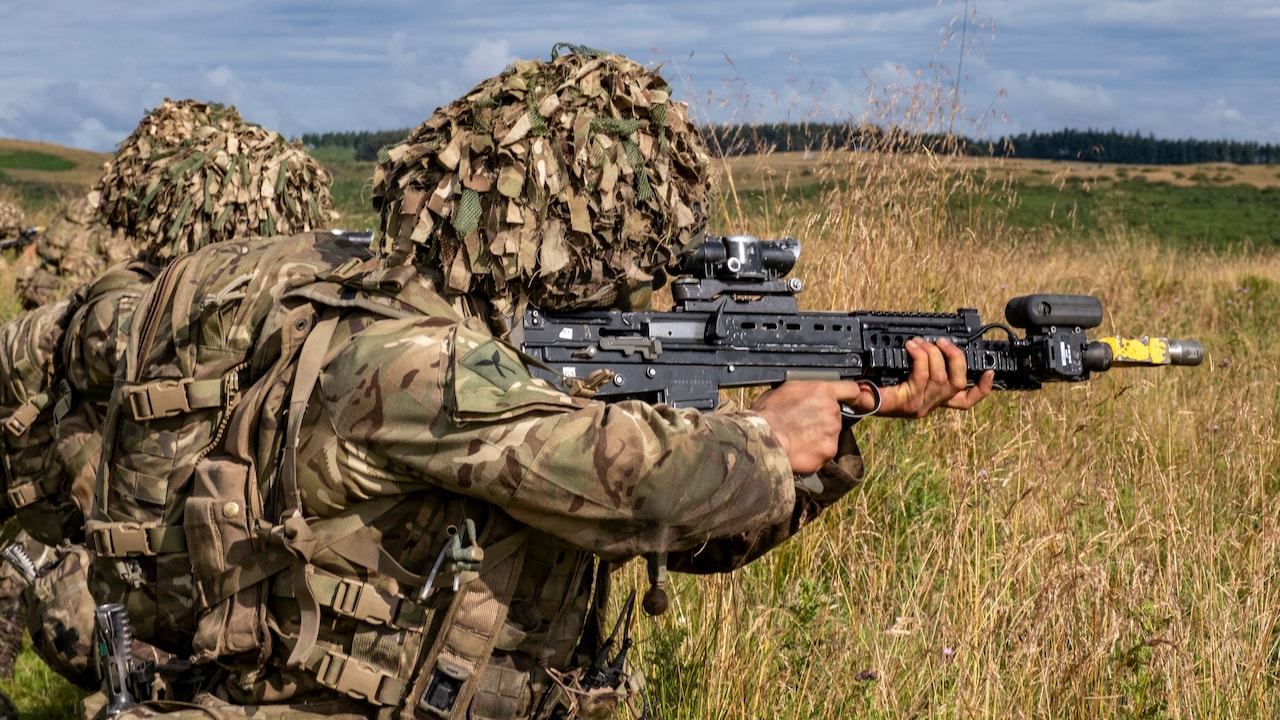
The boots on the gravel crunch softly, almost politely, compared to the roar of a night raid in eastern Syria. Dust hangs in the beam of an infrared light, smelling faintly of diesel, cordite, and dry earth. Two seconds. That is often all the time a man gets to decide whether a shadow in a doorway is holding a rifle, a suicide vest, or nothing at all.
When five British Special Air Service soldiers were arrested by military police in connection with operations in Syria, the headlines made it sound simple. Sent to kill. Tried for murder. Yet war is rarely tidy, and the courtroom is built for slow, methodical certainty rather than the jagged geometry of a midnight ambush. If you enjoyed this article, you should read: this related article.
To make sense of what happens when covert warfare collides with criminal law, it helps to step away from white papers and ministerial briefings. Let us trace a hypothetical scenario—explicitly a composite illustration rather than a literal account of any single raid—to see how a split-second decision in the dark can travel thousands of miles into a fluorescent-lit interview room.
A Hypothetical Night Behind Enemy Lines
Imagine an operator we will call Callum. He has spent years training for moments that ninety-nine percent of people will never experience: breaching compounds, reading body language under night vision, moving silently through territory contested by Islamic State remnants. In this hypothetical mission, intelligence points to senior militants hiding out in a cluster of mud-brick buildings. For another perspective on this development, see the recent update from USA Today.
The air feels heavy. Every muscle in Callum’s body is tuned to a razor’s edge. When a figure moves abruptly in a dim corridor, reaching toward a waistband or turning sharply without answering a shout, there is no pause button. There is no committee in London weighing proportionality at four hundred milliseconds. Callum pulls the trigger.
Years later, in a quiet room back in Britain, investigators play back timelines, forensic notes, and witness statements with a magnifying glass. What took less than a heartbeat in the Syrian dust is stretched across months and years of scrutiny. Was the threat imminent? Could the person have been detained instead? Did the force used cross the line from lawful combat into unlawful killing?
That is the fault line where elite soldiers and the justice system collide.
The Weight of Invisible Stakes
On paper, the legal question looks clean: did the soldier act in lawful self-defense or defense of others under the rules of war and domestic law? In practice, nothing about covert operations is clean. British special forces have operated in the shadows of the conflict against ISIS, often in environments where intelligence is fragmentary, local loyalties shift overnight, and the line between combatant and non-combatant can blur in seconds.
Consider what happens next when a military police investigation opens. A home is searched. Phones and kit are seized. A soldier who spent years absorbing risk for the state suddenly finds himself treated as a suspect—sometimes even while still expected to carry out high-risk duties.
Let’s be honest about how unsettling this tension is. Most of us watch conflicts from sofas or desks, safe behind borders and laws that protect daily life. It is easy to say from afar that nobody stands above the law, and it is just as easy to say from afar that troops fighting ruthless enemies shouldn't be second-guessed in hindsight. Both instincts come from real human values. Yet holding both truths at once makes the ground beneath our feet feel surprisingly unsteady.
Think of it like judging a penalty kick in slow motion on a stadium screen. From the stands, with endless replays, every angle looks obvious. On the pitch, with rain in your eyes and a roaring crowd, you have a fraction of a second to read a hip shift and commit. That metaphor has limits—football is a game, while combat carries life-and-death consequences—but it captures why hindsight feels so sharp to observers and so alien to the person who had to act in real time.
Why Prosecutions Are Rare—and Investigations Still Hurt
In reporting on the UK investigations into SAS personnel over operations in Syria, defense correspondents and legal analysts have noted how steep the legal hill actually is. Prosecutors examining allegations of war crimes or unlawful killing must meet a high evidentiary threshold, proving beyond a reasonable doubt that actions fell outside lawful bounds under intense operational pressure. In cases where prosecutors ultimately decline to bring charges—such as the decision reported in 2025 after a prolonged investigation into five SAS soldiers over a Syria operation—the absence of a trial does not erase the toll of the process itself.
Years under investigation leave marks. Careers stall. Families live with quiet dread. Even when no charges are brought, critics argue that prolonged probes create a chilling effect—a fear that hesitation in a firefight could cost a life, while decisive action could cost freedom or reputation.
On the other side stand human rights advocates, legal scholars, and citizens who insist that accountability is the bedrock of democratic legitimacy. If a state sends lethal force into foreign territory under a veil of secrecy, independent scrutiny is the only guarantee that power has limits. Without rules enforced evenly, a democracy risks becoming indistinguishable from the very abuses it claims to oppose.
Law, Secrecy, and the Soldier in the Middle
History shows this dilemma is older than modern special forces. Whenever empires or democracies fight asymmetric wars—guerrilla campaigns, counter-insurgencies, clandestine raids—the gap widens between battlefield necessity and peacetime legal standards.
When a government relies on deniability or tight secrecy, the burden falls heavily on the men on the ground. They are the tip of a very long spear. If policy is ambiguous or rules of engagement are hard to apply in chaotic terrain, the sharpest friction is felt not in Whitehall conference rooms, but in the mud and dark where a rifle is raised.
Pause and ask yourself: what do we actually demand of the people we send into the darkest corners of the world? We ask them to be lethal when required, restrained when possible, calm under terror, and legally spotless under conditions of extreme chaos. That is an extraordinary standard. Maybe it has to be. Yet pretending it is easy—or pretending an investigation leaves no scars—ignores the human cost on every side.
What Remains After the Headlines Fade
When a case ends without charges, the news cycle moves on quickly. A brief update appears, a file closes, and another story takes the top spot.
Still.
For the soldier who stood in that doorway years before, the memory of the night does not simply pack up and leave when a legal file is closed. The dust settles in the desert, the paperwork stacks up back home, and long after the arguments over law and war subside, one quiet question stays behind in the dark: what did that split second cost everyone who lived through it?
Ex-SAS Chief On Syria Murder Arrests
This video adds useful context by sharing a former special forces leader's perspective on how murder investigations affect elite soldiers operating in high-threat environments.


