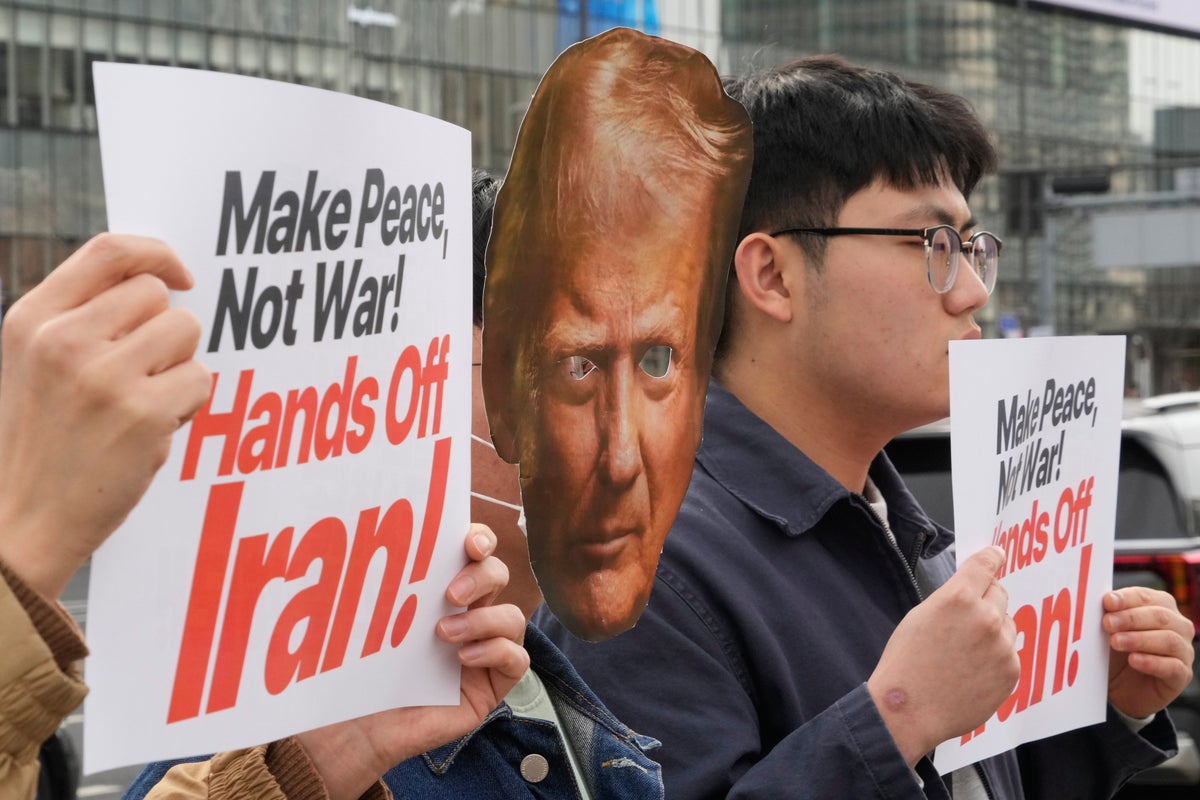
The headlines are screaming about a "climbdown." The pundits are weeping over "lost sovereignty." They see Keir Starmer’s decision to allow Donald Trump’s administration to use RAF bases—specifically RAF Akrotiri in Cyprus—for defensive strikes against Iran as a sign of a weak Prime Minister being bullied by a Mar-a-Lago whirlwind.
They are looking at the chessboard upside down. Building on this topic, you can find more in: Why the Green Party Victory in Manchester is a Disaster for Keir Starmer.
This isn't about Starmer caving to a populist. It is a cold-blooded, transactional play that secures British relevance in a post-Brexit, post-Ukraine-fatigue world. While the "lazy consensus" suggests Britain is being dragged into an American war, the reality is that the UK just successfully leveraged a stationary aircraft carrier in the Mediterranean to buy a seat at the only table that matters.
The Myth of the "Sovereignty Sacrifice"
The most tiresome argument currently circulating is that the UK has signed away its independent foreign policy. This assumes such a thing exists in a vacuum. True sovereignty isn't the ability to say "no" to your most powerful ally; it’s the ability to extract a premium for saying "yes." Observers at USA Today have also weighed in on this trend.
RAF Akrotiri is not just a runway. It is the most valuable piece of geopolitical real estate in the Eastern Mediterranean. By granting "permission" for its use, Starmer isn't giving a gift. He is setting a price.
In the brutalist architecture of international relations, you are either a provider of security or a consumer of it. For a decade, the UK has flirted with becoming a mere consumer. By positioning the RAF bases as the essential node for any regional "defensive action"—a term that we all know is a polite euphemism for pre-emptive containment—the UK moves from being a sidekick to a stakeholder.
Iran and the Price of De-escalation
The critics argue that this move makes Britain a target. They ask: "Why would we risk London for a skirmish in the Strait of Hormuz?"
This is flawed logic. Iran doesn't need an excuse to target Western interests; it needs a reason to calculate that the cost of doing so is too high. The "Special Relationship" has been a sentimental slogan for years, but this deal turns it back into a hard-currency asset.
When Trump looks at the map, he sees Akrotiri. If Starmer provides that, the UK gains a "veto by presence." You cannot launch a mission from a British base without British intelligence being in the room. This gives the UK a granular level of control over the "proportionality" of the response that a simple diplomatic protest never could.
The Economic Backdoor
We need to talk about the trade deal that nobody is mentioning.
Trump’s "America First" policy is built on tariffs. If you are a European nation sitting on the sidelines, you are a target for a 20% across-the-board levy. If you are the indispensable military partner providing the launchpad for the President's primary foreign policy objective, you have "leverage" (a word I hate, but let’s call it what it is: a hammer).
I have seen governments blow billions on lobbying firms to get five minutes of a President’s time. Starmer just got a permanent line to the Oval Office for the cost of some jet fuel and hangar space. This isn't just a military pact; it's an insurance policy against a trade war.
The Geography of Power
Let’s look at the mechanics. Why Akrotiri?
- Proximity: It is closer to the Levant and the Persian Gulf than almost any other secure Western asset.
- Legal Status: As a Sovereign Base Area (SBA), it doesn't require the permission of the Cypriot government. It is British soil.
- Infrastructure: It is a hardened, battle-tested facility.
The competitor's view is that we are "letting" Trump use it. The insider's view is that we are making it impossible for him to operate without us.
The "Defensive Action" Delusion
The term "defensive action" is a masterclass in linguistic gymnastics. In the context of Iran, it usually refers to degrading drone manufacturing sites or disrupting proxy supply lines.
The public fear is a repeat of 2003. But the 2026 reality is different. We aren't talking about regime change or boots on the ground in Tehran. We are talking about the technical management of a regional bully. If the US is going to act anyway—and with Trump, that is a high-probability event—it is far better for the UK to be the landlord than a distant, uninformed neighbor.
Being the landlord means you get to see the blueprints. Being the neighbor just means you get hit by the falling debris.
The Risks: A Brutal Honest Assessment
Is there a downside? Of course.
- Regional Backlash: UK assets in the Middle East become higher-priority targets for the IRGC.
- Political Fallout: Starmer will face a rebellion from his own backbenchers who still have Iraq-induced PTSD.
- The Trump Factor: Reliability is not a hallmark of the current administration. The deal could change on a whim.
However, the alternative is irrelevance. A Britain that says "no" to the US on base access is a Britain that gets ignored on trade, ignored on NATO reform, and ignored on the global stage.
Stop Asking the Wrong Question
The media is asking: "Is Starmer a pushover?"
The real question is: "How much did he get in return?"
If the "permission" comes with guarantees on steel tariffs, intelligence sharing, and a mutual defense pact that actually has teeth, then this is the most successful piece of British diplomacy in twenty years.
The status quo of "quiet cooperation" is dead. We have entered the era of the "transactional alliance." In this world, morality is a luxury and geography is destiny. Starmer has realized that the UK's only way to survive a protectionist, hawkish US administration is to become its most useful tool.
If you think this is a surrender, you don't understand how power is brokered. This is a cold, calculated move to ensure that when the missiles start flying or the trade barriers start rising, the UK is the only one with a "Get Out of Jail Free" card.
Forget the optics. Focus on the ledger.
Stop mourning the loss of a "pure" foreign policy that never existed and start watching the trade numbers. The "permission" granted at Akrotiri isn't a sign of British weakness—it’s the only way to keep the lights on in a world that doesn't care about your feelings.
Go check the flight logs at Akrotiri next month. Then check the tariff exemptions. That is where the real story is buried.