The limestone smells of wild thyme and centuries of baked dust. If you press your palm against the lower blocks of the citadel at Shamaa, the stone feels surprisingly cool, shielding itself from the fierce South Lebanese sun. For nearly nine hundred years, these walls have stood as a silent sentinel over the hills of Tyre. They survived the Mamluks. They survived the Ottomans. They survived the slow, grinding erosion of time itself.
But history has a way of returning to old battlefields with modern weapons.
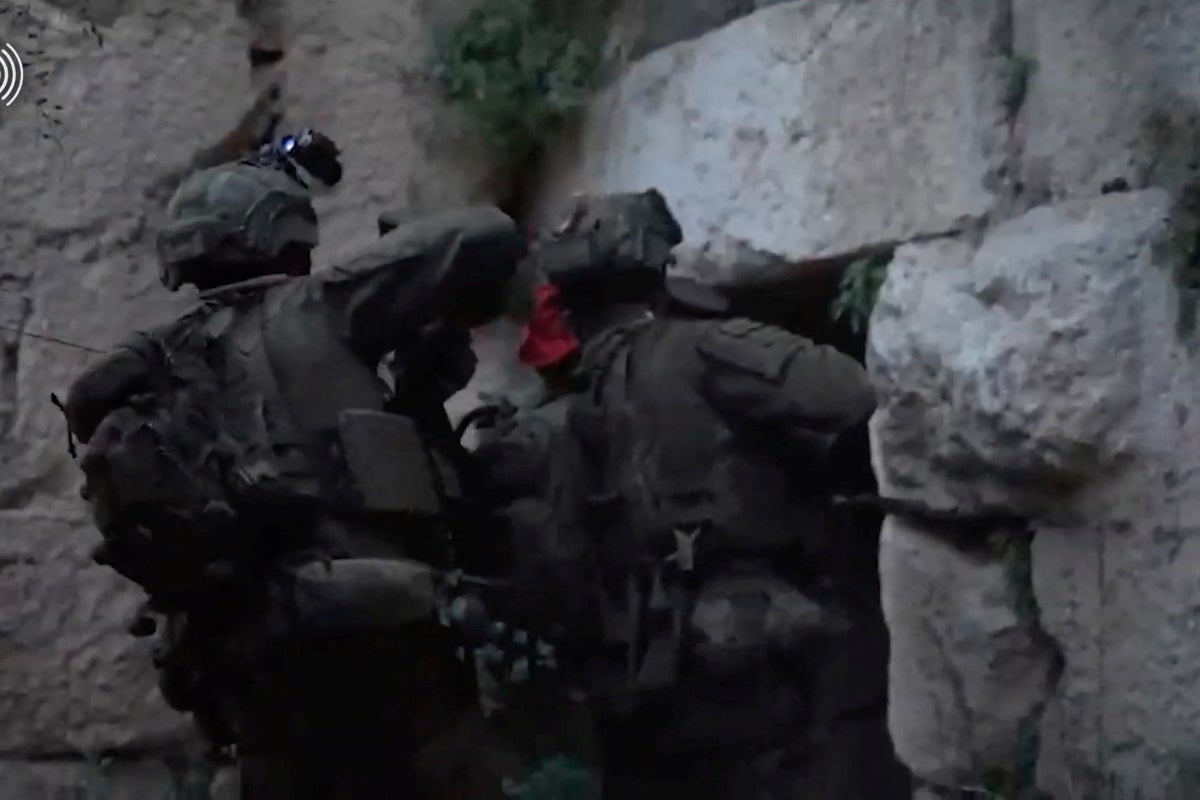
Recent military escalations have brought the war deep into the rugged topography of southern Lebanon. In a significant advancement, Israeli defense forces pushed several kilometers past the Blue Line, marking their deepest ground incursion into the country in recent months. Their objective lay on a high, strategic ridge. When the smoke cleared from the latest offensive, the Star of David was raised over the Crusader-era castle of Shamaa.
To a military strategist, the castle is simply a coordinate on a map. It is high ground. It is a vantage point overlooking the coastal plain, a spot to plant a flag and deny the enemy a staging area.
To the people who live in the valley below, the castle is something else entirely. It is the anchor of their identity.
The Weight of Old Walls
Imagine standing on the rooftop of a home in the village of Shamaa just a few weeks ago. The air would be filled with the ambient sounds of rural life—the distant bleat of goats, the hum of a scooter navigating the winding roads, the call to prayer echoing from the local mosque. And always, casting its long shadow over the village, the castle.
Built by the Crusaders in the twelfth century, the fortress was part of a network of defenses meant to secure the Kingdom of Jerusalem. It was constructed using the ruins of even older Roman and Byzantine structures. History here is layered like geological strata. You cannot dig a garden without hitting a piece of the past. Over the centuries, the castle integrated into the daily life of the local population. It wasn't a museum behind velvet ropes; it was a place where children played hide-and-seek among the ruined arches, where elders walked to watch the sunset over the Mediterranean, and where the local shrine of the prophet Shamoun drew the faithful.
When a modern army moves into a space like this, the collision between the ancient and the immediate is jarring.
Reports from the ground indicate that the push toward Shamaa was met with fierce resistance. Heavy artillery pounded the surrounding hills. Plumes of grey and black smoke rose around the medieval battlements. For the residents who fled northward toward Beirut or Sidon, packed into cars with whatever possessions they could grab, watching the bombardment of the ridge was like watching their own childhoods being chipped away.
The strategic value of the hill is obvious. From the battlements of Shamaa, you can see for miles. You can track movements along the coastal highway. You can control the roads that snake through the valleys. The Crusaders knew this in 1116. The military commanders of today know it now. The technology of warfare changes—from trebuchets and cross-bows to drones and precision-guided munitions—but the geometry of high ground remains absolute.
The Human Cost of Strategic Highs
War is often reported in the abstract. We hear about troop movements, lines of control, and strategic depths. We look at maps with red arrows pointing north and blue arrows pushing back. It feels like a chess match played on a digital board.
But the board is made of flesh, blood, and ancient stone.
Consider the reality of a family from Shamaa now living in a crowded school-turned-shelter in Beirut. They are sleeping on thin mattresses on the floor of a classroom. The noise is constant. The uncertainty is paralyzing. When they check their phones for news from the south, they are not looking for geopolitical analysis. They are looking for photos of their street. They are looking to see if the roof of their house is still intact.
And they are looking at the castle.
When news broke that the Israeli military had reached the fortress, accompanied by images of soldiers inside the historic compound, it sent a shockwave through the community. The castle was supposed to be permanent. In a world where governments fail, economies collapse, and borders shift, the old stones of Shamaa were the one thing the locals believed would always be there. Seeing it occupied by foreign forces is a visceral reminder of how completely their lives have been upended.
The current conflict has devastated dozens of towns and villages across southern Lebanon. The displacement is massive, with hundreds of thousands of people forced from their homes. Each town has its own tragedy, its own list of casualties, its own ruined neighborhoods. But the capture of Shamaa Castle carries a symbolic weight that transcends the immediate tactical victory. It represents the violation of a sanctuary.
Preservation in the Line of Fire
The vulnerability of cultural heritage in times of conflict is a recurring nightmare. From the destruction of Palmyra in Syria to the shelling of historic churches in Europe, humanity has a tragic track record of destroying its own memory in the pursuit of temporary military advantage.
Lebanon is no stranger to this preservation crisis. The country boasts five UNESCO World Heritage sites, including the ancient Phoenician cities of Tyre and Byblos, and the Roman ruins of Baalbek. While Shamaa Castle is not a top-tier UNESCO site, it holds immense regional significance. It is a vital link in the historical chain of the Levant.
International law, specifically the 1954 Hague Convention, strictly prohibits the targeting of cultural property during armed conflict, unless it has been turned into a military objective by the opposing force. In the fog of war, accusations fly from both sides. One side claims the historic site was being used as a staging ground for rocket attacks and a storage facility for weapons. The other side claims the attack was an unprovoked act of cultural erasure.
The truth is often buried beneath the rubble.
What is undeniable is that when ancient structures become battlefields, the damage is rarely reversible. A stone shattered by a tank shell cannot be glued back together with its original historical context. The architectural integrity is lost forever. The frescoes fade under layer of soot. The ancient cisterns are cracked and ruined.
The Unending Echoes of the Crusades
There is a bitter irony in the fact that a Crusader castle is once again at the center of a Middle Eastern war. The Crusaders came from Europe to establish a Latin kingdom, building massive stone fortresses to hold a hostile population at bay. They ultimately failed, leaving behind these hollow stone shells as monuments to a bygone era of religious and territorial warfare.
Today, the actors have changed, the ideologies have shifted, but the fundamental struggle for land and security remains identical. The ghosts of the twelfth century seem to whisper from the ramparts as modern soldiers tread the same pathways once walked by knights in chainmail.
The deepest incursion into Lebanon by Israeli ground forces underscores the intensity of the current campaign. It signals that this is not a limited border skirmish, but a deep, systemic effort to reshape the security dynamics of the region. The operations are designed to push opposing forces back beyond the Litani River, creating a buffer zone that ensures the safety of northern Israeli communities.
But buffer zones are rarely empty spaces. They are filled with history, culture, and the lives of people who have nowhere else to go.
The soldiers who raised the flag over Shamaa Castle will eventually leave. No military occupation lasts forever. The lines on the map will shift again, as they have done a thousand times before in this corner of the world. The politicians will sign treaties, or they won't. The news cameras will move on to the next crisis, the next frontline, the next tragedy.
But the stones of Shamaa will remain, scarred by new shrapnel, bearing the fresh graffiti of modern conflict alongside the faint inscriptions of medieval builders. The village below will try to rebuild, its people returning to salvage what they can from the ruins of their homes. They will look up at the ridge, searching for the familiar silhouette that guided their ancestors home for centuries, hoping that the ancient guardian of their valley can survive one more chapter of human madness.