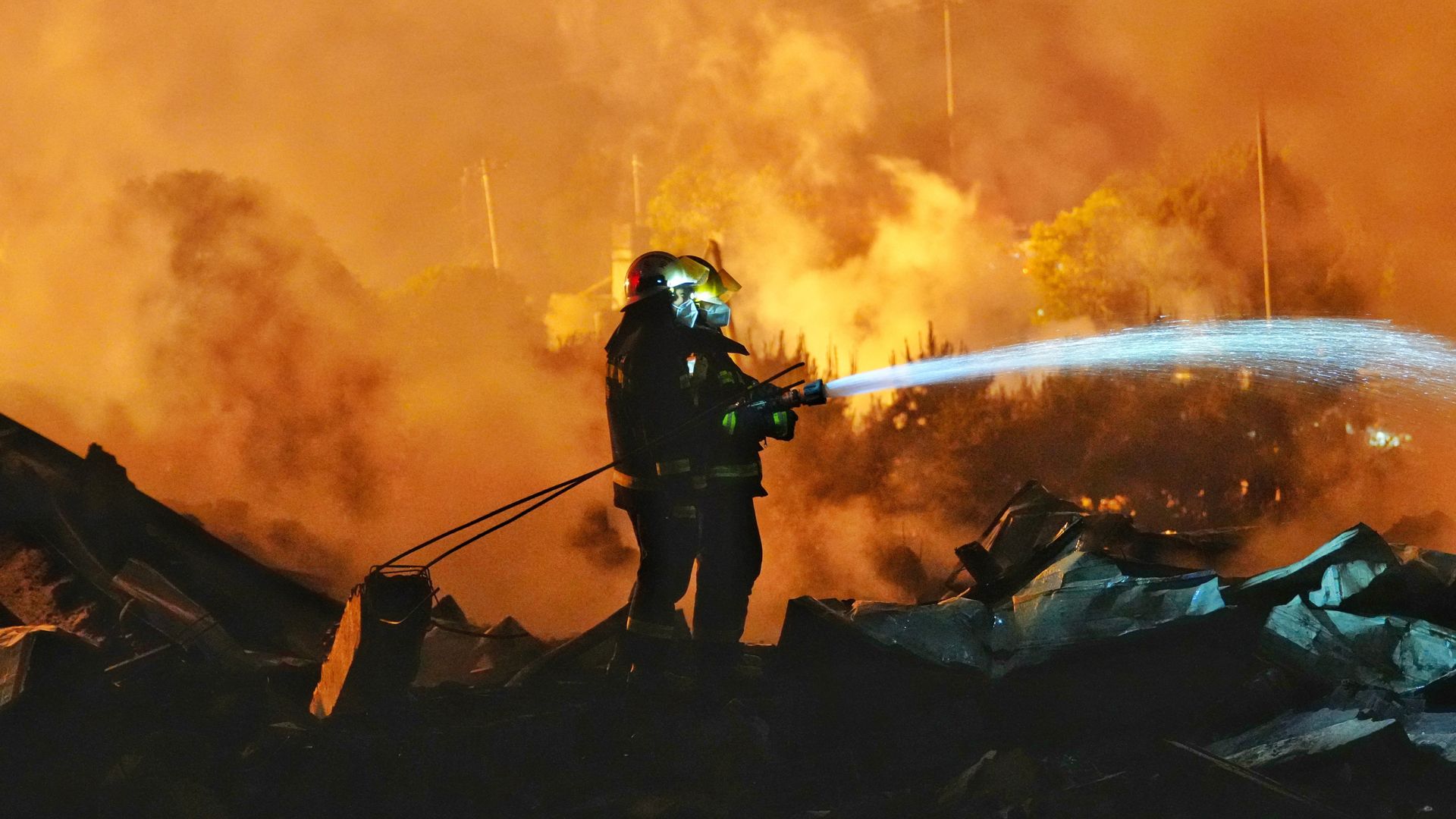
Tragedy is the easiest headline to sell. When a fireworks factory levels a city block, the media industrial complex follows a tired script: body counts, weeping families, and the inevitable demand for "stricter regulations." It is a lazy narrative that treats industrial explosions like acts of God or freak occurrences.
They are neither.
The industry is not suffering from a lack of rules. It is suffering from a fundamental misunderstanding of risk architecture and a global supply chain built on the delusion that you can mass-produce explosives using nineteenth-century manual labor methods while maintaining twenty-first-century safety expectations. If you want to stop the dying, you have to stop pretending that "safety protocols" fix a broken business model.
The Myth of the Freak Accident
Most reporting on industrial disasters centers on the "blast." This is a distraction. The blast is merely the terminal symptom of a systemic failure in kinetic energy management.
In the wake of a factory explosion, the public asks, "How did this happen?" The answer is almost always boring: friction, static, or heat. When you are dealing with black powder or flash powder, the margin for error is non-existent. A single grain of spilled composition trapped in a door hinge or under a worker’s boot is a detonator.
The "lazy consensus" is that someone skipped a safety check. The brutal truth is that human beings are biologically incapable of 100% precision over an eight-hour shift. If your manufacturing process requires a human to never make a mistake while handling sensitive energetic materials, you haven’t built a factory. You’ve built a ticking clock.
The Regulation Trap
Whenever 21 people die, the immediate outcry is for more inspectors. This is a classic "broken window" fallacy in the world of safety.
I have seen operations where the binder of government-mandated SOPs is four inches thick, yet the floors are covered in dust. Regulations create a false sense of security. They allow management to check a box and say they are "compliant." But compliance is not safety. Compliance is the bare minimum required to keep your insurance policy.
- Regulations are reactive: They are written in the blood of the last disaster. They rarely account for the next one.
- Regulations are static: They don’t adapt to changes in chemical purity or atmospheric conditions that affect powder sensitivity.
- Regulations create bureaucracy, not barriers: A piece of paper never stopped a spark.
Real safety is an engineering problem, not a legal one. The industry’s refusal to move toward full automation is the primary driver of the death toll. We have the technology to remove humans from the "blast zone" entirely, yet we continue to use manual packing and mixing because the capital expenditure is higher than the cost of a life insurance payout in a developing nation. That is the cold, hard math of the business.
The Globalized Death Trade
The consumer wants cheap pyrotechnics. To get a 500-gram cake for $40, the labor has to be cheap and the throughput has to be high. This creates a "safety tax" that the end-user never sees but the worker always pays.
We outsource our danger to regions with lower oversight and then act shocked when the inevitable happens. If these factories were operating in the heart of Zurich or Singapore, they would be ghost towns within a week because the cost of making them truly safe—using blast-shielded robotic cells and remote-operated mixing—would make a single firework cost as much as a small car.
We are subsidizing our Fourth of July and New Year’s Eve displays with a body count. If you aren't willing to pay five times the price for a firework, you are part of the market pressure that keeps these death traps open.
Redefining the Safety Architecture
If we actually cared about preventing these "blasts," we would stop focusing on fire extinguishers and start focusing on discretization.
Most factories are built for efficiency, which means moving large batches of material through a central hub. This is a catastrophic design flaw. In high-stakes energetics, the goal should be "Minimum Credible Accident."
Imagine a facility designed not as a single building, but as a series of disconnected, sacrificial pods.
- Isolation: Each pod contains only enough material to kill the machine, not the neighbor.
- Directional Venting: Roofs and walls designed to fail outward, channeling energy away from other structures.
- Zero-Occupancy Zones: If a machine is running, no human is within 100 yards.
This isn't "innovative." The defense industry has used these principles for decades. The fireworks industry ignores them because it prioritizes the "synergy" of a fast assembly line over the physics of a blast wave.
The Expertise Gap
We also have a massive deficit in actual pyrotechnic chemistry expertise on the floor. In many of these facilities, the "master" is someone who has survived the longest, not necessarily someone who understands the molecular sensitivity of the compounds they are mixing.
- Friction Sensitivity: Do your workers know the exact Newton-force required to ignite a specific batch of stars? Probably not.
- Hygroscopy: Do they understand how humidity changes the burn rate and pressure profile of the lift charge? Doubtful.
When you treat explosives manufacturing like a standard textile or plastics job, you invite disaster. It requires a level of scientific rigor that the current high-volume, low-margin business model cannot afford.
The Hard Truth About "Progress"
We love to talk about "making sure this never happens again." It’s a lie we tell to feel better. It will happen again next month, and the month after that, because the fundamental incentives haven't shifted.
Until the cost of an "accident" exceeds the cost of a total robotic overhaul, companies will continue to operate on the edge of catastrophe. They will pay the fines, they will rebuild the shed, and they will hire new workers to replace the ones they lost.
Stop asking for more laws. Start asking why we are still using human hands to mix chemicals that want to expand at 7,000 meters per second.
The industry doesn't need more "holistic" safety cultures or "robust" oversight. It needs to get people out of the room. Period. Every death in a fireworks factory is a design failure, not a lapse in judgment. If a mistake can kill 21 people, the system is the killer, not the person who made the mistake.
Fire the inspectors. Hire the engineers. Empty the buildings. That is the only way the screaming stops.