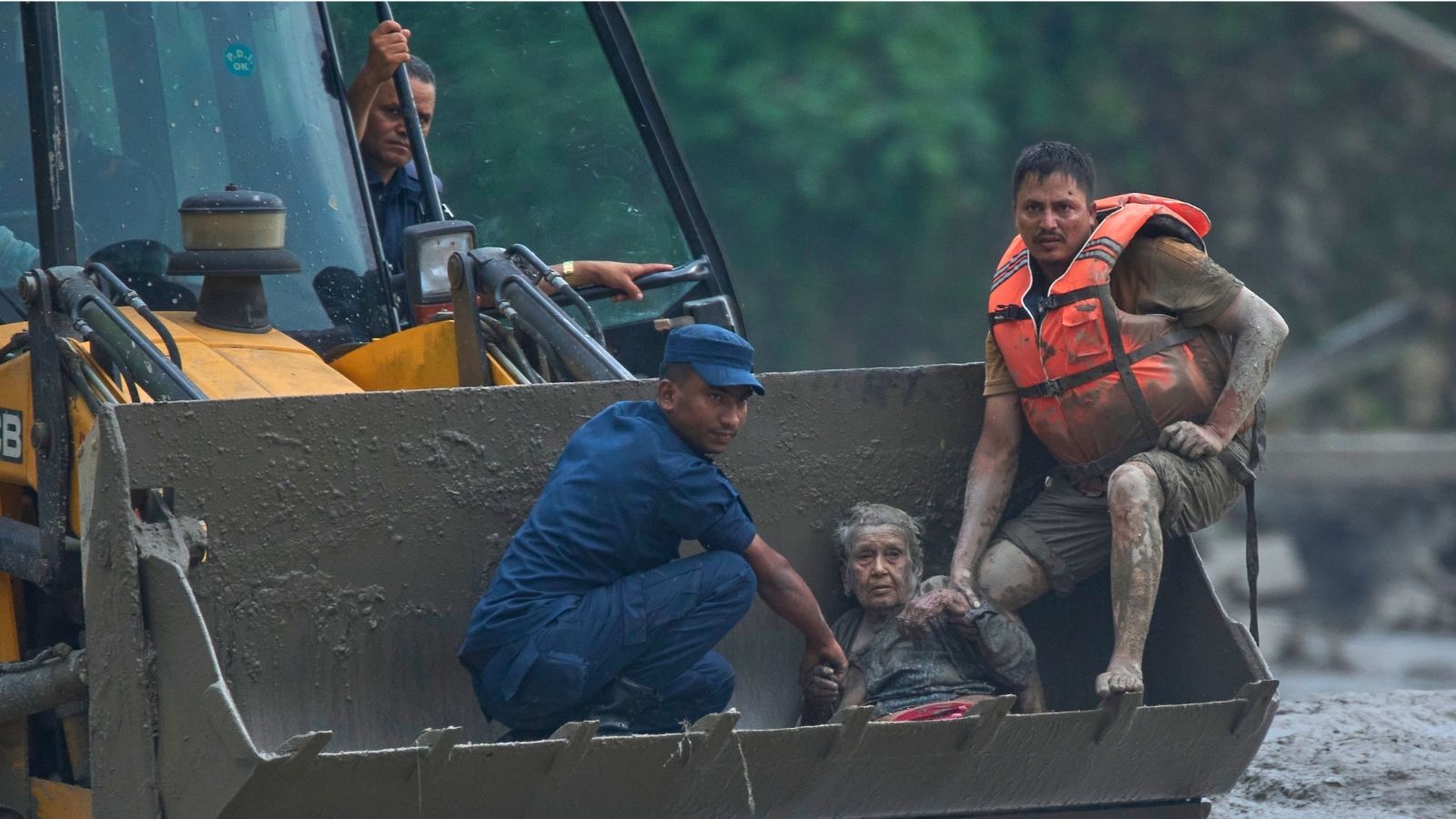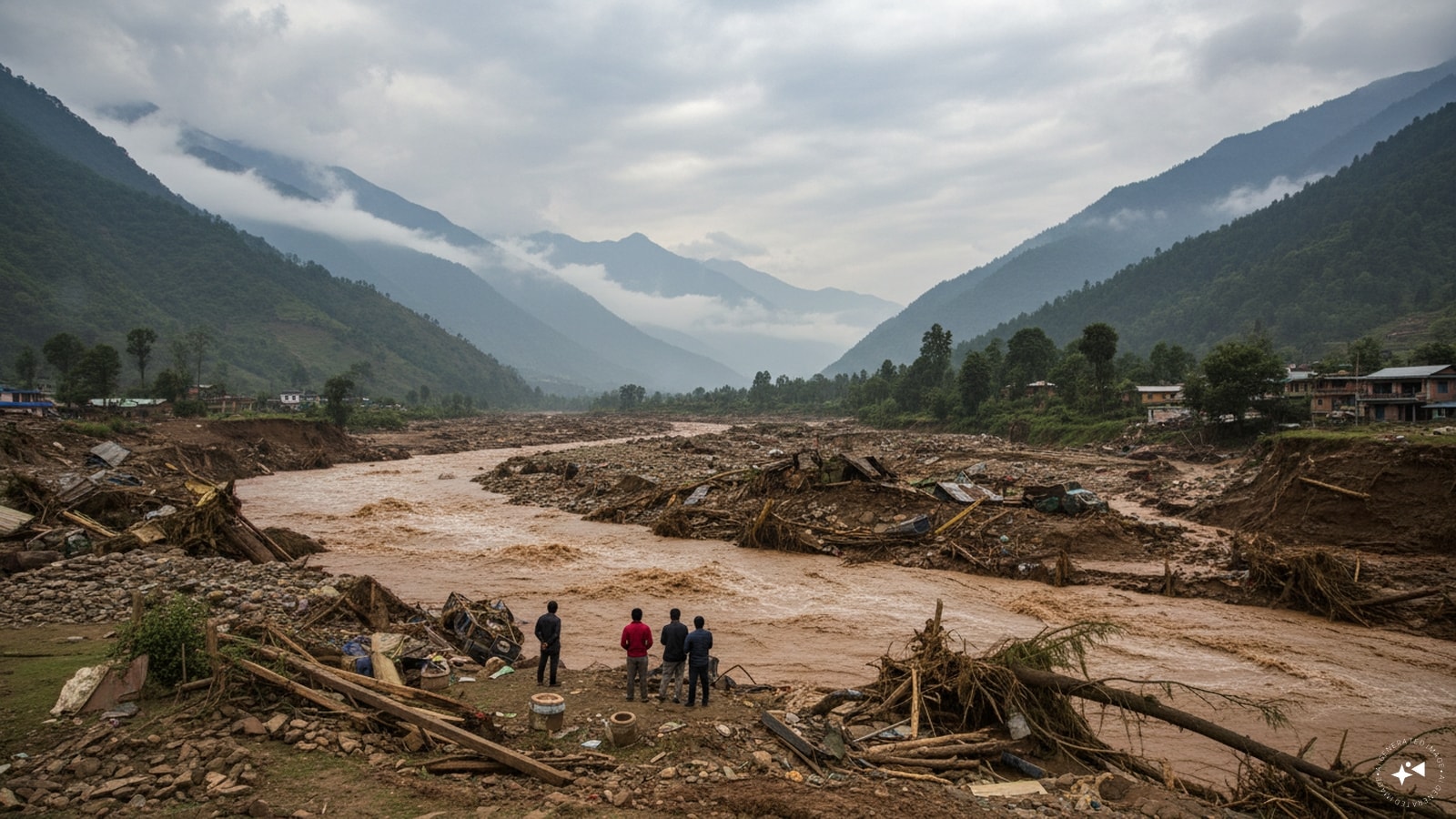
Every monsoon season, the headlines write themselves. Media outlets trot out the same lazy narrative about freak weather, wrathful gods, and unpredictable nature swallowing Himalayan communities whole. Six hundred dead, two thousand missing, and the international press corps nods solemnly, blaming an angry sky.
It is a convenient lie.
Nature does not commit manslaughter through rainfall. Engineering failures, systemic corruption, unbridled land speculation, and a complete institutional refusal to respect basic hydrological realities do. When you build concrete straightjackets for rivers and hack unauthorized access roads into fragile mountain slopes with heavy excavators, you are not developing rural infrastructure. You are constructing a slow-motion mass grave.
I have walked the fresh scar lines of the Mahabharat range after a cloudburst. I have watched multi-million-dollar donor funds vanish into bureaucratic pockets while gabion walls—flimsy wire baskets filled with river stones—are deployed where reinforced concrete retaining structures are the difference between life and death. The conventional coverage treats these disasters as acts of God. They are actually acts of municipal negligence.
The Myth of the Freak Storm
Meteorologists track rainfall accumulation and label events anomalies. This is intellectual cowardice. A monsoon is not an anomaly in South Asia. It is a predictable seasonal cycle that has operated for millennia with mathematical consistency, albeit with shifting intensity.
When a hillside collapses onto a settlement below, the official report blames record-breaking precipitation. Look closer. That same hillside was likely sliced at a ninety-degree angle six months prior to lay down a gravel road for a local politician's constituents, completely undercutting the toe of the slope. Roots were ripped out. Natural drainage channels were blocked with rubble. When water hits that slope, it finds nowhere to go except downward, carrying millions of tons of mud and rock at sixty miles per hour.
This is not a meteorological tragedy. It is a civil engineering felony committed out of sheer operational laziness.
Conventional Narrative vs. Ground Reality

Conventional Claim: Unprecedented rainfall caused catastrophic landslides.
Actual Cause: Unregulated road building cut slope toes, removing lateral support.

Conventional Claim: Flash floods caught remote villages by surprise.
Actual Cause: Encroachment on natural floodplains by unregulated riverside construction.
The Real Estate Death Trap
In the valleys, the scam takes a different shape. Real estate brokers and local municipal bodies collude to parcel out active river floodplains for residential development. Rivers in the young, volatile Himalayas shift courses. They braid. They expand during peak flow. This is basic geography taught to twelve-year-olds.
Yet, urban centers like Kathmandu and regional hubs across the hills permit massive concrete construction directly on the gravel beds of historical flood channels. When the water reclaims what belongs to it, authorities act surprised.
Imagine a scenario where a contractor builds a basement parking garage three meters from a seasonal riverbed, ignoring fifty years of high-water marks to maximize square footage. When the monsoon peaks, the river reasserts its dominion, fills the basement, and collapses the foundation. The local news reports a tragic flash flood. The truth is that human arrogance collided with basic physics, and physics won.
The Aid Industrial Complex
Following every major disaster, the international aid machinery grinds into gear. Cargo planes land, delegates hold press conferences, and millions of dollars are funneled into emergency relief funds.
It is a performative cycle that solves nothing and rewards failure.
Emergency aid treats symptoms while ignoring the disease. Pumping money into temporary tarps and instant noodles after a village washes away ensures that the village will be rebuilt in the exact same hazardous location, using the exact same substandard methods, ready for the next heavy downpour. It is a revolving door of humanitarian theater.
If international donors genuinely cared about saving lives in Nepal, they would cut off funding for post-disaster reconstruction entirely unless it came attached to strict, enforced relocation mandates and mandatory geotechnical zoning laws. But prevention is boring. It doesn't look good on a fundraising brochure. Rubble porn sells newspapers and secures donor budgets.
Engineering a Real Defense
Fixing this crisis requires dismantling the current paradigm of reactionary sympathy. It demands radical transparency and technical rigor.
First, geotechnical surveys must become a legal prerequisite for any construction project above a thirty-degree slope. Right now, local ward chairs sign off on dozer tracks based on political favors rather than soil mechanics. That needs to be criminalized.
Second, Nepal needs an enforced setback policy for all river corridors. No permanent structure should be permitted within fifty meters of a high-flow channel boundary. If this displaces informal settlements, the government's job is not to look the other way; it is to provide safe, elevated terrace housing outside the danger zone before the monsoon hits, not body bags after it leaves.
Third, we must stop treating local indigenous knowledge as quaint folklore and start recognizing it as survival science. Traditional stone-and-timber architecture in the middle hills was designed to flex during seismic events and allow water to pass through permeable foundations. Modern reinforced concrete structures built by amateur contractors with cheap steel and unwashed river sand shatter at the first sign of ground movement or hydraulic pressure.
The Uncomfortable Truth
The death toll in Nepal is not an act of nature's cruelty. It is a ledger entry balancing human greed, regulatory vacuum, and institutional cowardice.
Until the country stops apologizing for the weather and starts prosecuting the planners, engineers, and politicians who convert natural monsoons into man-made massacres, the body counts will keep rising, and the missing will keep multiplying.
Stop mourning the victims while ignoring the architects of their destruction.