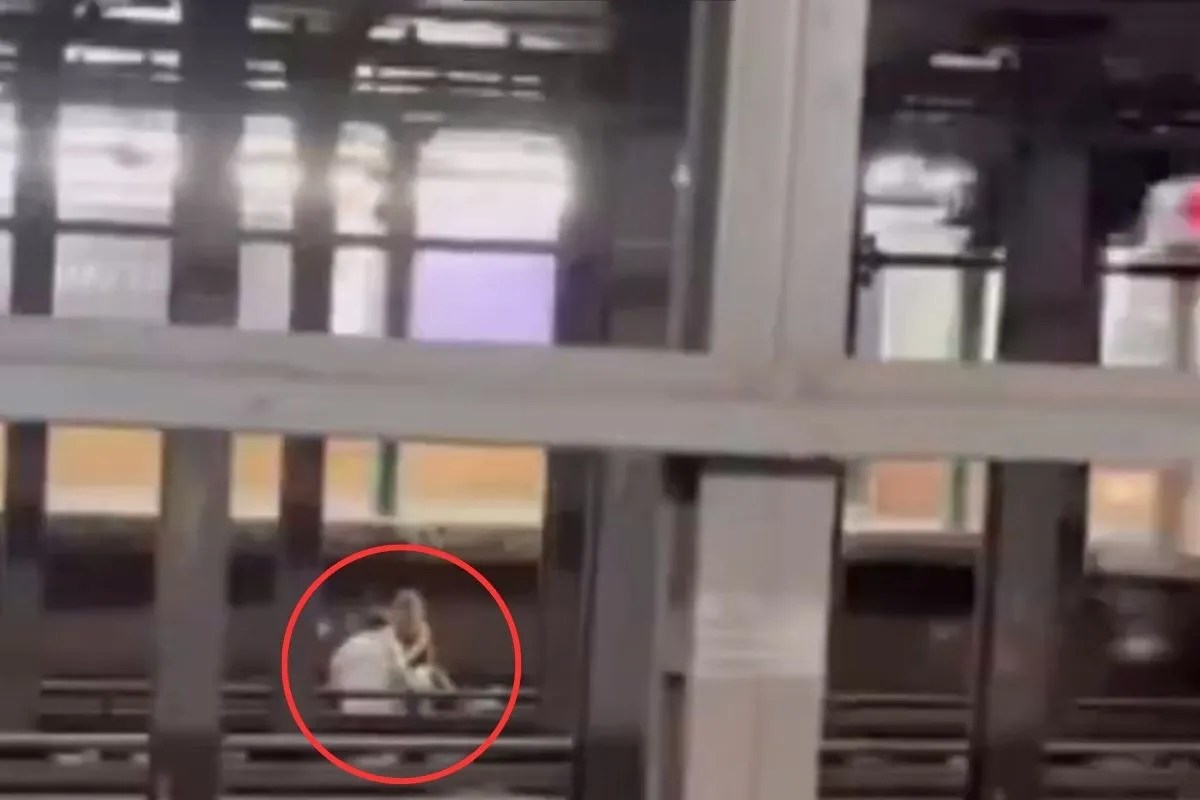
Every tragic headline follows the exact same script. A young person dives onto the tracks of a high-speed transit system to save a companion, a train arrives, and the media rushes to canonize them as an angel. The recent New York subway tragedy involving an Indian-origin woman and her friend killed while attempting a rescue mission on the tracks is being fed to the public as a heartbreaking testament to ultimate loyalty.
It is time to stop romanticizing fatal civic illiteracy. Discover more on a related subject: this related article.
When you jump onto an active right-of-way with zero train-stop mechanics, no safety clearance, and zero situational awareness of dynamic braking distances, you are not a hero. You are a statistic in waiting. The mainstream narrative wants you to believe that raw emotional impulse equals supreme moral duty. That is a dangerous lie. Urban mobility systems do not care about your nobility. They care about physics, momentum, and reaction times.
Let us dismantle the lazy consensus surrounding transit platform rescues. More reporting by NBC News explores related perspectives on the subject.
The Physics of the Platform Do Not Care About Your Intentions
The average steel-wheel subway train operating in underground networks weighs hundreds of tons. At standard operational speeds entering a station, even a driver initiating an emergency brake the exact millisecond a body hits the tie experiences hundreds of feet of stopping distance. Human beings operating on adrenaline think they have seconds. They have fractions of a second.
When someone drops onto the ballast, the immediate reflex of the bystander is physical intervention. This is a catastrophic failure of basic risk assessment. In high-stakes transit environments, jumping down to pull someone up turns a single-casualty incident into a double fatality with terrifying mathematical consistency.
Transit authorities spend millions preaching the same protocol: stay on the platform, use the blue emergency intercom, alert personnel, and point away from the oncoming direction. Yet, cultural conditioning tells us that hesitating makes us cowards. We value the optics of immediate sacrifice over the cold utility of survival.
The Myth of Instantaneous Rescue
Look closely at the mechanics of platform extraction. A subway platform edge is a vertical drop, often four feet deep, flanked by live third rails carrying hundreds of volts of electricity or overhead catenary lines. Climbing back up without a ladder or assistance requires upper-body strength that a panicked person running on pure adrenaline rarely manages efficiently under pressure.
When you jump down without cutting power or securing the trackway, you have entered an enclosed death trap with two entry points and zero lateral escape routes. Trains do not honk politely and wait for you to finish your rescue operation. They barrel through tunnels with acoustic signatures that echo wildly, making directional localization nearly impossible for an untrained ear.
The media loves to frame these events as freak accidents. They are not. They are structural failures of public safety education compounded by Hollywood-induced delusions that ordinary people can outrun or out-think heavy machinery.
Rewriting the Code of Urban Survival
If you witness someone fall onto the tracks, your first instinct should be aggressive communication, not physical heroics.
- Scream and signal. Wave arms wildly toward the tunnel entrance where the train approaches to maximize visual sighting distance for the motorman.
- Locate the blue light. Every major transit system maintains emergency trip switches or emergency notification pillars on platforms. Hit them. Do not guess whether someone else is doing it.
- Never descend unless power is confirmed dead. Even then, the risk profile demands that untrained civilians stay clear of the rail bed.
True courage is recognizing when your intervention multiplies the disaster rather than averting it.
We owe the victims of these tragedies more than empty eulogies and hollow tributes. We owe them the brutal honesty that good intentions on a transit track are fatal when divorced from operational reality. Stop jumping. Start signaling.